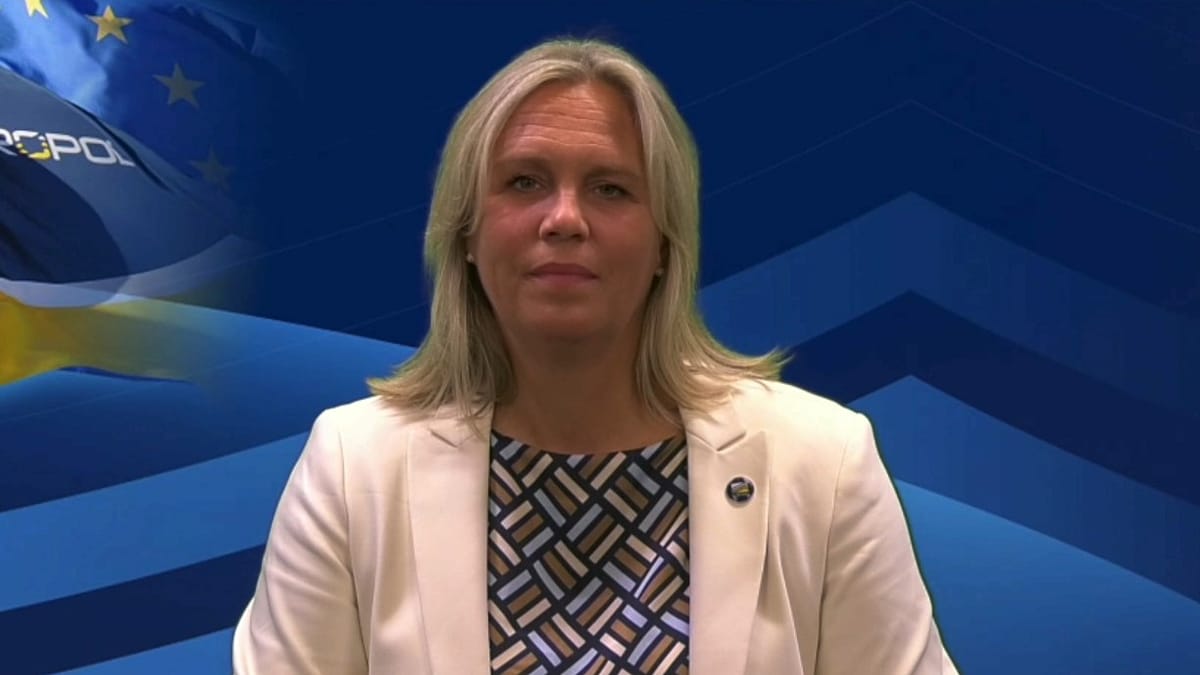
The European Union's law enforcement agency, Europol, has reiterated that terrorism remains a persistent threat across the continent, with lone-actor attacks presenting a particularly difficult challenge for security services. Speaking from The Hague, Anna Sjöberg, head of the European Counter Terrorism Centre, warned that the nature of radicalisation has shifted dramatically in recent years.
“Lone actors are often radicalised online, which creates a lack of possibility for law enforcement to intervene in a timely manner,” Sjöberg said. This shift from organised, externally directed plots to self-initiated attacks has forced police and intelligence agencies across the EU to adapt their methods.
Online Radicalisation and the Challenge of Early Detection
The internet, and especially encrypted messaging platforms and social media, has become the primary vector for extremist propaganda. Unlike traditional terrorist networks, which could be infiltrated or monitored through physical surveillance, lone actors often leave few traces until shortly before they act. This makes prevention heavily reliant on digital monitoring and tip-offs from the public.
Europol’s assessment comes as several member states, including France, Germany, and Belgium, have reported an uptick in foiled plots involving individuals inspired by jihadist or far-right ideologies. The agency has stressed that the threat is not limited to any single ideology; both Islamist extremism and right-wing radicalism remain significant concerns.
In response, Europol has been pushing for greater harmonisation of data retention laws and faster cross-border information sharing. The agency also supports the EU’s proposed regulation on detecting and removing terrorist content online, though critics warn of potential overreach and privacy infringements.
Cooperation Across the Continent
The challenge is compounded by the fact that many lone actors operate across borders, using virtual private networks and encrypted apps to communicate with like-minded individuals in other countries. Sjöberg emphasised that no single member state can tackle this threat alone. “We need a coordinated European response, from the Baltic states to the Iberian Peninsula,” she said.
Europol’s European Counter Terrorism Centre, established in 2016, acts as a hub for intelligence sharing and operational coordination. It has supported dozens of joint investigations in recent years, often working with agencies from non-EU countries such as Switzerland, Norway, and the United Kingdom. The UK, despite leaving the EU, remains a key partner through bilateral agreements and Interpol.
The agency’s warning also comes amid broader geopolitical tensions that could indirectly fuel radicalisation. For instance, the ongoing conflict in the Middle East and the Houthi threat to close the Bab el-Mandeb strait have been exploited by extremist groups to recruit and incite violence. Similarly, disinformation campaigns, such as the fake Euronews video falsely claiming Zelenskyy's parents were probed for corruption, can erode public trust and create fertile ground for radical narratives.
Technological and Legal Responses
Europol is also investing in advanced analytical tools, including artificial intelligence, to detect patterns of radicalisation online. However, Sjöberg cautioned that technology alone is not a silver bullet. “We must balance security with fundamental rights,” she said. The agency is working with the European Commission to develop guidelines that respect privacy while enabling effective monitoring.
Several member states have already introduced legislation to compel tech companies to report extremist content. The EU’s Digital Services Act, which came into full effect in 2024, imposes stricter obligations on platforms to remove illegal content, including terrorist propaganda. Yet enforcement remains uneven, and smaller platforms often lack the resources to comply.
For now, Europol’s message is clear: the threat is not going away, and Europe must remain vigilant. As Sjöberg put it, “We cannot afford to be complacent. The landscape is constantly evolving, and so must our response.”