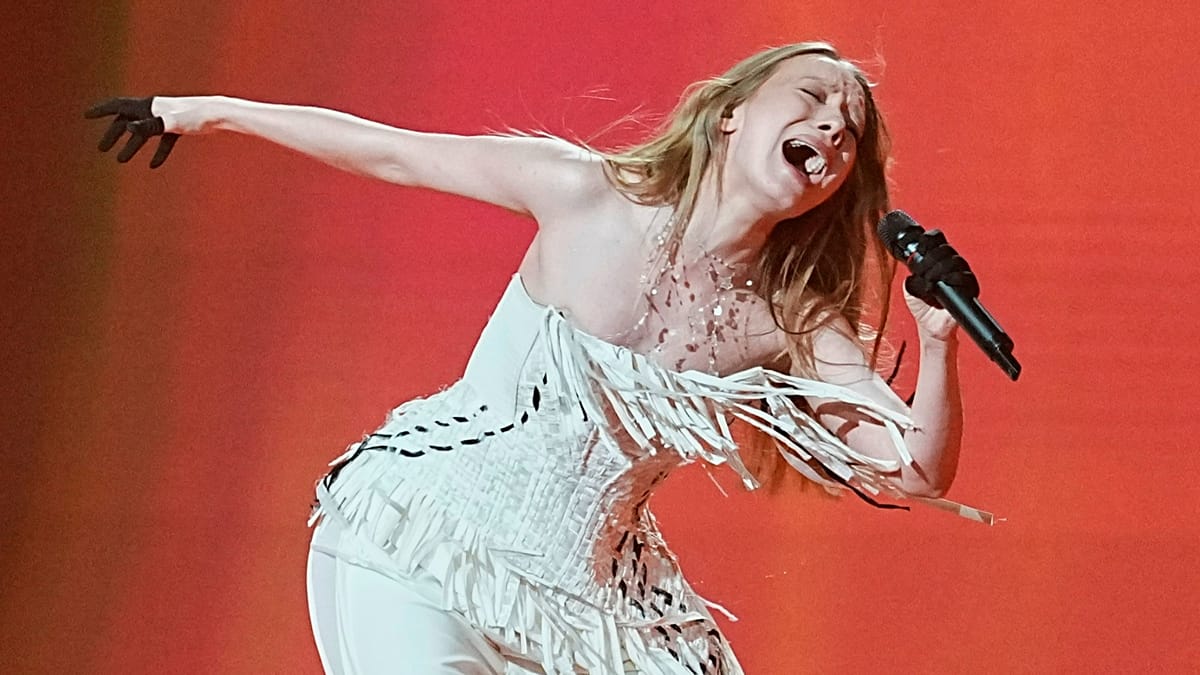
The final lineup for the 70th Eurovision Song Contest is now set, following Thursday night's second semi-final in Vienna. Ten acts advanced to Saturday's Grand Final, while five others saw their journey end.
Eliminated from the competition were performers from Azerbaijan, Luxembourg, Armenia, Switzerland, and Latvia. The remaining 25 finalists will compete for the coveted trophy at the Wiener Stadthalle.
Qualifiers from the Second Semi-Final
Among those moving forward are Denmark's Søren Torpegaard Lund with the sultry “Før Vi Går Hjem” (“Before We Go Home”), Australian star Delta Goodrem with her power ballad “Eclipse,” and Bulgarian singer Dara with the catchy “Bangaranga.” Other qualifiers include Daniel Žižka from Czechia, Leléka from Ukraine, Alis from Albania, Aidan from Malta, Antigoni from Cyprus, Alexandra Căpitănescu from Romania, and Jonas Lovv from Norway.
These acts join the ten who advanced from Tuesday's first semi-final, which featured Finland's Pete Parkkonen and Linda Lampenius, Greek rapper Akylas, Serbian goth metal band Lavina, Moldovan folk-rapper Satoshi, and Israeli singer Noam Bettan.
Automatic Qualifiers and Host Country
The United Kingdom, France, Germany, and Italy automatically qualify for the final as the contest's largest financial contributors. Austria, as last year's winner, also secures a place as host nation. This brings the total number of finalists to 25.
Boycotts and Protests Continue
Five countries — Spain, Ireland, the Netherlands, Slovenia, and Iceland — are boycotting this year's edition due to Israel's participation. The boycott represents a significant revenue and viewership loss for an event that drew a global audience of approximately 166 million last year.
Israeli performer Noam Bettan faced protests during his Tuesday semi-final performance. Unlike previous years, Palestinian flags are now permitted inside the arena, and Austrian broadcaster ORF has stated it will not mute any booing. For more on the ongoing tensions, see our report on Finland and Israel Advance to Eurovision Final Amid Boycotts and Protests.
Cultural and Economic Impact
Eurovision remains one of the world's largest cultural events, and this year's edition in Vienna has already generated significant buzz. The city has embraced the contest with initiatives like the unveiling of Austria's largest mural on an office tower, as covered in Vienna Unveils Austria's Largest Mural on Office Tower for Eurovision. Meanwhile, fans are eagerly tracking the most-streamed entries and betting favorites, detailed in Eurovision 2026: The Most-Streamed Entries and the People's Favorites.
As the Grand Final approaches, all eyes are on Vienna for what promises to be a memorable night of music, spectacle, and political undercurrents.