Finland, the betting favorite, and Israel were among the ten acts that secured a spot in Saturday's Eurovision final after the first semi-final on Tuesday in Vienna. The 70th edition of the continent's largest music competition is unfolding under the shadow of a five-country boycott and planned pro-Palestinian demonstrations.
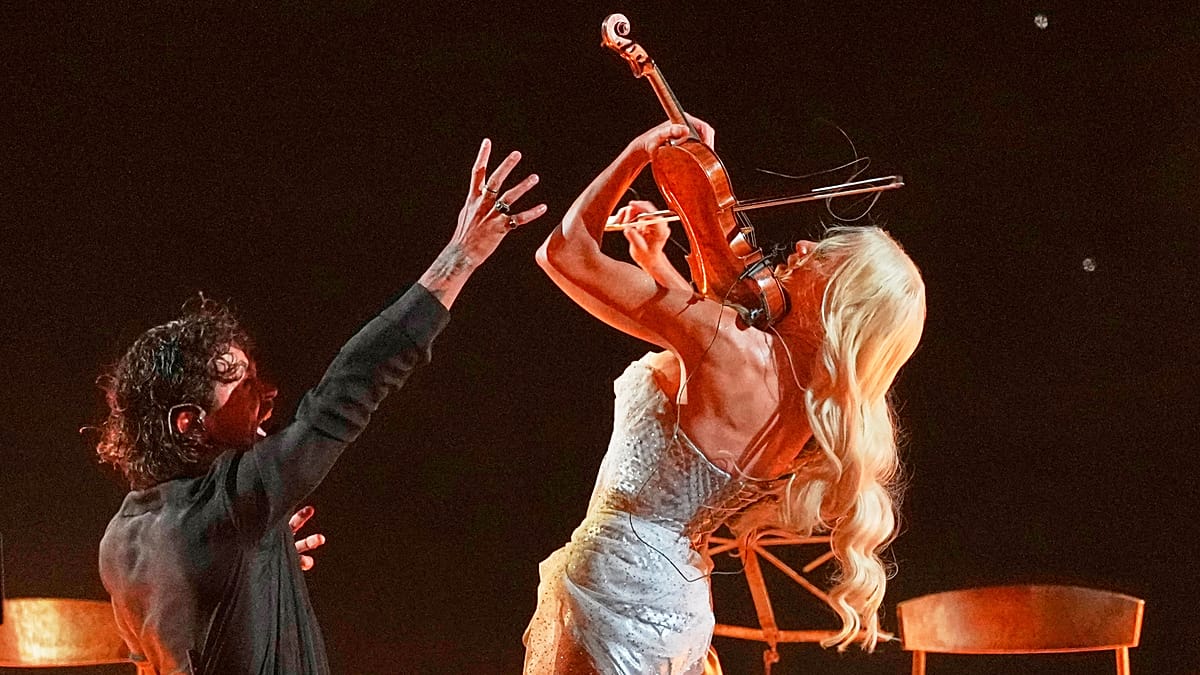
Fifteen acts performed three-minute songs in the semi-final, often accompanied by elaborate choreography and pyrotechnics, vying for votes from national juries and international viewers. Finland's entry, Liekinheitin (Flamethrower), a fusion of pop singer Pete Parkkonen's intense vocals and violinist Linda Lampenius's fiery fiddling, lived up to its pre-contest hype.
Advancing Acts and Eliminated Nations
Joining Finland in the final are Greece's Akylas with the party-rap track Ferto (Bring It); Serbian goth metal band Lavina performing Kraj Mene; Moldovan folk-rapper Satoshi with Viva, Moldova!; and the Croatian female ensemble Lelek singing Andromeda. Belgium defied expectations to qualify, alongside Croatia, Lithuania, Poland, and Sweden.
Five countries were eliminated after the first night: Estonia, Georgia, Montenegro, Portugal, and San Marino. San Marino's entry featured a guest appearance by 1980s icon Boy George on the song Superstar, but it was not enough to secure a place in the final.
The second semi-final on Thursday will select ten more finalists. The United Kingdom, France, Germany, and Italy automatically qualify as the contest's largest financial contributors. Austria, as last year's winner, also receives an automatic spot as host nation.
Political Divisions and Boycotts
This year's contest, held under the motto United by Music, has been overshadowed by political tensions. Five countries—Spain, Ireland, the Netherlands, Slovenia, and Iceland—are boycotting the event to protest Israel's participation, citing its conduct in the war in Gaza. This marks the largest boycott in Eurovision history, following Russia's expulsion in 2022 after its full-scale invasion of Ukraine.
Israeli singer Noam Bettan performed the rock ballad Michelle and was met with both cheers and shouts of protest from the audience. He advanced to the final, but the controversy surrounding Israel's inclusion has not subsided. The 2024 contest in Malmö, Sweden, and last year's event in Basel, Switzerland, saw large pro-Palestinian protests, and similar demonstrations are planned for Vienna this week, including a musical event called No Stage for Genocide.
The European Broadcasting Union (EBU), which organizes Eurovision, has tightened voting rules in response to allegations of vote-rigging against Israel's delegation last year. The number of votes per person has been halved to ten, and safeguards against suspicious voting activity have been strengthened. However, the EBU declined to expel Israel, prompting the five-nation boycott announced in December.
The boycott represents a blow to the contest's revenue and viewership. Organizers reported that 166 million people watched last year's event. While Bulgaria, Moldova, and Romania have returned after absences, the total number of participating countries stands at 35, the lowest since 2003.
Jonathan Hendrickx, a media researcher at the University of Copenhagen, warned that further boycotts could strain the contest's structure. “They really are at their limits now, in terms of what they can handle with the current format,” he said.
For more on the entries and favorites, see our analysis of Eurovision 2026: The Most-Streamed Entries and the People's Favorites. For context on the broader political backdrop, read about EU sanctions on Israeli settlers and the protests at the Venice Biennale.