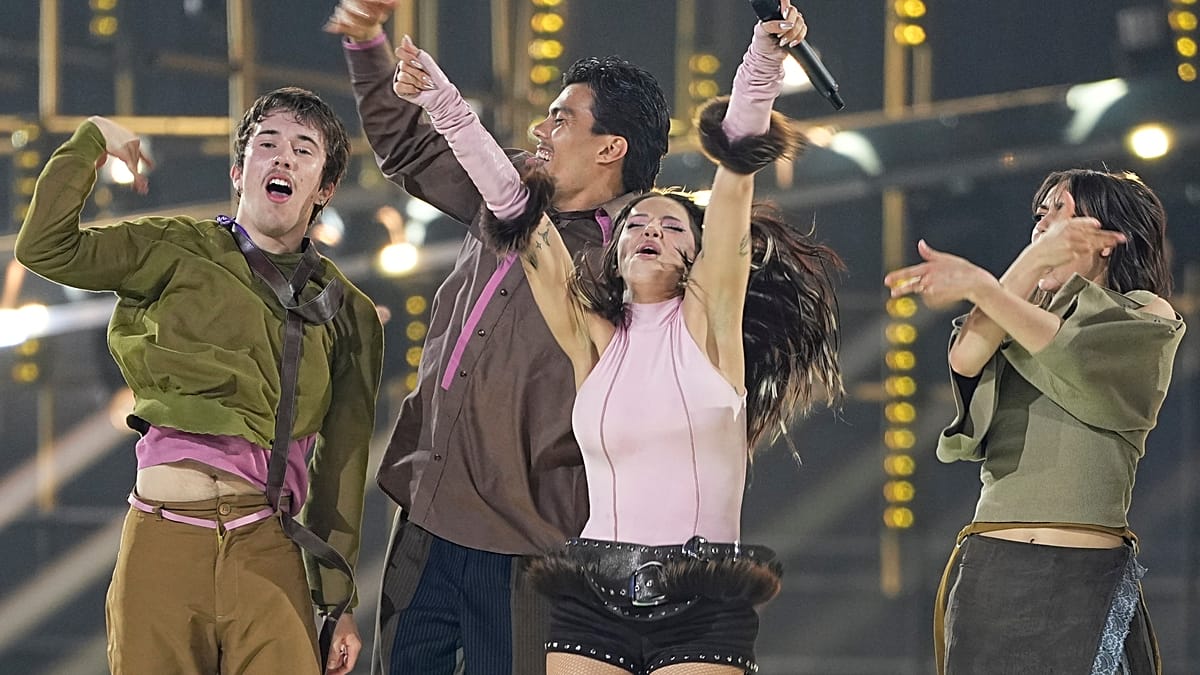
In the days leading up to the Eurovision Song Contest 2026 final in Vienna, a viral post on X, originally from TikTok, alleged that the competition had been secretly fixed in Finland's favour. The post, which amassed over 1 million views, claimed to be from a Eurovision security guard who said, "I can freely say through a secret account that the winner is picked," and asserted that Finland had offered organisers around €16 million to secure victory.
However, the claim unravelled during the final itself. Finland, tipped as a favourite in betting markets and among fans, ultimately finished in sixth place once the televote was announced. Bulgarian popstar Dara took home the trophy with her hit "Bangaranga," as detailed in our coverage of Bulgaria's triumph in Vienna.
The anonymous account behind the viral claim had no verifiable connection to Eurovision, no previous posts, and provided no screenshots, documents, or verifiable information linking itself to the organisers. A spokesperson for the Geneva-based European Broadcasting Union (EBU), which organises the contest, told us in the run-up to the grand final that the allegation was "false information."
How Eurovision's Voting System Works
The claim directly contradicts the EBU's voting system. Eurovision's final result combines public televotes with rankings submitted by professional juries in each participating country. National juries consist of seven music industry professionals who rank performances during a dress rehearsal before the live final. Public viewers vote for their favourite acts during the final via phone, text message, or online—all for a fee—but cannot vote for their own country.
According to the EBU, votes are processed through telecom operators, payment providers, and national voting partners before being independently verified. This year, in response to concerns raised by broadcasters over promotional campaigns for acts, the EBU reduced the number of votes viewers can cast from 20 to 10 and introduced new rules discouraging "government-backed campaigns."
It wasn't the only false claim to spread amidst the contest. Our fact-checking team found a raft of claims on social media alleging the competition was rigged, with posts claiming various countries had paid to win. After Dara was announced as the winner, users on Reddit and X circulated unsupported claims that Israel had funded the Bulgarian act alongside several others.
Eurovision acts are primarily funded by their country's national public service broadcaster. In this case, publicly available reports show that Bulgarian National Television (BNT), alongside Dara's Bulgarian record label Virginia Records, organised and supported Bulgaria's Eurovision participation, including its national selection process, staging, and costs. Dara partnered with international writers and producers for her song. We found no credible evidence of undisclosed Israeli government funding of Bulgaria's entry.
False Claims Spread Amidst Controversy
The majority of allegations that Eurovision was rigged emerged on social media during heightened scrutiny over the contest's voting system and promotional campaigns. In the past two years, investigations by the New York Times and the EBU's own fact-checking unit, Eurovision News Spotlight, have examined Israeli government-backed promotional campaigns encouraging viewers in participating countries to vote for Israel's Eurovision entry. Israeli broadcaster KAN said it believed no Eurovision rules had been broken in response to the controversy.
Additional government support and promotion of Eurovision acts, beyond that provided by state-backed broadcasters, is not unusual, with tourism boards and cultural institutions sponsoring artists' promotional tours and publicity efforts. The EBU said it remained confident that the 2025 contest had delivered a "valid and robust result" despite complaints from several public broadcasters over televoting transparency and promotional campaigns. The EBU later tightened its rules on the number of public votes and introduced measures discouraging what it called "disproportionate" government-backed campaigns.
It's not the first time the EBU has altered the competition's rules amidst controversy. In 2022, it removed jury votes during the second semi-final from six countries—Azerbaijan, Georgia, Montenegro, Poland, Romania, and San Marino—after identifying what it described as "irregular voting patterns." This controversy, denied by broadcasters, led organisers to temporarily remove professional juries from the semi-finals between 2023 and 2025. Jury votes in the semi-finals were reintroduced for this year's competition.
For more on the host city's preparations, see Vienna's mural unveiling. The race for the 2027 host city is already heating up, with Sofia, Plovdiv, Varna, and Burgas vying for the spotlight, as reported in our coverage of the host city race.