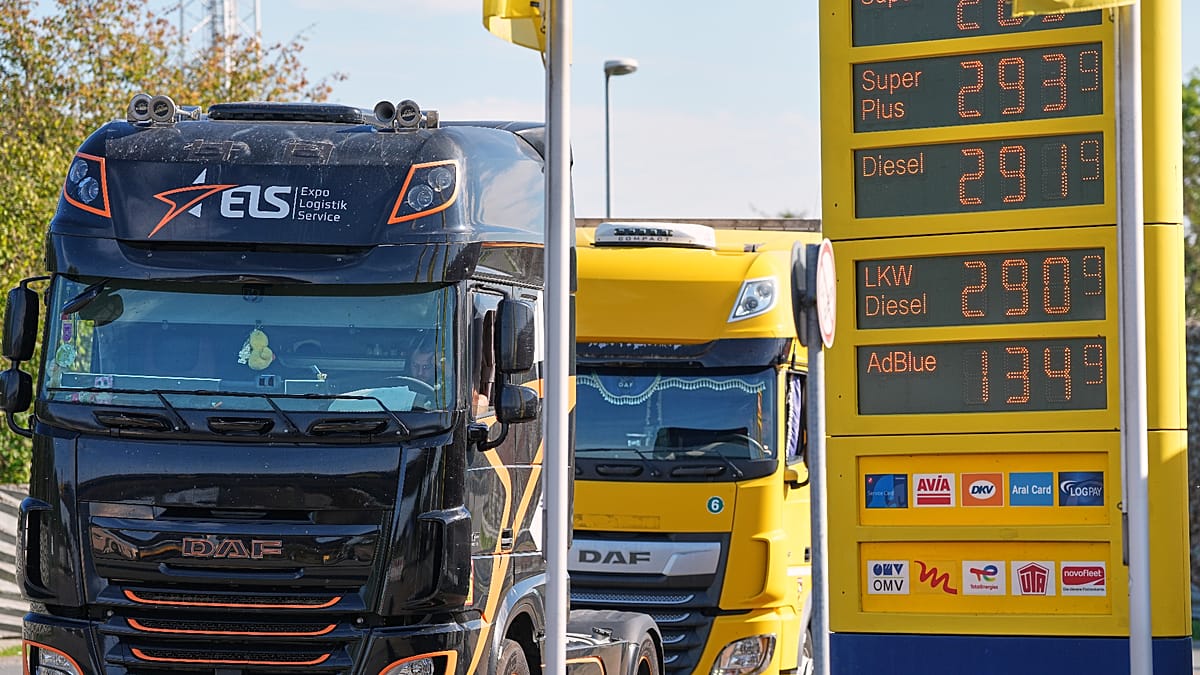
Inflation across the euro area accelerated to 3.8% in September, the fastest pace in three years and above the 3.6% that economists had expected. The jump was almost entirely the result of higher energy prices, which have been climbing since the summer and now account for nearly half of the overall inflation rate.
According to Eurostat's flash estimate, prices rose 0.6% in September compared with August. The annual rate is now more than double the European Central Bank's 2% target, the level it considers consistent with stable prices. The last time inflation was higher was in September 2023, when it stood at 4.3%.
Core inflation, which strips out volatile items like energy, food, alcohol and tobacco, ticked up to 2.5% from 2.4%, matching forecasts. That relatively modest increase leaves the ECB with a delicate question: is this an energy shock that will fade, or the beginning of broader price pressures?
Energy prices lead the charge
Energy costs rose 18.8% year-on-year in September, up from 14.3% in August. On a monthly basis, energy prices climbed 3.9%. Because energy carries a weight of about 9% in the euro area inflation basket, that surge added roughly 1.7 percentage points to the headline figure.
Services inflation, the largest component of the basket at around 47%, rose to 3.2% from 3.0%. This category includes rents, restaurants, travel and insurance. Food, alcohol and tobacco prices increased 1.4%, up from 1.1% in August, with unprocessed food inflation jumping to 4.0% from 2.7%. Non-energy industrial goods, such as cars and clothing, saw inflation ease slightly to 1.1%.
The energy-driven spike is not unique to the eurozone. Global oil prices have been under pressure, and oil has rebounded above $100 amid supply concerns. This has hit European consumers particularly hard, as many countries rely heavily on imported energy.
Which countries saw the biggest increases?
Lithuania recorded the highest annual inflation rate in the euro area at 6.1%, up from 5.6% in August. Bulgaria, which adopted the euro on 1 January 2026, followed at 5.6%. Cyprus and Luxembourg both posted 5.2%, ahead of Greece at 5.1% and Spain at 5.0%.
In total, six of the euro area's 21 member countries recorded inflation of 5% or more, and ten were at or above the 3.8% average. At the other end, Malta had the lowest rate at 2.4%, followed by Finland at 2.6% and Latvia at 2.9%. Latvia was the only member country where annual inflation eased in September.
Among the four largest economies, Italy saw the biggest jump, with inflation climbing to 4.1% from 3.2%. Italian prices rose 2.0% in a single month, the largest monthly increase in the bloc. France followed, with inflation rising to 3.4% from 2.6%, pushing it above Germany, where the rate rose to 3.3% from 2.9%. Spain remained the highest of the four at 5.0%, up from 4.6% in August.
These figures are in line with recent national data. Italy's inflation climbed to 4.2% in September, the highest in three years, while Spanish inflation hit 4.9% as fuel costs rebounded.
What this means for the ECB
The European Central Bank raised its three key interest rates by 25 basis points on 10 September, bringing the deposit facility rate to 2.50%. That was the second increase this year, following a similar move in June. Higher rates make borrowing more expensive for households and companies, which tends to slow spending and ease price pressures over time.
The ECB's September projections see headline inflation averaging 3.0% in 2026, 2.5% in 2027 and 2.1% in 2028. Policymakers meet next on 28-29 October in Frankfurt, with the decision due on 29 October. That meeting will not include new staff projections; the next set arrives in December.
The September data put a fresh warning in front of the ECB. Headline inflation is well above target and still rising. Prediction markets assign a 91% chance of a further rate hike at the end of the month. The central bank will have to weigh the risk of an energy-driven spike becoming entrenched against the risk of choking off economic growth.
For European households, the immediate impact is clear: higher energy bills and faster-rising prices for everyday goods. The question is whether this is a temporary blip or the start of a more persistent inflationary period.