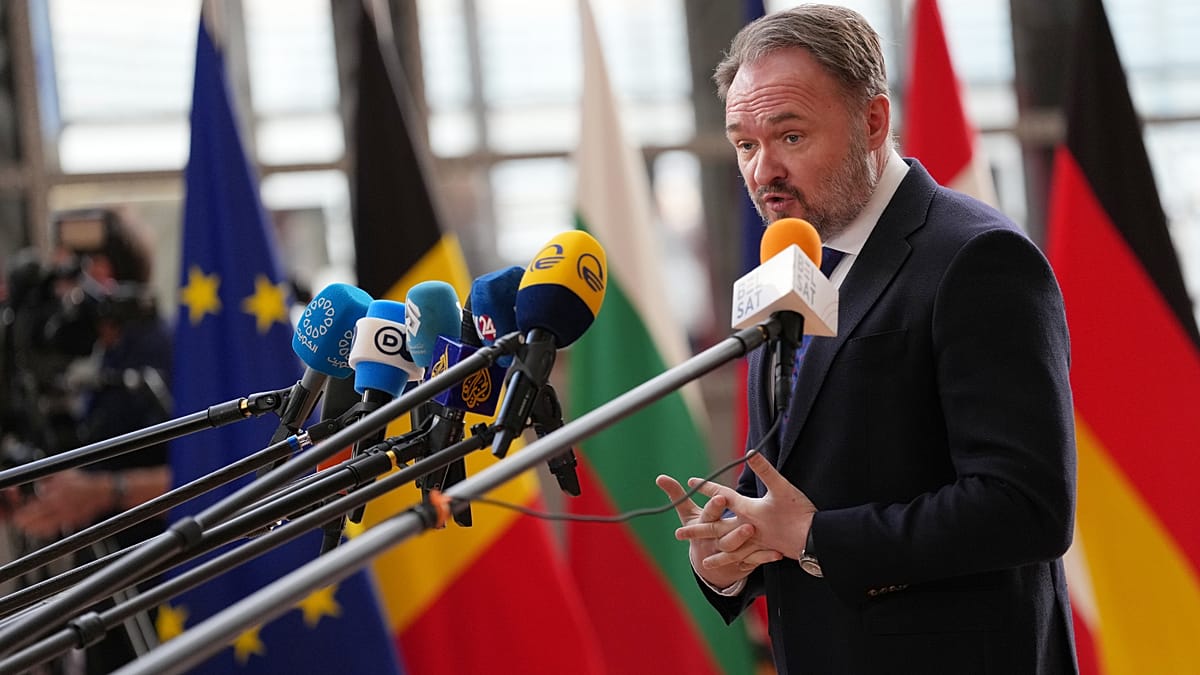
As diesel prices climb across Europe, the EU's energy chief has confirmed that releasing strategic petroleum reserves is on the table. Dan Jørgensen, the Danish commissioner responsible for energy, told Euronews that Brussels is in talks with International Energy Agency (IEA) members about the timing of a potential release, a tool that has been used before and could be deployed again.
“We are discussing with all members of the IEA, not only the United States, when the right time is to release, because this is one of the opportunities that we have. We've used it before, and we'll likely use it again,” Jørgensen said on Thursday.
The comments come as diesel prices at the pump have risen sharply over the past month, driven by the ongoing conflict in Iran and reduced refining capacity. US diesel has hit $7 a gallon, while Brent crude has traded between $97 and $102 a barrel since late September—up $25 to $30 from pre-war levels. European motorists and businesses are feeling similar pressure, with diesel and jet fuel supplies particularly tight.
Coordinated action through the IEA
Jørgensen explained that EU member states are discussing a coordinated release through the Paris-based IEA, although the decision ultimately lies with individual governments. “We coordinate via the EU and our positions in the IEA. But this is a decision of each member state; do they want this or not?” he said. “And this is something that is being discussed as we speak.”
An EU source told Euronews that the European Commission held a call on Thursday with several countries, including the United Kingdom, to assess different scenarios. The UK, while no longer an EU member, remains a key player in European energy markets and a member of the IEA.
The pressure to act is not only coming from within Europe. Washington has been pushing European allies to tap their emergency stocks, a move that could add an additional 120 million barrels to the global market. The United States has already released significant volumes from its own Strategic Petroleum Reserve, and the Biden administration is keen to see allies share the burden.
Releasing reserves can quickly inject diesel and other petroleum products into the market, potentially easing tight supplies. But emergency stocks are finite: once drawn down, they must be replenished, and governments may be reluctant to reduce their buffers while the geopolitical crisis remains unresolved. The IEA said in August that global observed stocks had fallen by about 410 million barrels since the start of the US-Israeli war against Iran on 28 February, while tight diesel and jet-fuel supplies had pushed refining margins to record levels.
According to the latest Eurostat figures, EU emergency stocks remain high and are available in the event of market disruption, although diesel and jet-fuel markets remain tight and prices elevated. The EU already participated in a major coordinated release in March, when the IEA oversaw the release of 400 million barrels. EU countries contributed roughly 20% of the total, although a significant portion had yet to reach markets as of last week.
The situation is particularly acute for countries like Greece, which has been pressing Brussels for fiscal leeway as the energy shock deepens. Athens and other southern European capitals are struggling to cushion the blow for households and businesses, and a coordinated reserve release could provide some relief.
Jørgensen's remarks echo earlier warnings about the coming winter. In a previous interview, he warned of a harsh winter despite adequate supply, highlighting the fragility of Europe's energy system. The current diesel squeeze is a reminder that even with full storage, the continent remains vulnerable to global market shocks.
The debate over reserve releases also intersects with broader questions about European energy security and defence. As NATO chief Mark Rutte has warned that the alliance model is unsustainable without European action, the energy crisis underscores the need for a more coordinated European approach to strategic resources.
For now, the decision rests with individual member states. Some, like Germany and France, have large reserves and may be more willing to contribute. Others, particularly those with smaller buffers, may hesitate. The coming weeks will show whether the EU can speak with one voice on this issue—or whether the diesel squeeze will force a more fragmented response.