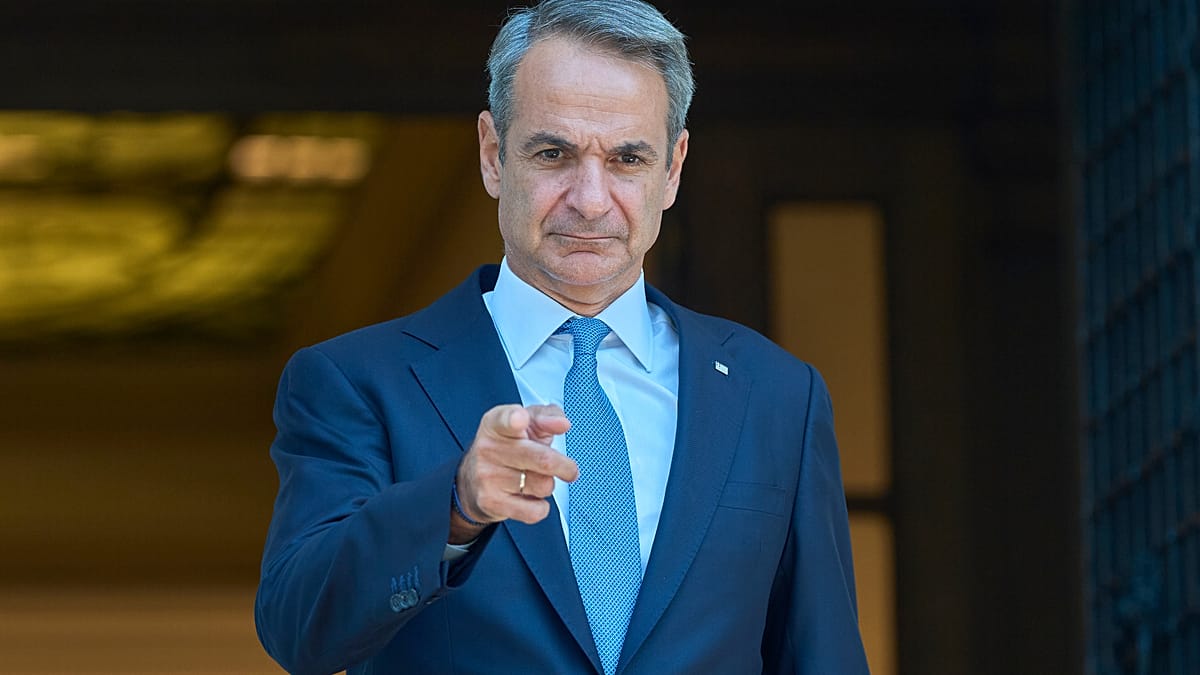
ATHENS — With energy prices climbing again and conflict in the Middle East threatening supply routes, Greek Prime Minister Kyriakos Mitsotakis has written to Brussels urging the European Commission to relax the bloc's fiscal rules. The letter, dated 30 September and seen by Euronews, calls for "more breathing room" so national governments can protect households and businesses from the renewed cost pressure.
"We must find the additional necessary flexibility within the Economic Governance Framework to allow Member States to take additional support measures," Mitsotakis writes, addressing Commission President Ursula von der Leyen and Eurogroup President Kyriakos Pierrakakis. He warns that Europe's latest energy crisis is lasting longer than expected and that escalating attacks on energy facilities in the Middle East could turn it into both an economic and political challenge for Athens.
Debt burden and election timing
Greece carries the largest national debt among the 27 EU member states, a legacy of the sovereign-debt crisis that still shapes fiscal policy. While the economy is growing, a wave of generous subsidies and sweeping tax cuts has made it harder to reduce that debt. To help families cope with rising costs, Athens has been handing out cash aid for energy bills, fuel, and farming. At the same time, Mitsotakis has cut income and property taxes to boost his popularity ahead of parliamentary elections scheduled for 2027.
The Greek leader points to sharp price increases since the United States and Israel launched a war against Iran on 28 February. EU gasoline prices before tax are up 53%, diesel 66%, and gas has risen from just over €30 per megawatt-hour to around €70. In most EU countries, electricity prices have exceeded €100 per megawatt-hour over the past month, up from €42 before the Middle East disruption, with some markets approaching or surpassing €200.
Mitsotakis argues that the problem is no longer just energy costs but their knock-on effect on wider inflation and household affordability. He insists that the Commission's current advice—mainly to reduce energy demand—is not politically acceptable. "We need to have on the agenda a broader set of ideas that speak to the urgency of the current moment," the letter reads.
Proposals for flexibility
Greece is proposing that temporary national measures to support consumers and companies could, up to a certain limit, be excluded from the EU's net-expenditure indicator—a spending cap that limits how fast a government can increase its day-to-day budget. It also suggests that governments be allowed to account for additional VAT revenues generated by unexpectedly high inflation linked to energy prices. If the Commission accepts these measures, it would give governments more fiscal space to subsidise or otherwise support citizens and businesses without the same pressure from EU fiscal rules.
Several EU countries have already spent billions on tax cuts and subsidies to shield against skyrocketing prices. But governments are reaching a tipping point. Belgian Prime Minister Bart De Wever put it bluntly when he ruled out broad measures to tackle rising energy prices: "There is no money."
Mitsotakis expects the request to be discussed at the gathering of energy ministers in Brussels later in October and at next year's summit of EU heads of state and government. He is not alone in pressing for looser rules. Italian Prime Minister Giorgia Meloni also urged von der Leyen to relax fiscal rules, according to local media reports on 30 September.
The push comes as other European countries feel the strain. In Bulgaria, fuel costs now eat 15% of the minimum wage as the Middle East crisis deepens, a stark illustration of the social impact of energy inflation. Meanwhile, the EU's energy chief has warned of a harsh winter despite adequate supply, suggesting that the bloc's resilience will be tested in the coming months.
For Greece, the stakes are high. With its debt-to-GDP ratio still above 150%, any relaxation of fiscal rules would be a political victory for Mitsotakis, who has staked his credibility on economic recovery. But critics argue that further flexibility could undermine the credibility of the EU's fiscal framework, which was only recently reformed after years of negotiation. The debate is set to intensify as ministers meet in Brussels, with the outcome likely to shape how Europe responds to the energy crisis in the months ahead.