Portugal's housing market continues to defy broader European trends, with new data showing the country recorded the sharpest rise in house prices across the European Union in the second quarter of 2026. According to Eurostat, prices in Portugal jumped 16.5% compared with the same period a year earlier, outpacing Bulgaria (+15.5%) and Lithuania (+14.3%).
The figures, released this week, underline a persistent affordability challenge in a country that has become a magnet for foreign buyers and digital nomads. In September, the national median price reached €3,228 per square metre, a fresh all-time high, according to the Idealista price index. On a monthly basis, prices rose 0.6% from August.
Regional disparities widen
The surge is not uniform across the country. District capitals and autonomous regions saw the steepest climbs in Vila Real (17.8%), Leiria (17.6%), Beja (14.4%), Faro (14.3%) and Guarda (14%). The Centro region led regional growth, while areas such as Aveiro (9.3%), Setúbal (9.1%), Porto (9%), Castelo Branco (9%), Ponta Delgada (7.1%), Funchal (5.3%) and Lisbon (4.4%) recorded more moderate increases.
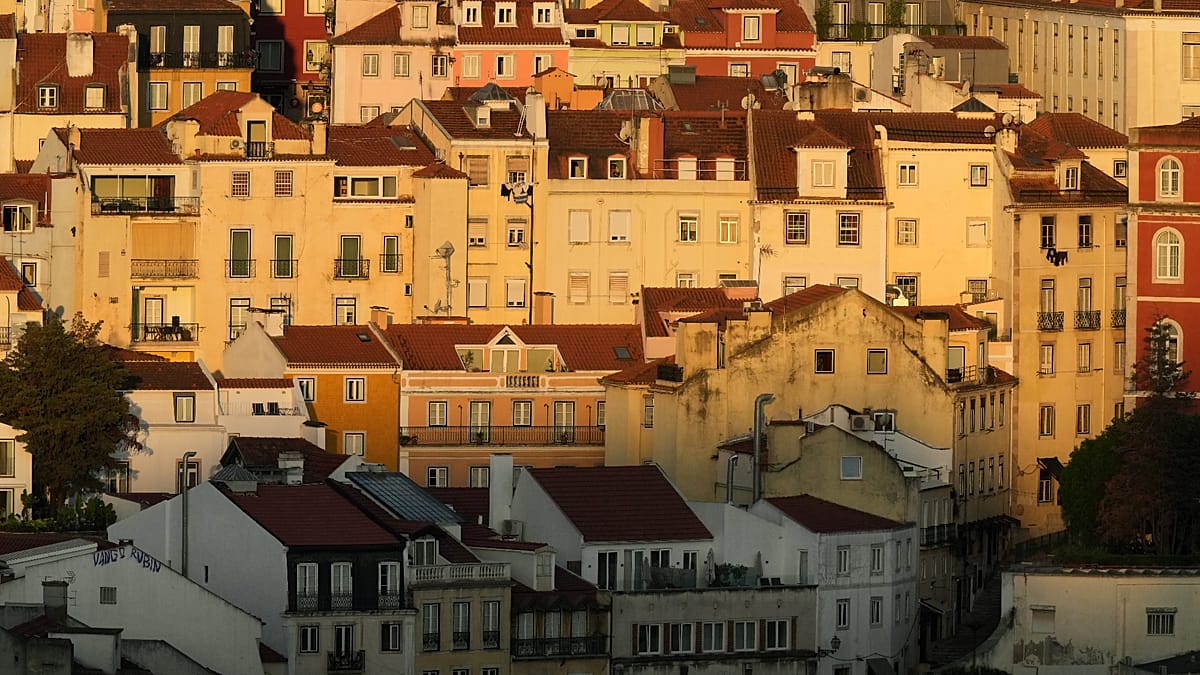
Lisbon remains the most expensive city to buy a home, with a median price of €6,256 per square metre. The wider Lisbon region follows at €4,501 per square metre, making it the priciest area in the country.
The national trend stands in stark contrast to the broader EU picture. In the second quarter of 2026, house prices rose by 4.0% in the euro area and 4.7% in the EU compared with the same quarter of 2025. Only three member states saw declines: Finland (-2.7%), Luxembourg (-2.2%) and France (-0.8%).
On a quarterly basis, prices in the euro area increased by 1.1% and in the EU by 1.2% between the first and second quarters of 2026.
The Portuguese housing boom has been fuelled by a combination of strong demand from international investors, a growing tourism sector, and a limited supply of new housing. The government has introduced measures to cool the market, including tax incentives for long-term rentals and restrictions on new short-term lets, but so far these have had limited impact.
For many Portuguese, the rising costs are becoming untenable. In Lisbon and Porto, locals increasingly struggle to afford homes in their own cities, pushing younger generations to the outskirts or abroad. The situation has sparked protests and political debate, with some calling for more aggressive state intervention.
Meanwhile, the broader European housing market shows signs of divergence. While southern and eastern nations like Portugal, Bulgaria and Lithuania see rapid appreciation, northern and western economies such as Finland, Luxembourg and France are experiencing price corrections. This split reflects differing economic conditions, interest rate sensitivities and housing policies across the continent.
As Europe heads into winter with thin gas reserves and high energy prices, the housing market remains a key concern for policymakers. In Portugal, the government is under pressure to address the affordability crisis, but with prices still climbing, the challenge shows no sign of easing.
The Eurostat data also highlights the impact of rising energy costs on construction and renovation, which in turn feeds into housing prices. In Portugal, the cost of building materials has surged, further limiting supply.
For now, Portugal's housing market remains one of the most dynamic in Europe, but the social consequences are becoming harder to ignore. As the country continues to attract international attention, the question of how to balance growth with affordability will be central to its political agenda.