The United States has renewed its call for European governments to release more emergency oil reserves, arguing that several EU member states have yet to deliver on earlier pledges. US Energy Secretary Chris Wright made the appeal on September 29, the same day Washington announced it would put an additional 40 million barrels onto the market.
“While the United States and Japan are delivering on their commitments, several European member countries have released only a fraction of the crude oil and petroleum products they pledged,” Wright said. “We urge every member country to fulfil its commitments.”
The pressure comes as the Trump administration weighs a 90-day ban on diesel exports to contain domestic fuel prices ahead of the November midterm elections. US diesel has climbed to $7 a gallon, while Brent crude has traded between $97 and $102 per barrel since late September—roughly $25 to $30 above pre-war levels.
Supply disruptions and strained budgets
Disruption to shipping through the Strait of Hormuz, escalating tensions in the Gulf of Aden, and attacks on Russian refineries have tightened an already fragile market. European Energy Commissioner Dan Jørgensen noted on September 29 that the EU has spent more than €100 billion extra on energy this year without receiving additional gas or oil in return.
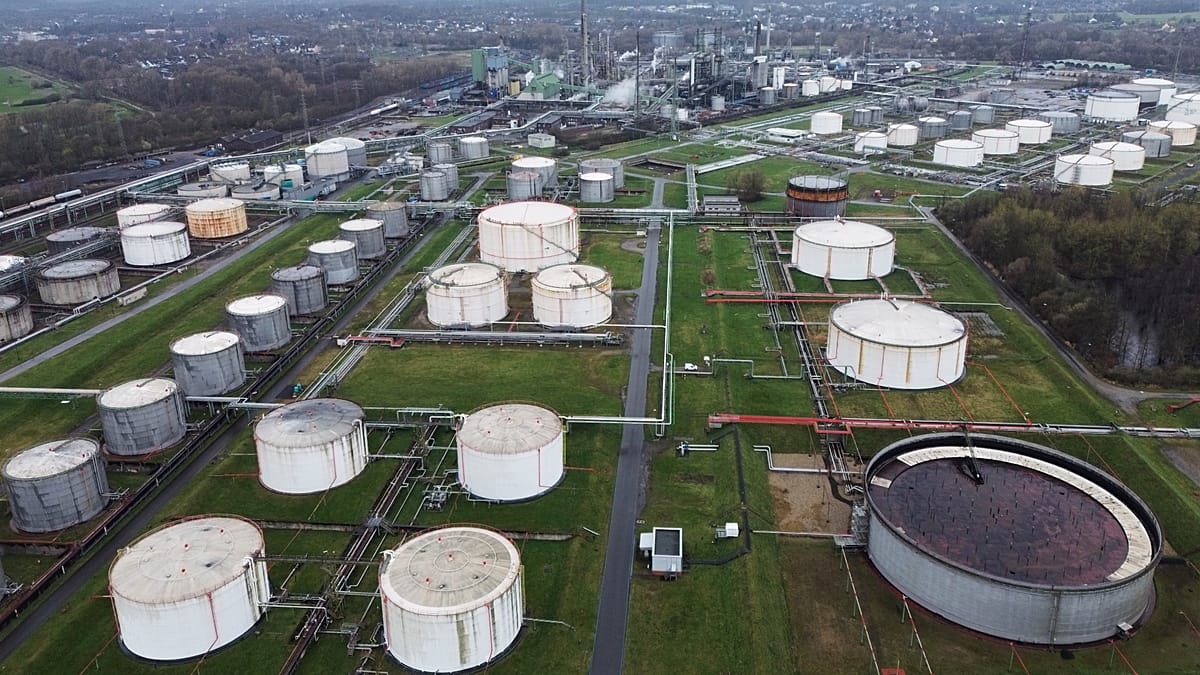
Europe still holds substantial emergency stocks, though distribution is uneven. In May 2025, EU countries collectively held 108.6 million tonnes of emergency oil, including 43.5 million tonnes of crude, 39 million tonnes of diesel and gasoil, and 10.4 million tonnes of petrol, according to the European Commission. But Finland had reserves equal to 178 days of net imports, while Greece had 112, Belgium 108, Sweden 107, Malta 105, and Spain 104. Ireland held 83 days, Czechia 79, and Bulgaria 88.
The International Energy Agency (IEA) coordinated a release of 400 million barrels in March, with the EU contributing about 20 percent, shortly after US and Israeli attacks on Iran on February 28. But IEA executive director Fatih Birol downplayed the prospect of another coordinated release when he spoke to reporters in Dublin on September 29. “About two-thirds [of emergency oil reserves] have been released and hit the markets, and one-third is still to come,” he said, adding that European countries had made significant efforts but still had stocks available.
US Interior Secretary Doug Burgum suggested Europe could do more, particularly on diesel. “They have a lot of diesel reserves,” he told reporters in Washington. The administration is “discussing a lot of options,” he said, without elaborating.
Potential fallout for Europe
A US diesel export ban would add to the pressure on European consumers and industry, according to Francesco Sassi, assistant professor of political science at the University of Oslo. “The immediate consequences would be even costlier supply scenarios for European consumers and additional costs for industries and energy operators,” Sassi told Euronews. Governments would also face higher public spending as they sought to cushion households and businesses from soaring energy prices.
Sassi warned that prolonged disruption could increase pressure on Europe to reconsider Russian energy supplies. “The EU continues to ignore the severe disruptions to supply the market has been experiencing since the beginning of the war in the Persian Gulf and the blockade of Hormuz,” he said, arguing that Europe remained heavily dependent on supply routes protected by other powers or controlled by global markets.
Ireland’s Energy Minister Darragh O’Brien said on September 29 that a US diesel export ban was “unlikely” because it would damage economies on both sides of the Atlantic, but he urged Europe to prepare for the possibility. The IEA did not respond to a request for comment by the time of publication.
As the EU heads into winter with thin gas reserves and high prices, the question of how to secure affordable energy remains acute. Some member states have already taken national measures, such as Italy extending fuel tax cuts to ease the burden on motorists. Meanwhile, the IEA has signaled readiness to tap more reserves if needed, though Birol’s comments suggest a cautious approach.
For now, European governments face a delicate balancing act: meeting US demands to release more oil, protecting consumers from price spikes, and maintaining strategic reserves for future emergencies. The coming weeks will show whether Washington’s pressure yields results—or whether Europe’s fragmented energy policies leave it exposed to further shocks.