Italy's Council of Ministers approved a new decree on Friday extending the reduction in fuel excise duties until 1 May, a move that Economy Minister Giancarlo Giorgetti said would cost around €500 million. The original measure, introduced on 18 March, was set to expire on 7 April.
Speaking after the cabinet meeting in Rome, Giorgetti also announced a specific intervention for agricultural holdings, extending a 20% tax credit already available to the fishing sector. The decree also includes measures for exporters, notably Simest, the CDP Group company that supports the internationalisation of Italian businesses.
The minister detailed the financing: “The cost of this measure is around 500 million euros. Of these, 200 million are self-covered by the increase in VAT revenue, while 300 million are resources substantially recovered from ETS CO2 allocations that had not yet been used, taking care not to touch those originally earmarked for relief for large energy consumers.”
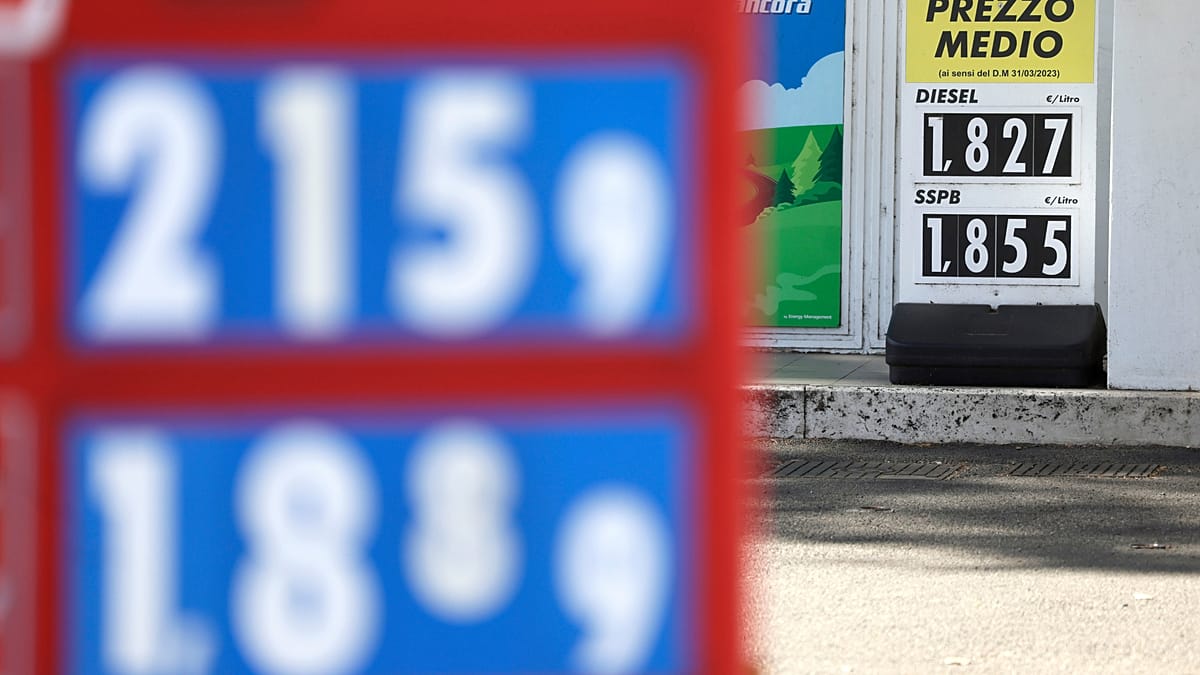
The extension comes as fuel prices in Italy continue to rise, driven by tensions in the Middle East and the ongoing blockade in the Strait of Hormuz, through which about 20% of the world's oil passes. According to the Environment Ministry's monitoring, average prices last week reached €1.733 per litre for petrol and €2.032 for diesel. Compared with the period before the US-Israeli strikes on Iran, that is 6 cents more for unleaded and 31 cents more for diesel.
What the decree includes
The measure keeps the discount at 25 cents per litre for petrol and diesel, and 12 cents for LPG. The first phase of the scheme cost around €528 million. The decree also provides a 28% tax credit on diesel purchases for road hauliers and fishermen.
Giorgetti also addressed concerns about the prolonged conflict in the Middle East, saying that if the situation does not change, the European Union's derogation on deficit limits and the 3% threshold “will be inevitable.” Italy had been close to bringing its deficit below 3% of GDP and exiting the EU's excessive deficit procedure, which would have given it more flexibility in spending constraints.
Consumer association Codacons criticised the extension as insufficient. “The extension of the excise cut decided today by the government is not enough to bring fuel prices back to acceptable levels,” the group said in a statement. It noted that despite the discount, diesel prices have returned to pre-measure levels and now exceed €2.1 per litre in nine Italian regions.
The highest prices are recorded in Bolzano, where self-service diesel costs €2.134 per litre, followed by Calabria (€2.116), Friuli Venezia Giulia (€2.113), Liguria and Lombardy (€2.108), Apulia and Valle d'Aosta (€2.104), Basilicata (€2.102) and Piedmont (€2.100). On motorways, diesel costs €2.137 per litre and petrol €1.822.
Codacons argued that “the effect of the excise discount ordered by the government has been completely nullified by increases at the pumps. For this reason, we expected today from the Council of Ministers not only an extension of the excise cut, but a strengthening of the tax discount to bring diesel prices back to acceptable levels.”
The Italian government's move comes amid broader European concerns about energy costs and inflation. The extension of the fuel discount is part of a series of measures aimed at cushioning the impact of high energy prices on households and businesses. The decision also reflects the delicate fiscal position of Italy, which has one of the highest public debt ratios in the eurozone.
As the situation in the Middle East remains volatile, Italian motorists and businesses will be watching pump prices closely. The government's decision to extend the discount until 1 May provides some relief, but consumer groups argue that more needs to be done to address the underlying causes of price increases.