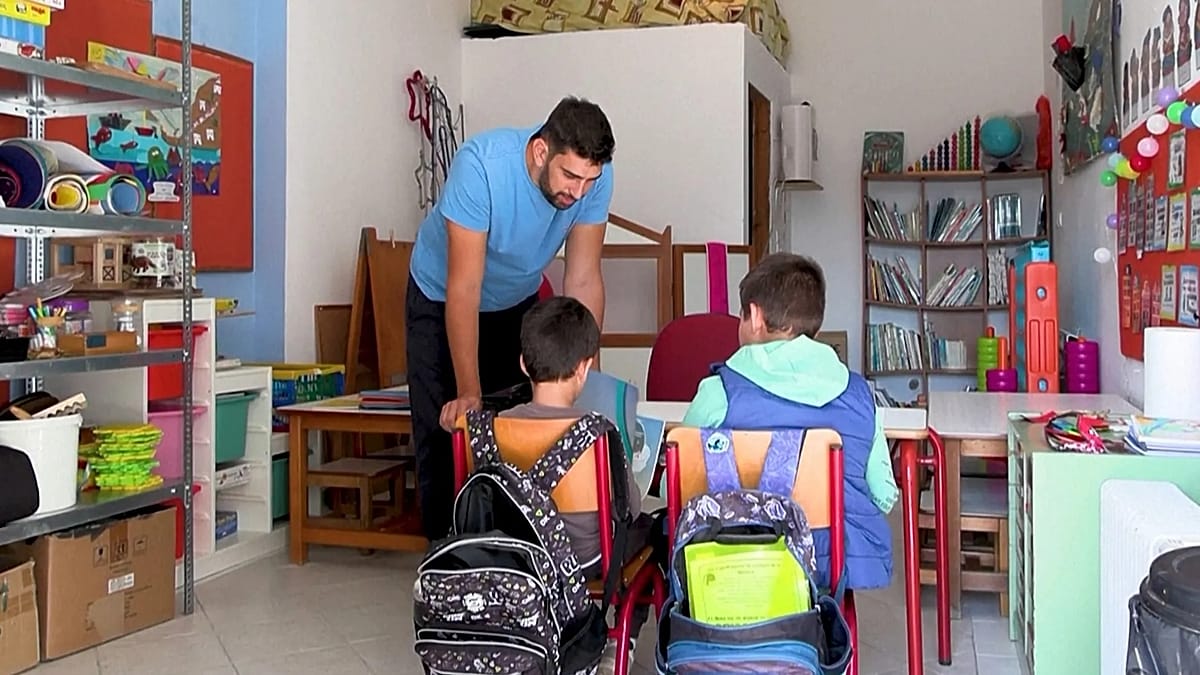
On the tiny Aegean island of Thymaina, a 40-kilometre ferry ride from the Turkish coast, the schoolyard echoes with the shouts of just two children. Six-year-old Giorgos and his older cousin Minas chase each other with geranium stalks, their games a rare sign of youth on an island where the population is ageing and thinning.
Manolis Mitikas, 77, who runs the portside cantina, remembers a different time. "When I was a boy, the school had nearly 70 children," he said over a game of backgammon. Today, the school has two pupils, and its future hangs by a thread.
A national trend of closures
Thymaina is a microcosm of Greece's demographic crisis. The education ministry has announced the closure of 43 nurseries and 32 primary schools this year due to "very low to non-existent" student numbers, with another 70 nurseries merged. The problem is acute on small Aegean islands, where isolation and limited services accelerate depopulation.
Marigo Kottara, deputy mayor of the Fournoi archipelago, which includes Thymaina, told AFP: "If we have no more children, the school will close...and unfortunately, we have no more children in Thymaina." The island has already lost its nursery and high school; six teenagers take a daily boat to neighbouring Fournoi for classes.
Konstantinos Fantelas, the island's sole teacher, instructs the two boys in everything from Greek and maths to history, religion and music. The school's survival depends on these two pupils, but with no younger children on the island, the next school year looks bleak.
Demographic data and government response
Greece recorded fewer than 66,000 births last year, down from more than 107,000 in 2005. The population is projected to fall by over a million to 9.2 million by 2050. Prime Minister Kyriakos Mitsotakis has called the demographic problem a "national danger." His government, facing elections next year, has promised tax breaks for parents with three children and extra cash for larger families.
But for many Greeks, the incentives are insufficient. With salaries often below €1,000 and energy prices soaring, some local officials are taking their own measures. Nisyros, a Dodecanese island with just over 1,000 residents, has announced €3,000 for each child born to permanent residents. Mayor Christofis Koronaios said, "It is the message that Nisyros believes in its future and that future is our children."
The demographic decline is not just an island problem. Rural areas across Greece are seeing falling milk output as young people leave, and the tourism boom, while strong, has not reversed the trend. July's tourism surge was driven by foreign visitors, not a return of residents.
Pirate lore and hopes for the future
Thymaina's history is steeped in piracy. The Mitikas family claims descent from Emmanouil Mitikas, the area's last known pirate, executed in the 1860s. Maria Markaki, a restaurant owner in Fournoi, joked, "My husband is still a pirate, he can't get enough of the sea." The waters around the island hold over 60 known shipwrecks dating back to the 6th century BCE.
Municipal officials hope that a decade-long culture ministry initiative to create underwater archaeology parks will draw visitors. The first of three parks is set to open next year, Kottara said. Such tourism could provide an economic lifeline, but it won't solve the demographic challenge.
Thymaina's infrastructure remains basic: only two ferries a week connect it to Athens, a journey of at least eight hours, often disrupted by weather. Locals have waited years for harbour and road improvements. Without investment and a reason for young families to stay, the island's future looks uncertain.
As Giorgos and Minas play in the schoolyard, their presence is a fragile hope. But as the deputy mayor noted, without new children, the school will close. The question is whether Greece's broader demographic crisis can be reversed before more communities like Thymaina fade away.