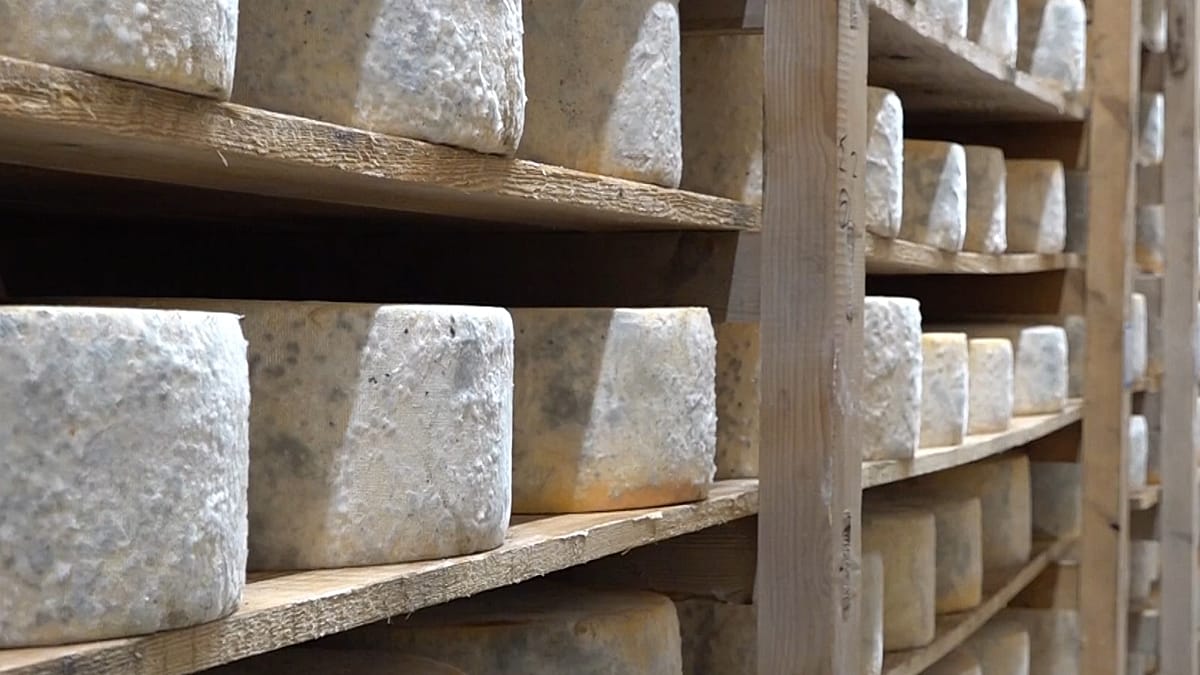
Naxos Graviera, the hard cheese from the Greek Cycladic island of Naxos, has long been a source of national pride. In 2025, the international food guide TasteAtlas ranked it the best cheese in the world, a recognition that cemented its reputation beyond Greece's borders. Yet behind the accolades, producers are grappling with a stark reality: milk production on the island is declining, and the cheese's future is uncertain.
A product of the island's unique terroir
Naxos Graviera has held Protected Designation of Origin (PDO) status since 1996, a mark of its distinct identity. It is made from cow's milk or a blend of 80% cow's milk with 20% sheep's or goat's milk, all sourced exclusively from animals raised on Naxos. The cheese is known for its pale yellow color, thin dry rind, and a sweet, subtle flavor with a distinctive aftertaste—qualities that have made it a staple in Greek cuisine and a favorite among chefs.
Giannis Politis, a professor at the Agricultural University of Athens who has collaborated with the Naxos Union of Agricultural Cooperatives for eight years, attributes the cheese's character to the island's environment. "Naxos is a paradise for aromatic plants," he explains. "The small ruminants graze on grass rich in these plants, which gives the milk a distinctive flavor and composition." He adds that Naxos Graviera rivals the graviera produced on the French-Swiss border, a bold comparison given the latter's international renown.
The Naxos Union of Agricultural Cooperatives, the island's largest dairy, produces about 1,250 tonnes of graviera annually. Konstantina Vadoula, a food chemist at the plant, notes that the milk comes from short distances, ensuring freshness and quality. The cheese is sold in wheels of 9, 3, and 1 kilograms, as well as in smaller pieces. Around 100 tonnes are exported, alongside 250 tonnes of other Naxos cheeses like kefalotyri and goat's cheese.
Production challenges and a call for state support
Despite the cheese's popularity, production is constrained by a decline in milk output. "Milk production on the islands faces inherent difficulties," says Politis. "Feed does not reach us easily, and it is expensive. The state needs to step in and help. This is a product that is essentially a national champion." He warns that without intervention, the quantities available will continue to fall, limiting both domestic sales and exports.
The issue is not new. Naxos has seen a broader trend of agricultural decline, with younger generations leaving for urban centers. The island's potato farmers, for instance, have been fighting to preserve a centuries-old crop, as reported earlier. The same demographic pressures now threaten the dairy sector.
Vadoula echoes the concern: "We could sell double or triple the amount we produce, but the milk isn't there." The cooperative, which is celebrating its centenary this year, is determined to keep livestock farming alive. "If livestock farming is maintained," Politis says, "absorbing the graviera produced will be, as my students would say, 'a piece of cake.'"
The stakes extend beyond Naxos. Greece's agricultural heritage is a pillar of its economy and identity, and products like graviera are ambassadors for the country's gastronomy. The European Union's PDO system was designed to protect such regional specialties, but it cannot solve the structural challenges of island farming. As Politis puts it, "This is a product that sells easily. What we need is to create conditions for it to be produced in the quantities the market can absorb."
For now, Naxos Graviera remains a symbol of excellence, but its future hinges on whether the island can sustain its pastoral traditions. The cooperative's centenary is a reminder of a long history, but the next hundred years will depend on addressing the economic and social pressures that threaten to erode the very foundations of this celebrated cheese.