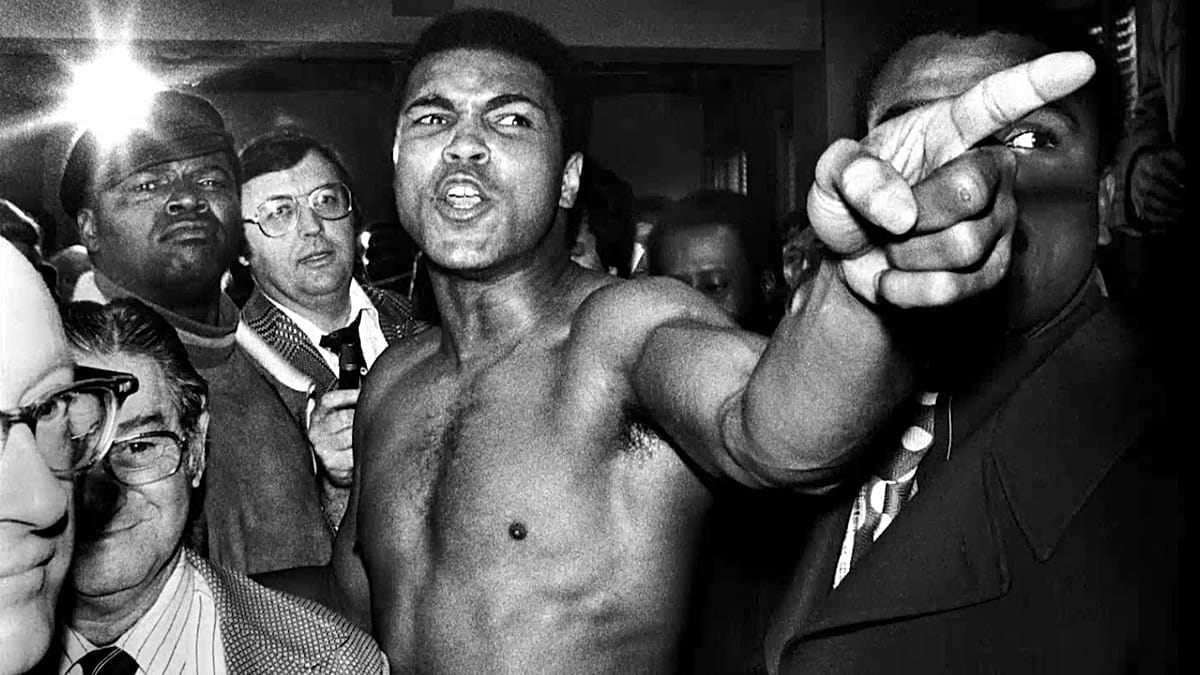
When Jean-Pierre Laffont stepped off the boat in New York in April 1964, he found a city far removed from the polished metropolis of today. The French photographer, then in his twenties, had arrived with little money and a plan to document ordinary American life from an outsider's perspective. What he discovered was a city on the brink of bankruptcy, riddled with crime, and seething with the energy of a cultural revolution.
In a wide-ranging conversation with European Lens, Laffont reflects on his years spent documenting America's upheavals, from civil rights marches to the first Gay Pride parade, and offers his views on how photography has changed. His new book, Rebels with a Cause, collects these images, offering a visual genealogy of the divisions that still shape the United States.
An outsider in a city in ruins
Laffont's first impressions of New York were stark. "I found myself in a city where everything was in ruins, where everything was dirty, where crime was everywhere," he recalls. Living on the West Side, he quickly learned that walking at night was dangerous, and carrying cameras around his neck was an open invitation to trouble. The city was on the verge of financial collapse, yet for a photographer, this decay was a source of visual excitement. "Anything new is a source of visual excitement," he says. "You see things, you notice them, you frame them, you compose the shot."
His lens captured the gritty reality of the era: the American flag draped over a car in a protest, the members of the 'Savage Skulls' street gang, the crowds at Central Park's peace marches. But Laffont was not merely a chronicler of chaos; he was a keen observer of the motivations behind the unrest.
The draft's injustice
One of the central themes of his work is the anti-Vietnam War movement, which he saw not as a simple pacifist uprising but as a rebellion against a deeply unfair system. "I actually realised that the young people out on the streets weren't necessarily against the Vietnam War, which wasn't their war, and which they didn't understand," he explains. "What it was really about was the injustice of the way they were being drafted."
The American draft at the time was a lottery. Some young men could defer service by staying in university, while others, having drawn the short straw, were forced to go. By the early 1970s, a disproportionate number of Black Americans were being sent to combat units, a fact that Laffont found deeply troubling. "They really were being sent into the meat grinder," he says. "And that, too, was an injustice that was beginning to become apparent."
These movements, which often began in New York, would frequently culminate in Washington, D.C., where Laffont followed them. He photographed writer and activist Abbie Hoffman alongside actress Jane Fonda at the Kent State shootings protest, capturing the convergence of celebrity and activism.
A joyful rebellion
Not all rebellions were born of anger. Laffont vividly remembers the first Gay Pride parade in June 1970, an event he stumbled upon by chance. "It was a joyful rebellion," he says. "They arrived in Central Park and started kissing, they started dancing, and for me, it was a fantastic day." He didn't know at the time that it was the first such event, but he captured the joy and liberation of the moment.
Ten years later, he traveled to San Francisco to document the tenth anniversary of Gay Pride, where he found a more organized community. "There was a mayor, there were doctors, there were mechanics, there were restaurants, there were lawyers, there were gay architects, serving gay people and wanting to work only with gay people," he recalls. "It was a very interesting, very intelligent community, but ultimately, they were rebels. It wasn't a revolution; it was a rebellion."
Photography's evolution
Reflecting on his craft, Laffont notes the dramatic changes in photography. In his day, he carried five cameras with different lenses because there was no time to switch. Today's young photographers, he says, are "incredibly lucky"—they don't have to reload film or worry about missing a shot. Yet he remains nostalgic for the discipline that analog photography demanded.
Laffont's work is a testament to the power of photography to capture the spirit of an era. As the United States continues to grapple with its divisions, his images serve as a reminder that today's conflicts have deep roots—roots that a young French photographer saw firsthand on the streets of New York.