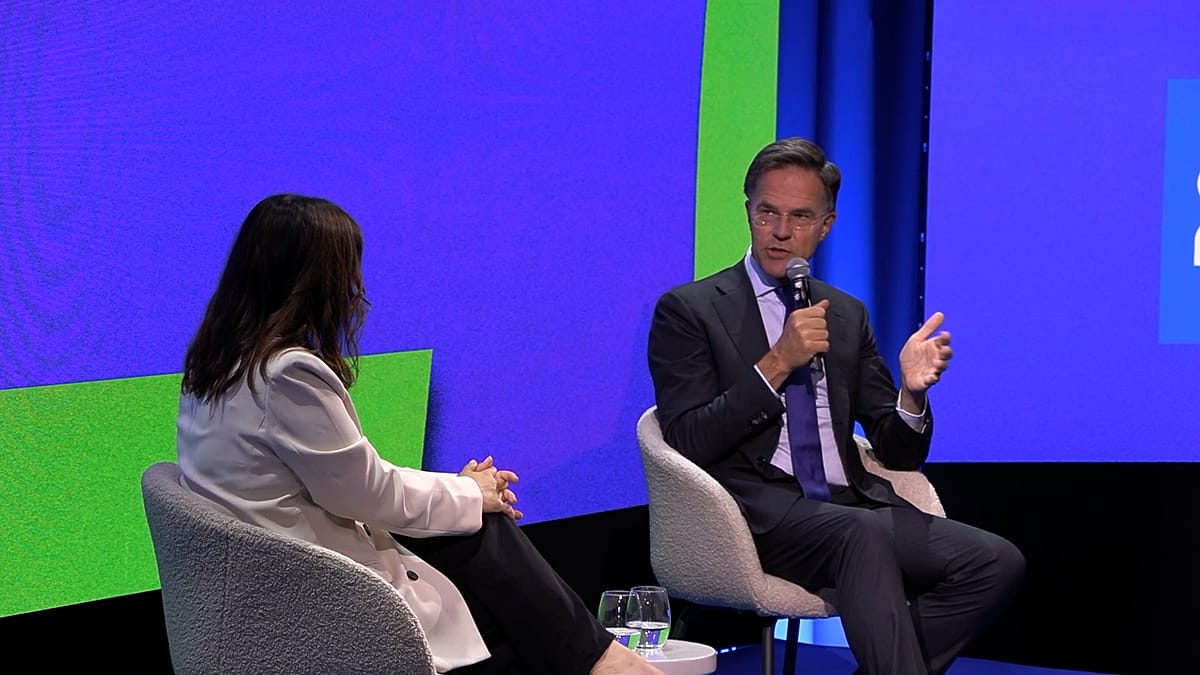
NATO Secretary General Mark Rutte has issued a stark warning that the alliance's current operating model is "not sustainable," as Europe continues to depend heavily on the United States for its defence. In an exclusive interview at Euronews' Defence and Space summit, Rutte argued that the transatlantic partnership, while enduring, must evolve to reflect the economic weight of its European members.
Rutte, the former Dutch prime minister who took the helm of the alliance in October, acknowledged that the United States, under President Donald Trump, has been openly critical of NATO and has even threatened to withhold support. However, he insisted that Washington's commitment to Europe remains firm, both in the nuclear and conventional domains. The real problem, he said, is not American resolve but the structural imbalance within the alliance.
"It is not sustainable that you have a country, the United States, being overly responsible for the defence of 600 million Europeans," Rutte said. "We are the richest part of the world. And still we are totally overdependent on a country so far away. That's what we are changing now."
The comments come as European leaders grapple with the dual challenges of Russian aggression and a more unpredictable US administration. Rutte's message echoes the broader debate across the continent about European defence autonomy, a topic that has gained urgency since Russia's full-scale invasion of Ukraine in 2022.
Europe's defence spending gap
Rutte's remarks highlight a persistent issue: while the US accounts for the lion's share of NATO's military spending, European members have historically underinvested in their own capabilities. Although many have increased budgets since 2014, the gap remains significant. According to NATO estimates, only a handful of the 32 member states meet the 2% of GDP spending target, and even fewer reach the 3% threshold that some officials now advocate.
The alliance chief's warning is not new, but his blunt language underscores the urgency. "We have the resources, we have the technology, we have the population," he said. "What we need is the political will to act."
Rutte also addressed the nuclear dimension, dismissing recent Russian threats as rhetoric. He pointed out that Moscow's sabre-rattling, while concerning, does not pose an immediate danger to the alliance. "We have been here before," he said, referencing the Cold War era. "We must not be intimidated."
The interview took place against the backdrop of the Euronews defence summit, where officials discussed hybrid threats, rearmament, and the future of European security. Rutte's call for a more balanced burden-sharing aligns with ongoing efforts within the EU to develop a more integrated defence industrial base, though progress has been slow.
Some analysts argue that the debate over European strategic autonomy is a luxury, a point Rutte himself has made in the past. In a separate session, he noted that the priority must be to strengthen NATO as a whole, rather than to create parallel structures that could weaken the alliance.
Rutte's message is likely to resonate in capitals like Berlin, Paris, and Warsaw, where leaders are under pressure to increase defence spending. Germany has announced a major modernisation fund, while Poland is already spending over 4% of GDP on defence. Yet many other members, including Italy and Spain, remain below the 2% threshold.
The NATO chief's warning also carries implications for the broader European security architecture. As the UK, Switzerland, Norway, and the Balkans look on, the alliance's ability to adapt will shape the continent's stability for decades to come. Rutte's insistence on European responsibility is a clear signal that the status quo is no longer acceptable.
"We are not asking for a favour," he said. "We are asking for a fair share. That is what sustainability means."