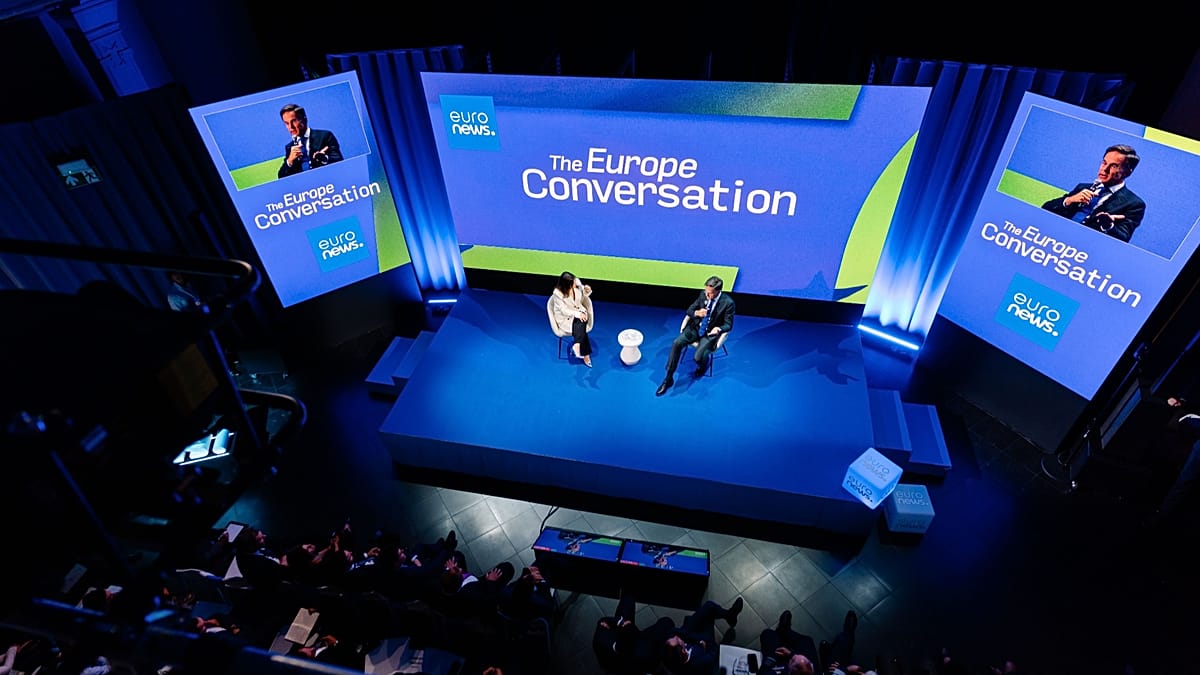
Europe's capacity to defend itself took centre stage at the Euronews Defence and Space Summit in Brussels, where policymakers, military officials and industry executives gathered to confront a continent shaken by Russia's full-scale invasion of Ukraine. The day-long event exposed deep divisions over strategy, while also revealing a growing consensus on the need for rapid rearmament.
Radev's nuclear warning
Bulgarian Prime Minister Rumen Radev opened the summit with a stark challenge to the EU's approach, calling the bloc's support for Ukraine a failed attempt at "peace by force." He argued that Europe had misread the strategic situation and needed a more realistic assessment of Moscow's intentions.
"The war in Ukraine challenged our critical thinking and realistic approach," Radev said. "It challenged our ability to assess the strategic centre of gravity of the opponent. It challenged most of all our ability to design feasible political objectives and to translate them into a sound military strategy and to define a desired end state."
Radev urged European leaders to open a diplomatic channel with the Kremlin to avert what he described as the "worst-case scenario" of a nuclear strike on European soil. Russia controls the world's largest nuclear arsenal, with an estimated 4,400 stockpiled warheads, including 1,796 strategically deployed. "There is a nuclear card," he warned. "We need to have this into account. We cannot close our eyes (to the fact) that there are nuclear weapons on our continent, there are nuclear weapons in the arsenal of Russia. And this is part of the game calculation."
His remarks came hours after Reuters reported that Russia had sent a document threatening to use "the entire arsenal of forces and capabilities at its disposal, including nuclear weapons" to defend its territory. The report added urgency to an already tense debate.
Rutte's calm rebuttal
NATO Secretary General Mark Rutte offered a starkly different message, telling Moscow to "stop the nuclear threats." While declining to comment on the reported document, Rutte dismissed the danger posed by Russian President Vladimir Putin. "Putin knows he can never win (against) NATO, so I don't take this seriously," he said. "Of course, we had to reply and make clear to him that NATO is a defensive alliance."
Rutte also addressed the surge in hybrid attacks targeting Ukraine's allies, including an arson attack at a robotics defence company in Estonia and an attempted drone strike at Leipzig airport in Germany. He framed these incidents as attempts by Putin to divert attention from the stalled battlefield, fracture Western unity and weaken military support for Kyiv.
Seeking to reassure allies, Rutte insisted: "There is no immediate threat to NATO territory. We will defend every inch of NATO territory, every square kilometre, square mile. There's no doubt Putin knows this. So that threat is not there. And if anything happens, we are ready to counter it."
He praised Ukraine's gains on the battlefield and its deep strikes inside Russia, but highlighted a critical weakness: air defence. Russia has used sustained aerial attacks to pummel Ukrainian cities, putting pressure on Kyiv's stocks of interceptors. "It is crucial now to keep Ukraine strong," Rutte said, urging allies to provide Patriot interceptors. "But Ukraine is not doing worse (now) than some time ago."
Francken's 'dark winter'
Despite Rutte's reassurances, concern over Europe's security is mounting. Belgian Defence Minister Theo Francken warned that Europe was facing a "dark winter" of increasing interference. "Russia, air attack, air attack, air attack. This is the biggest threat. So we need air defence, air defence, air defence," Francken told the summit. "We need to have more stocks, more production, scale up production, and a large industrial base. Everything has to go faster."
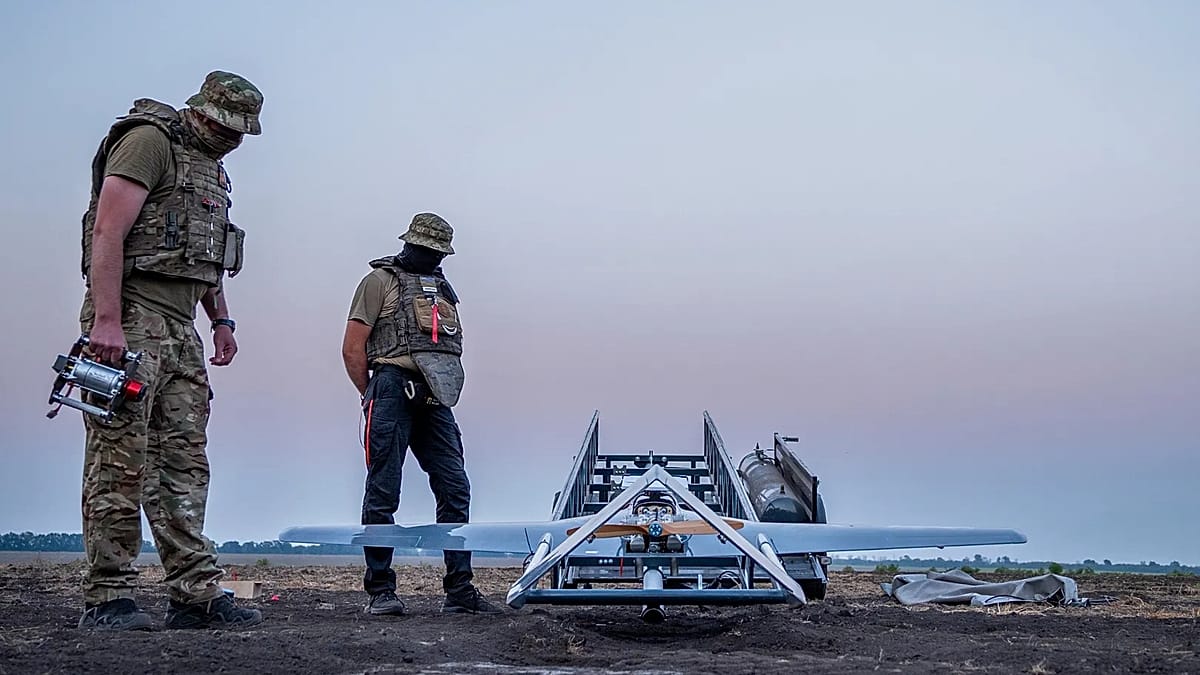
Francken said Russia had decades of experience in hybrid warfare and argued that Europe should draw on Ukraine's battlefield expertise to keep pace with rapidly changing technology. "I don't want to have 200,000 drones somewhere in a stock, and in two months you cannot even use them because they're outdated. So we have to adapt," he said.
He also acknowledged Belgium's long-standing underinvestment in defence. "We were like the worst pupil of the NATO class. We had 1% of GDP in defence spending," he said, adding that spending had since doubled. "But I cannot do in 18 months what has been neglected for 40 years."
US commitment under scrutiny
European security remains closely tied to the United States, NATO's largest military power. Relations between Washington and European capitals have faced repeated tensions since Donald Trump returned to the White House and pursued an "America First" agenda. Matthew Whitaker, the US ambassador to NATO, sought to reassure European allies that Washington remained committed to the alliance, but the summit's broader mood reflected a growing sense that Europe must prepare for a future where it cannot rely solely on American protection.
The debate over European defence autonomy is not new, but the war in Ukraine has given it new urgency. As NATO's chief has argued, the preference for European-made equipment is a luxury that cannot come at the expense of readiness. Yet, as one Estonian MEP warned, Europe's defence industry is not yet ready for the scale of rearmament required.
The summit also highlighted the need for a more robust response to hybrid threats. EU Commissioner Andrius Kubilius has insisted that any response must inflict real pain on Moscow, a sentiment echoed by several speakers. The challenge, as this week's Brussels summit made clear, is translating rhetoric into concrete action.
As Europe grapples with the twin pressures of nuclear brinkmanship and hybrid warfare, the summit's central question remains unanswered: is Europe ready to defend itself? The answers from the podium were sobering, but the urgency was unmistakable.