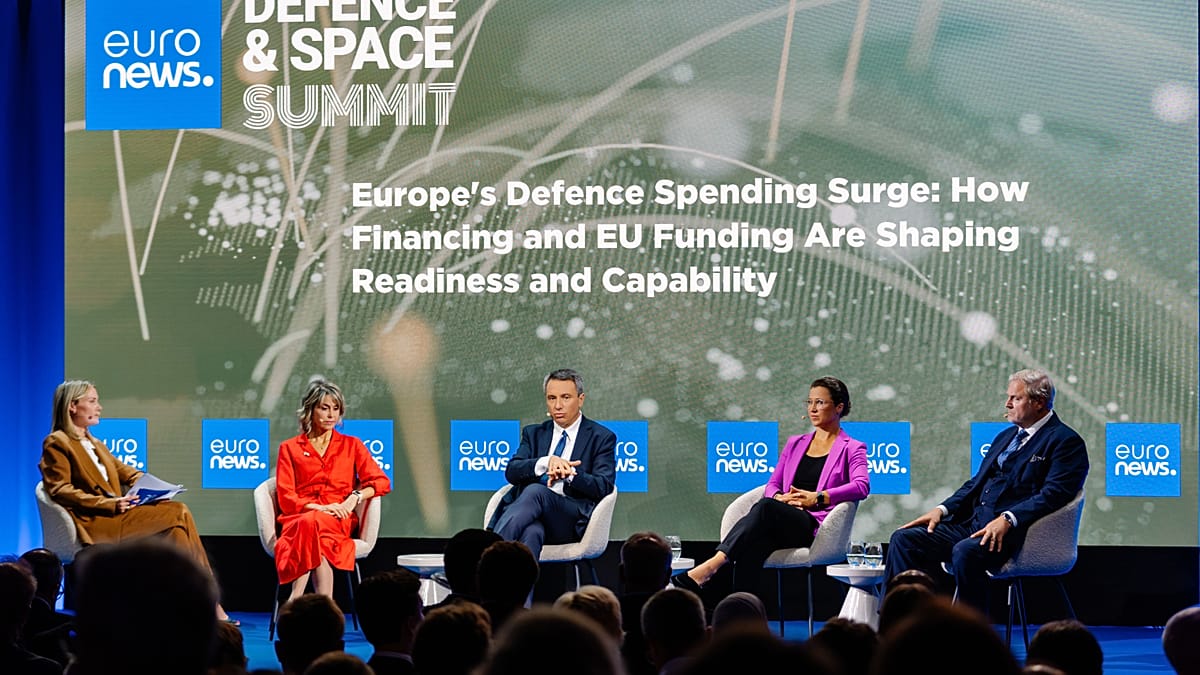
Europe's defence industry is not equipped to deliver the weapons and ammunition needed to support Ukraine and replenish national stockpiles, according to Riho Terras, a former Estonian army general and now a senior member of the European Parliament's centre-right EPP group. Speaking at the Euronews Defence & Space Summit on Wednesday, Terras argued that EU member states should prioritise buying the most effective and affordable capabilities, even if that means sourcing from outside the bloc.
“The European industry is not yet ready to produce in the numbers, in the speed, and in the quality which is needed for our armed forces to speed up quickly the capabilities,” Terras said during a debate on the surge in defence spending. His remarks push back against the European Commission's push for a “Made in Europe” approach to defence procurement, which would require a significant share of components to be produced within the EU.
The debate, moderated by Euronews's Shona Murray, brought together Greens/EFA MEP Hannah Neumann, Camille Grand, secretary-general of the Aerospace, Security and Defence Industries Association of Europe (ASD Europe), and Lorena Boix Alonso, deputy director-general of the European Commission's department for defence industry. All agreed that Europe must spend more on defence and coordinate its efforts better, but they diverged sharply on how to reach the NATO target of 5% of GDP.
Industry faces multiple pressures
Grand argued that European manufacturers are being asked to do too much at once: support Ukraine, rebuild depleted stocks, and drive innovation, all while recovering from decades of underinvestment. He noted that if Germany had consistently spent 2% of GDP on defence over the past two decades, it would have had an additional €400 billion to invest. He also stressed the EU's role in reducing dependence on US suppliers, a point that resonates amid warnings from Washington that protectionist rules could alienate NATO allies.
The European Commission's “Readiness 2030” plan, presented last year, aims to boost production of strategic equipment such as air and missile defence systems, artillery, missiles, ammunition, and anti-drone technology. It includes a €150 billion loan package, but with a condition: at least 65% of the components funded must be European. That provision has become a point of contention, with EU governments split over how to define “Made in Europe” in other industrial legislation.
Terras, who has been a vocal advocate for Ukraine, said the EU should not tie itself in knots over origin rules. “We should buy the best and the cheapest, wherever it is produced,” he said, echoing a sentiment that has gained traction in some capitals, particularly those with smaller domestic defence industries. His stance is a direct challenge to the Commission's industrial strategy, which seeks to build a self-sufficient European defence base.
MEP Neumann took a different view, arguing that the EU must focus on building its own capacity in the medium term. She called for more cross-border projects and a common strategy, warning that if the 27 member states each go their own way, “we will just not have the big puzzle that we need.” She added: “Either we defend the European project together, or there is not going to be a European project anymore.”
Public opinion lags behind
A key obstacle, according to Terras, is public perception. “People in Spain do not believe it,” he said, referring to the threat from Russia. He criticised the Spanish government's reluctance to raise defence spending to 5% of GDP, highlighting the divide between northern and southern EU countries in how they perceive the danger. This gap in threat perception is a recurring theme in European defence debates, as seen in recent discussions at Brussels summits.
Neumann argued that defence spending must be made more acceptable to citizens through transparent debate with their representatives. She expressed concern about the profits being made by defence companies, saying: “If defence companies make huge benefits, I am not sure this is the best [way to invest] taxpayer money.” Her comments reflect a broader unease in some quarters about the ethics of militarisation, even as the EU moves to ramp up its defence posture.
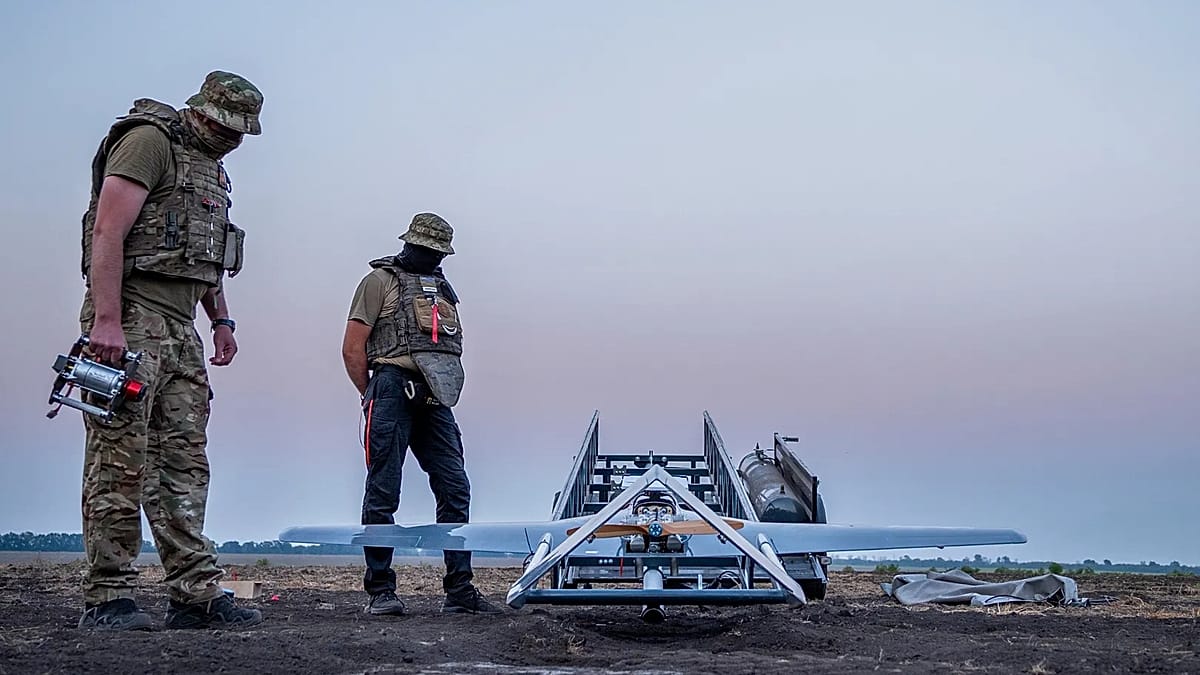
The debate comes at a time when Europe is grappling with the dual challenge of supporting Ukraine and preparing for potential future threats. The Commission's plan, while ambitious, faces practical hurdles: scaling up production takes time, and the industrial base is still recovering from years of low investment. As Estonia's drone industry has shown, innovation can emerge from conflict, but it requires sustained funding and political will.
For now, the EU is caught between the need for immediate capabilities and the long-term goal of strategic autonomy. Whether the “Made in Europe” rule survives the political and practical pressures remains to be seen. What is clear is that the debate over how to rearm Europe is far from settled, and the decisions made in the coming months will shape the continent's security for decades.