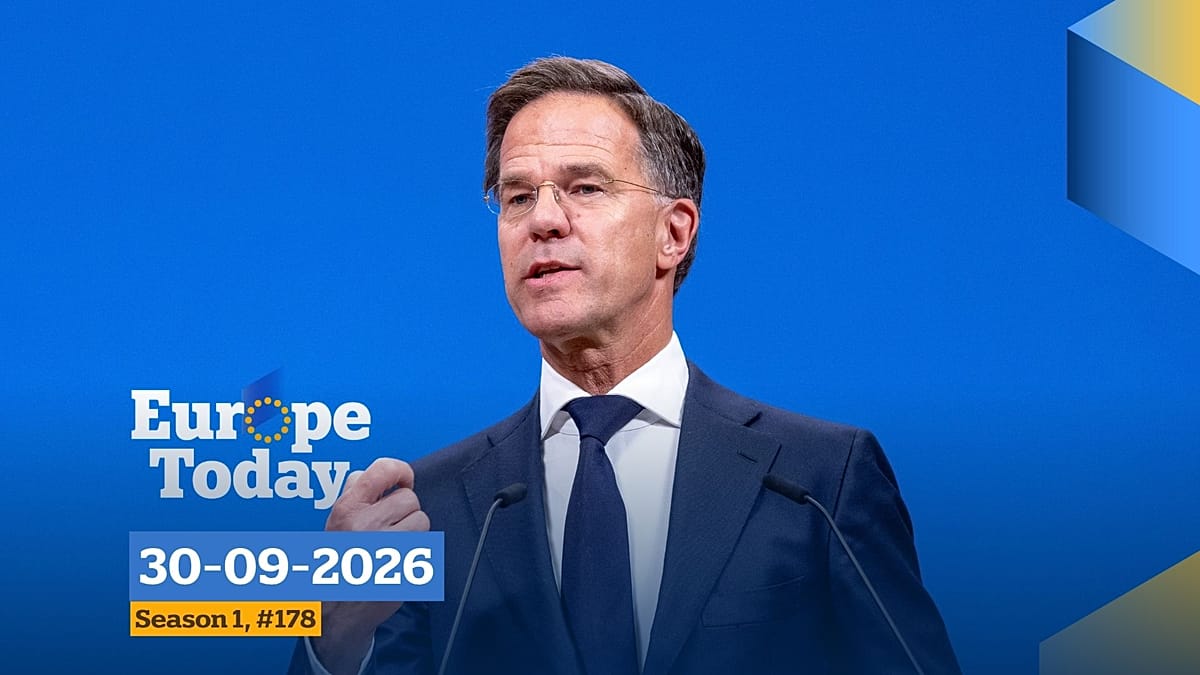
Brussels is hosting Euronews' largest-ever news event, the Defence and Space Summit, bringing together the people shaping Europe's security landscape. NATO Secretary General Mark Rutte is among the senior leaders joining defence ministers, military commanders, and industry chiefs for a day of discussions on the future of defence and space policy.
The summit comes at a moment of heightened urgency for the continent. Russia's war in Ukraine grinds on, and European capitals are grappling with how to sustain military support while rebuilding their own arsenals. The agenda spans everything from drone warfare and space-based intelligence to the future of the transatlantic alliance.
Ukraine's race for interceptor drones
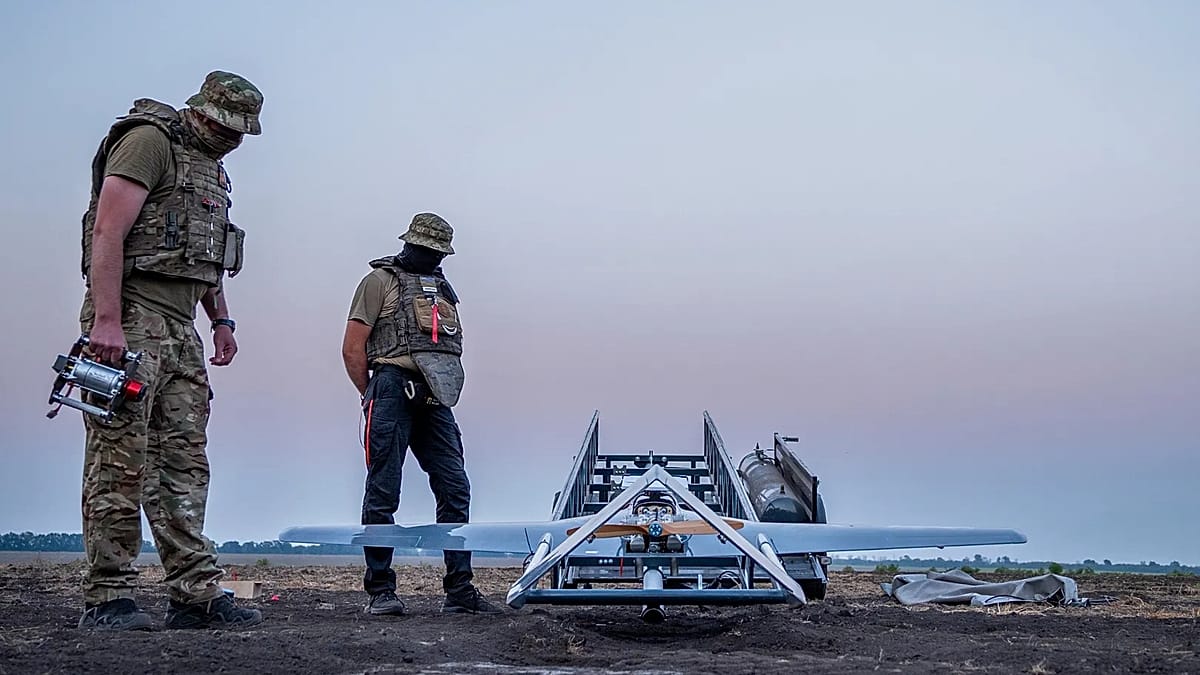
In an exclusive interview, Kyrylo Budanov, head of Ukraine's Presidential Office, spoke with Euronews about Kyiv's efforts to scale up a new generation of interceptor drones. These unmanned systems are designed to counter Russia's jet-powered drone attacks, which have become a hallmark of Moscow's aerial campaign. Budanov described the programme as a critical priority, noting that Ukraine must innovate faster than its adversary to protect cities and critical infrastructure.
The push for interceptor drones reflects a broader shift in modern warfare, where low-cost unmanned systems are increasingly decisive. Ukraine has already demonstrated its ability to develop and deploy drones at scale, but the challenge now lies in industrial production and supply-chain resilience. Budanov's remarks underscore the urgency of moving from prototypes to mass manufacturing.
Transatlantic ties under strain
Another key theme at the summit is the state of the transatlantic partnership. With Washington's "America First" policies under the Trump administration, the US role in European security has become less predictable. Shona Murray reports on how this shift is forcing European nations to reconsider their reliance on American military support and intelligence sharing.
The pressure is not just political but practical. European members of NATO have increased defence spending, yet gaps remain in capabilities such as airlift, satellite communications, and precision munitions. The summit's discussions on space and defence are therefore not abstract—they address concrete vulnerabilities that could shape the continent's ability to act independently.
Estonia, for its part, has blamed Russian special services for an arson attack on a defence firm, an incident that highlights the growing threat of sabotage and hybrid warfare. Such attacks, often carried out by proxies, are designed to disrupt European defence production and sow fear. The Baltic states have repeatedly warned that Russia's tactics extend beyond the battlefield in Ukraine.
The summit also features Sviatlana Tsikhanouskaya, the Belarusian opposition leader, who continues to campaign for democratic change in Minsk. Her presence underscores the broader geopolitical stakes: Belarus remains a staging ground for Russian forces, and its future is intertwined with European security.
As the day unfolds, expect announcements on defence cooperation and space initiatives. The European Union has already moved to boost joint procurement, but member states remain divided over funding mechanisms and the pace of integration. The funding shortfall for Ukraine was a central topic at recent EU defence ministers' talks, and it is likely to resurface here.
For those following the summit, the key question is whether Europe can translate rhetoric into action. The presence of Rutte and other senior officials signals political will, but the real test lies in budgets, contracts, and timelines. As one delegate put it, "We are past the era of declarations; we need deliverables."
The Defence and Space Summit is part of a broader conversation about Europe's strategic autonomy. From SpaceX's recent milestones to the EU's own satellite programmes, space is becoming a contested domain. European leaders are increasingly aware that security in the 21st century depends on what happens both on the ground and in orbit.
With the war in Ukraine entering a new phase and transatlantic relations in flux, the decisions made in Brussels this week could shape the continent's defence posture for years to come. The summit offers a rare opportunity for policymakers, military leaders, and industry executives to align their priorities—and to confront the uncomfortable gaps that remain.