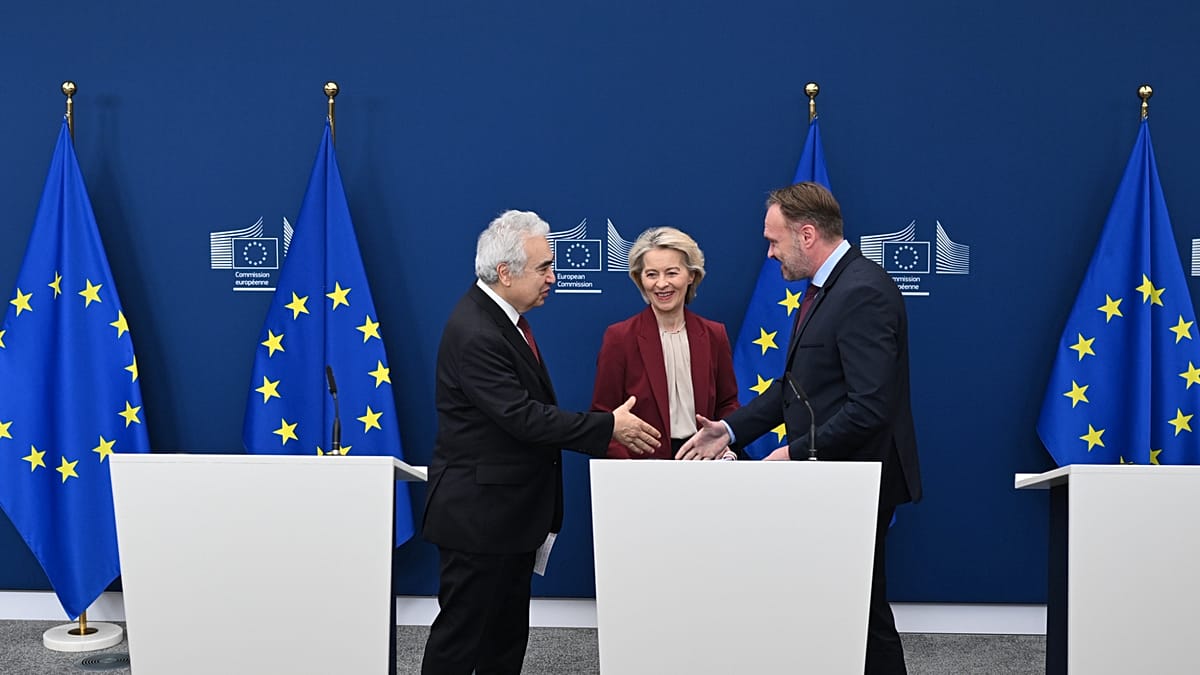
Europe is not staring down an immediate energy-supply emergency, but the coming winter could still inflict severe pain on households and businesses, the European Union's energy commissioner has cautioned. Dan Jørgensen, the Danish official responsible for energy policy in Brussels, said the bloc must shield consumers from another price shock while simultaneously reducing the role of fossil fuels in its economy.
Speaking to reporters on the margins of an informal meeting of energy ministers in Dublin, Jørgensen noted that roughly 50 million Europeans already cannot adequately heat their homes during an ordinary winter. That figure, he suggested, illustrates the social fragility that another surge in prices could expose. "We are looking into all ideas of how we can make rules more flexible, be more efficient in our implementation, do what we can, both on the supply and the demand side," he said.
Emergency measures and strategic reserves
The commissioner welcomed a request from French President Emmanuel Macron for a temporary relaxation of certain fuel rules, which would allow refineries in France to produce more diesel and related products for the domestic market. The move reflects a broader push to bolster internal supply without abandoning climate commitments.
Also present in Dublin was Fatih Birol, executive director of the International Energy Agency, who played down the prospect of another coordinated release of emergency oil stocks. Birol observed that countries have so far drawn down about 20% of their strategic reserves, leaving roughly 80% available should supply disruptions worsen significantly and governments agree on further action. The IEA has previously signalled it stands ready to tap more oil reserves if conditions demand it.
Jørgensen also confirmed that the European Commission intends to postpone by one year the enforcement of parts of the EU's methane regulations that apply to imports. He argued that the delay would ease pressure on energy markets while preserving the bloc's longer-term climate objectives. "We stick to the objectives, we stick to our ambitions, but I'm proposing now that we take part of it, the parts that are connected to imports, and postpone the set and force date by one year," he said.
Green transition versus short-term relief
Despite the current high prices, Jørgensen stressed the need to accelerate Europe's departure from fossil fuels through investment in renewables, electrification and energy efficiency. "Our answer is twofold: doubling down on the green transition and being flexible and pragmatic in this very difficult transition period," he said. "We must help member states, citizens and companies to help this crisis."
However, he ruled out an EU-wide windfall tax on energy companies, leaving individual member states to design national schemes within the existing EU framework. Several countries had urged the Commission to propose such a levy, as it did in 2022. Jørgensen acknowledged that political pressure could lead governments to subsidise fossil fuels, but he urged them to keep any such measures targeted and temporary so that tax policy does not undermine the bloc's energy transition.
Both Jørgensen and Birol called on governments to reconsider tax systems that heavily burden electricity while taxing gas more lightly. If households and industry are to switch from gas and oil to electricity, they warned, electricity must be affordable — particularly during periods of high energy prices. The matter is currently under discussion between the European Council and the European Parliament, with Germany expressing reservations.
Storage and international cooperation
Gas storage remains another concern. EU rules now require an 80% storage target, reduced from 90%, but Jørgensen insisted that countries must still meet it. A significant shortfall this winter could leave the EU entering the next refill season with less gas in reserve, creating what he described as a potentially damaging cycle. The bloc is already heading into winter with thin gas reserves, and the Commission has separately urged member states to cut energy use.
Birol emphasised that cooperation between gas-producing and gas-consuming countries will be critical, pointing to Norway, Canada and even Nigeria as suppliers that can help Europe manage disruptions. With global markets still tight, the coming months will test both the EU's crisis-management tools and its political cohesion.