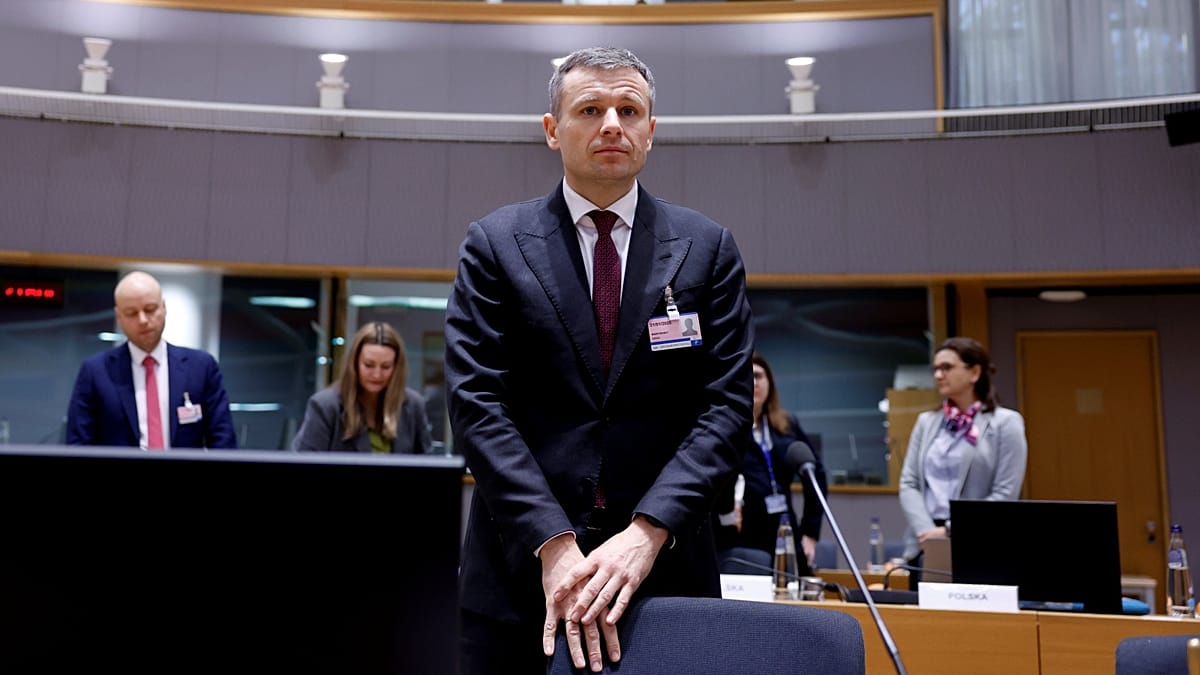
Ukraine's finance minister, Sergii Marchenko, used a donors' meeting in Brussels this week to press the European Union to convert its stockpile of immobilised Russian central bank assets into direct support for Kyiv, warning that the country faces a financing gap of roughly $78 billion (€68.8 billion) in 2027 if allies do not move.
Speaking to representatives of international financial institutions and donor governments, Marchenko framed the use of the assets — some €210 billion of which sit in the Brussels-based depository Euroclear — as both a practical and a moral necessity. According to officials briefed on the closed-door discussions, he argued that tapping the funds would help Ukraine cover extraordinary wartime costs, preserve its debt sustainability and force Moscow to bear part of the cost of its own aggression.
A widening hole in the 2027 budget
The numbers Marchenko laid out are stark. Of the $52.6 billion in financial assistance Ukraine needs from donors, only about $20 billion has been committed, leaving a $32.6 billion shortfall. A further $45 billion in defence spending has no allied guarantees behind it. Combined, that produces the $78 billion gap.
The shortfall is being compounded by Russia's unrelenting air campaign, which has disrupted civilian life, damaged power infrastructure, destroyed industrial capacity and made tax collection harder. Moscow has recently begun targeting Ukrainian data centres in an effort to degrade the country's digital economy and communications networks. Meanwhile, the Black Sea blockade has cut Ukrainian farmers off from the maritime routes they rely on to sell grain to global buyers — a situation that, as Kyiv has warned, could add billions to global food costs.
"We need our friends, our European politicians, to be brave enough and to make some bold actions," Marchenko said at a panel hosted by the European Policy Centre. "Unfortunately, the war is longer, the war is harder, and we need to provide some resolution of frozen Russian assets or provide other means for us to survive."
He also acknowledged a domestic problem: "It's the first time since 2022 we realised that we have underperformance in our tax and customs administrations."
Belgium's veto and the €90 billion fallback
This is not the first attempt to put the Russian assets to work. Last year the European Commission proposed channelling them into a zero-interest credit line for Ukraine. The plan collapsed at a December summit when Belgium, where Euroclear is based and which would carry the legal risk, assembled a blocking majority.
As a fallback, EU leaders agreed on a €90 billion joint-debt loan, split evenly between €45 billion for 2026 and €45 billion for 2027. Marchenko welcomed the facility but was blunt: "We're very happy with the €90 billion. But it's not sufficient."
Sweden, the Netherlands, Spain and Poland, with backing from the Baltic states, have echoed that assessment and called for fresh options on the Russian assets. Belgium has pushed back immediately, while Italy and France — two decisive votes in the Council — remain sceptical about touching sovereign funds, according to diplomats.
Marchenko has floated a centralised, legally sound framework, including transferring the assets from Euroclear into an EU-owned custodian to reduce the legal exposure currently borne by Belgium. He made a similar case on Monday at an event examining that idea.
Brussels wants reforms first
The Commission, bruised by December's defeat, insists its priority is disbursing the €90 billion loan — a process slowed by the pace of reform in Ukraine's parliament. EU officials have grown frustrated that Kyiv is requesting new money while failing to complete the steps needed to unlock assistance already agreed.
"Our message to our Ukrainian friends is clear: deliver the agreed reforms, so we can continue supporting you financially," enlargement commissioner Marta Kos said in her opening remarks at Tuesday's conference. "The government, the Rada and institutions across Ukraine need to unite around this collective effort and act with determination to deliver the reforms."
For the past month the Commission has been in intensive talks with Kyiv and the International Monetary Fund to pin down the precise size of the shortfall. Ukraine initially flagged a $27 billion gap in its defence ministry for this year, a figure that has since been revised downward — a sign of how fluid the estimates remain.
The political arithmetic in Brussels is unlikely to shift quickly. Any decision to confiscate or repurpose the Russian assets would require unanimity among the 27 member states, and the legal, financial and diplomatic stakes — including the precedent it would set for the euro's role as a reserve currency — mean the debate will run well into next year. For now, Kyiv's message is that the clock is running faster than the negotiations.