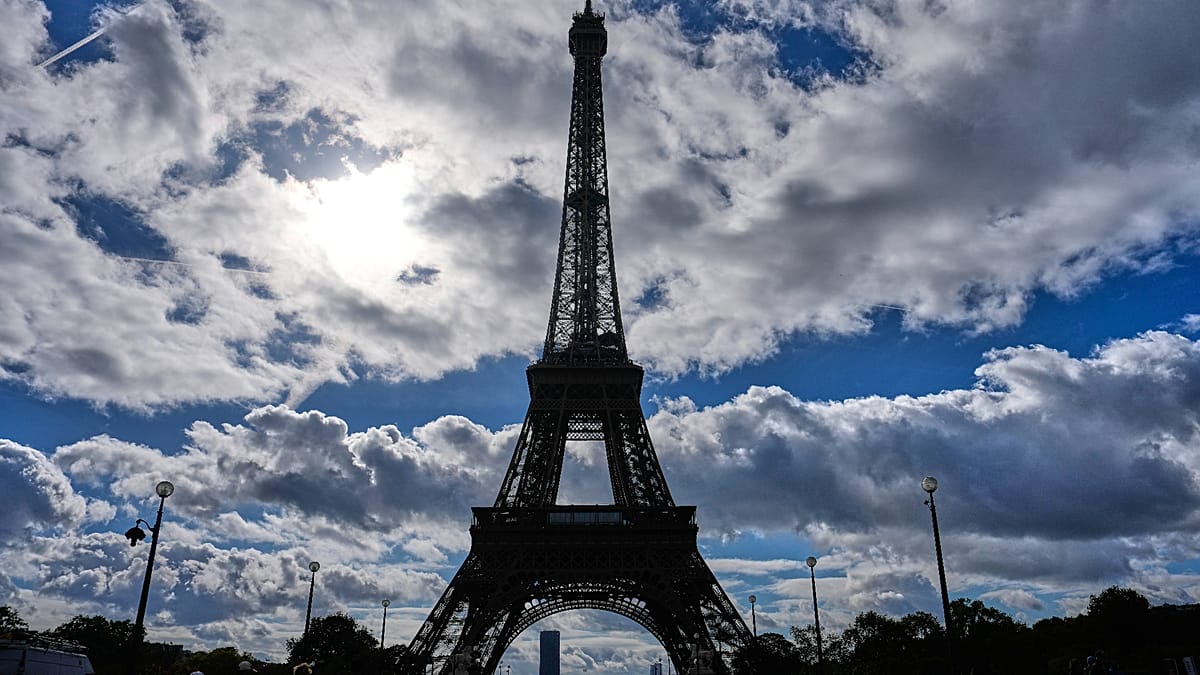
The Eiffel Tower will soon have a new leader. Patrick Branco Ruivo, chief executive of the Société d'Exploitation de la Tour Eiffel (SETE), announced on Tuesday that he will leave his post at the end of the year, following a controversy over the exclusion of female employees during a visit by a Hindu religious group.
Ruivo, who has headed SETE since 2018, saw his position severely weakened after the incident in early September, when members of the Bochasanwasi Akshar Purushottam Swaminarayan Sanstha (BAPS), an ultraconservative Hindu movement, were hosted at the monument. According to a staff statement, some female employees were asked to leave their posts and withdraw to other rooms during the visit.
The decision sparked a strike by Eiffel Tower staff and forced the closure of Paris's most iconic landmark for an entire day on 7 September. The walkout drew national attention and prompted the mayor of Paris, Emmanuel Grégoire, to order two investigations.
Internal probe finds 'unacceptable situation'
The internal inquiry, whose findings were released on Tuesday, "brought to light a series of malfunctions and shortcomings in the organisation of protocol visits," which "resulted in the exclusion of female staff on the day of the visit, an unacceptable situation," SETE said in a statement.
The company did not specify whether any other disciplinary measures would be taken, but the announcement of Ruivo's departure is widely seen as a direct consequence of the affair. The Eiffel Tower, one of the most visited monuments in the world, employs 402 people and welcomes about 6.7 million visitors each year, generating an annual turnover of €156 million.
SETE is a local public company owned 99% by the City of Paris and 1% by the Greater Paris Metropolis. The search for a new director will be overseen by the city hall, which has stressed the need to restore confidence among staff and the public.
The incident has also reignited debates about gender equality in French workplaces, particularly in high-profile public institutions. It echoes broader concerns across Europe about the treatment of women in traditionally male-dominated sectors, as seen in Spain's recent moves to support female athletes and the ongoing protests by French police over working conditions.
While the Eiffel Tower has long been a symbol of Parisian elegance and engineering prowess, its management now faces the challenge of rebuilding its reputation. The departure of Ruivo is a clear signal that the city takes the incident seriously, but questions remain about how such protocol visits will be handled in the future to ensure that no staff member is discriminated against.
For now, the Iron Lady—as the tower is affectionately known—will continue to welcome millions of visitors, but its leadership will change hands. The next director will inherit not only a beloved monument but also a mandate to uphold the values of equality and respect that are central to French public life.