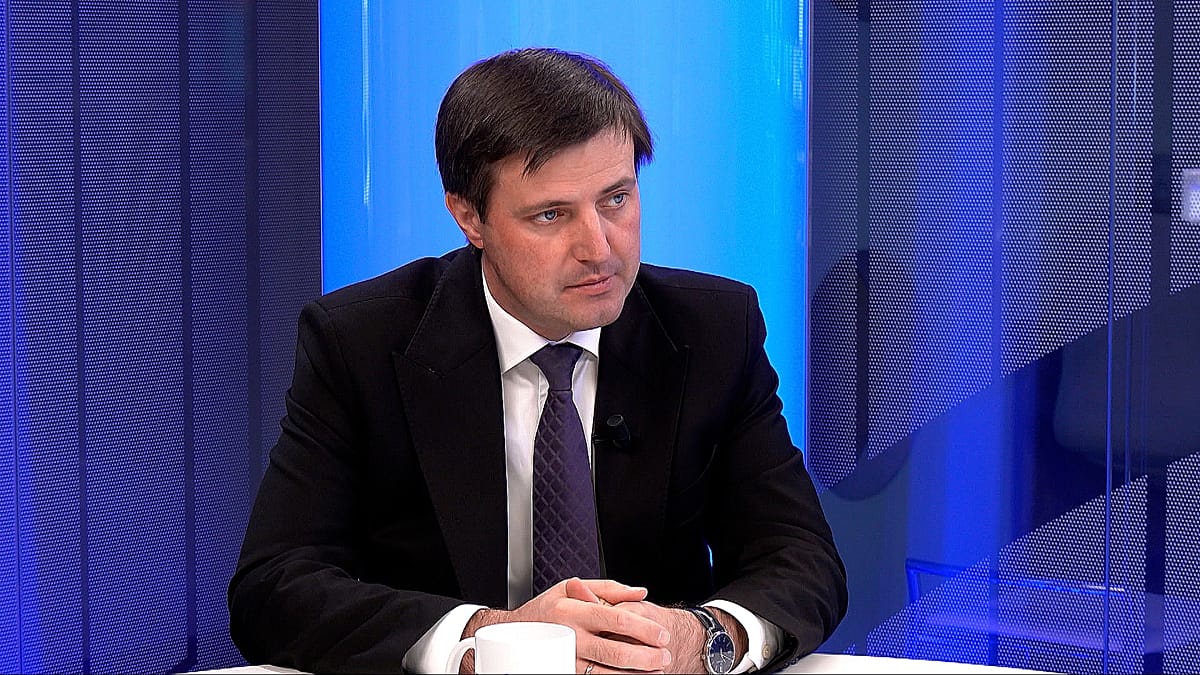
Russia's ongoing blockade of Ukraine's Black Sea export routes is becoming "critical," with potentially severe consequences for global food prices, according to Ukraine's Minister for Agrarian Policy and Food, Taras Vysotskyi. In an interview with Europe Today, he warned that consumers worldwide could face an additional $60 billion in costs within a year if the situation persists.
"We can already see that on average, grain prices have increased by 25 percent," Vysotskyi said. "If you multiply it by the overall grain and food consumption out of grain, within a year, it could mean up to $60 billion in additional costs for consumers throughout the world."
The warning comes as Russia has intensified strikes on Ukrainian vessels and port infrastructure in the Black Sea, a route that Kyiv relies on for roughly 90 percent of its agricultural exports. Attacks on storage facilities inside Ukraine have also escalated, further threatening the country's ability to deliver harvests to international markets.
Solidarity lanes offer partial relief
Despite the mounting pressure, Vysotskyi said Kyiv is making "some progress" in getting Ukrainian grain to market, partly through the EU's "solidarity lanes"—alternative transport corridors established to bypass the Black Sea. These routes have become a lifeline for Ukrainian agriculture, though they cannot fully replace the capacity of the sea ports.
The blockade has broader implications for European food security and prices, as Ukraine is a major supplier of wheat, corn, and sunflower oil to many EU member states, as well as to countries in the Middle East and Africa. The disruption is already being felt in markets from Warsaw to Rome, and the EU has been exploring ways to ease the pressure on both Ukrainian farmers and European consumers.
Vysotskyi acknowledged ongoing negotiations with international partners, including the possibility of a mediated deal with Russia. "We are ready to create the safety conditions in the Black Sea for all of the civil goods, including Ukrainian agricultural commodities. We are open to it," he said.
However, he expressed deep skepticism about Moscow's reliability. "The reality is that we can never trust what's going to happen tomorrow, or after any kind of memorandum or deal is done," the minister said, reflecting Kyiv's cautious stance after previous agreements were violated.
The crisis adds to the twin pressures Ukraine faces: a severe budget shortfall and the ongoing grain blockade. The government in Kyiv has been pressing the EU for urgent financial support, as the war continues to drain resources and the agricultural sector struggles to export its produce.
EU defence ministers recently discussed Ukraine's funding shortfall during talks in Brussels, underscoring the urgency of the situation. Meanwhile, the bloc is also grappling with broader security concerns, including Russian hybrid sabotage, which has raised alarms across member states.
For now, Ukraine continues to rely on the solidarity lanes and the goodwill of its European partners to keep its agricultural exports flowing. But as Vysotskyi's warning makes clear, the cost of inaction could be measured in billions of dollars—and in the empty shelves of households far beyond Europe's borders.