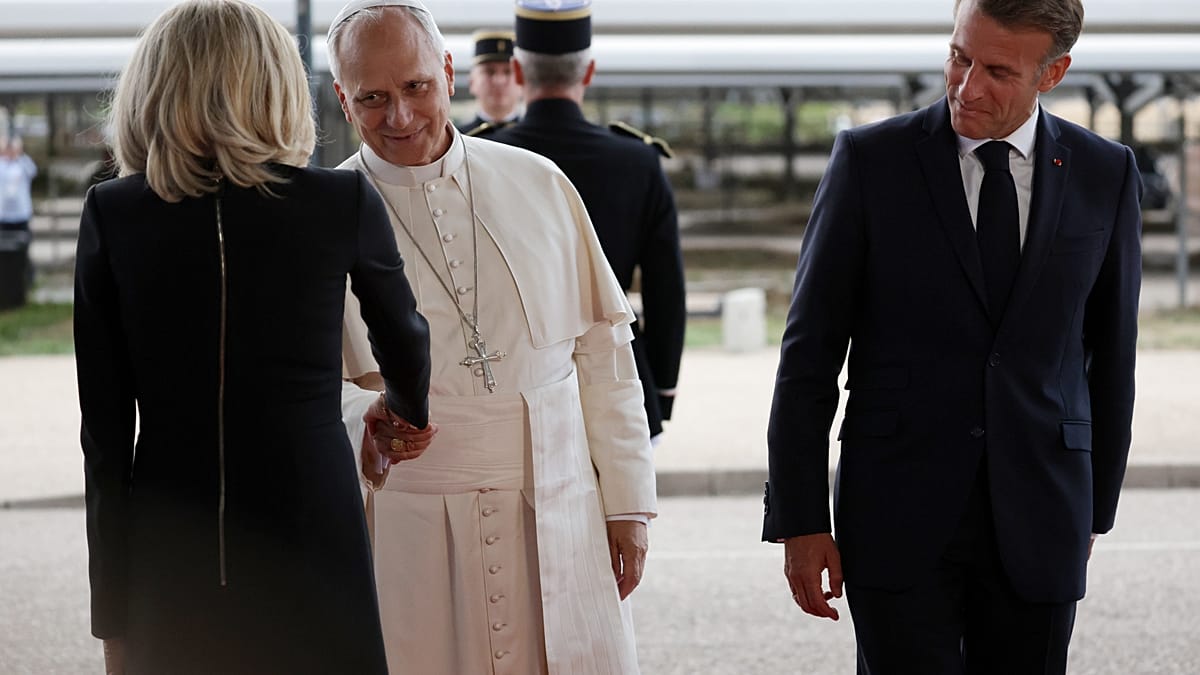
Pope Leo XIV wrapped up his four-day visit to France on Monday in the eastern city of Metz, using his final address to urge Europe to rediscover its Christian roots and tradition of dialogue as a counterweight to the forces driving today's conflicts.
Speaking in the capital of the Grand Est region, the pontiff warned that many of the wars currently afflicting the continent and its neighbourhood stem from what he called a “desire for domination” – a tendency he said Europe must resist by drawing on its shared cultural and spiritual inheritance.
A symbolic setting
Metz, a city that has changed hands between France and Germany several times over the past century and a half, provided a fitting backdrop for the Pope's message on reconciliation and unity. The city's Gothic cathedral, with its vast stained-glass windows by Marc Chagall, stands as a testament to the intertwined histories of the two nations.
The Pope's choice of Metz was widely seen as a nod to the Franco-German friendship that underpins the European project. It was in nearby Strasbourg, just an hour away, that the Council of Europe and the European Parliament now sit, institutions born from the ashes of the Second World War.
During his visit, the Pope also paid tribute to Robert Schuman, the French foreign minister whose 1950 declaration laid the groundwork for the European Coal and Steel Community, the forerunner of today's European Union. Schuman, a native of Lorraine, is often regarded as one of the founding fathers of a united Europe.
“Europe must not be afraid to draw on its Christian heritage and its culture of dialogue,” the Pope said, according to Vatican Radio. “It is precisely this heritage that can help the continent face the challenges of our time.”
The visit came at a delicate moment for France, where the political landscape has shifted markedly in recent years. The far-right has made significant inroads, and the country's relationship with the EU has been tested by debates over sovereignty and identity. The Pope's message of unity may resonate with those who fear that the continent is drifting apart.
His comments also touched on the broader international situation, with wars raging in Ukraine and the Middle East. The Pope has repeatedly called for peace in these conflicts, and his Metz address was no exception, urging leaders to choose dialogue over confrontation.
The visit to France was the Pope's first since his election, and it included stops in Paris and the southern city of Marseille, where he met with migrants and young people. In Marseille, he celebrated Mass at the Stade Vélodrome, drawing tens of thousands of worshippers.
In Metz, the Pope also met with local clergy and visited a shelter for the homeless, underscoring his focus on social justice. His itinerary reflected a desire to engage with the realities of modern France, from urban centres to the provinces.
The trip has been closely watched in Rome, where the Vatican is navigating its own challenges, including the fallout from recent scandals and the need to address the decline in church attendance across Europe. The Pope's emphasis on heritage and dialogue is seen as an attempt to reposition the Church as a moral voice in a secularising continent.
As he departed for Rome, the Pope left behind a message that many in Europe will ponder: that the continent's strength lies not in domination, but in its ability to listen, to share, and to build together. Whether that message will be heeded remains to be seen, but for now, it has been delivered with clarity and conviction.