In central Kyiv, a Russian drone strike on Monday afternoon targeted the National Academy of Sciences, killing one person and injuring six. As emergency crews arrived to assess the damage, a second drone attempted to strike the same site—a tactic known as a double-tap. Air defences intercepted the second attack, and Euronews correspondent Sasha Vakulina captured the moment on camera. The State Emergency Service confirmed the first strike was a direct hit by a jet-powered drone on the three-storey building.
The attack is a stark reminder of the daily dangers Ukrainians face as Russia's full-scale invasion grinds into its fifth year. For European allies, it underscores the urgency of maintaining military and financial support for Kyiv.
Budget crunch deepens
On Tuesday, Brussels hosts a meeting of the Ukraine Donor Platform, bringing together allied nations and financial institutions to mobilise assistance. The gathering comes as Ukraine's Ministry of Defence faces a $20 billion budget shortfall—down from an initial $27 billion after austerity measures, but still a significant gap. The European Commission and the International Monetary Fund have been in intense talks with the Ukrainian government for the past month to pin down the exact deficit and design solutions, but no agreement has yet emerged.
Kyiv has warned that the shortfall could jeopardise $9 billion in drone deliveries, which are crucial for countering Russian advances. A Commission spokesperson said the meeting aims to bring together international partners ready to discuss bridging the budgetary gap. The Commission will be represented by Marta Kos, the enlargement commissioner, who has urged Ukrainian authorities to speed up reforms linked to EU financial assistance. If legislation stalls, payments could be delayed, worsening the situation.
Ukraine's Finance Minister Sergii Marchenko, who will represent Kyiv at the meeting, recently described the current budget as the tightest since the start of the war. The stakes are high: without swift action, Ukraine's ability to sustain its defence and basic state functions could be severely compromised.
Grain exports under siege
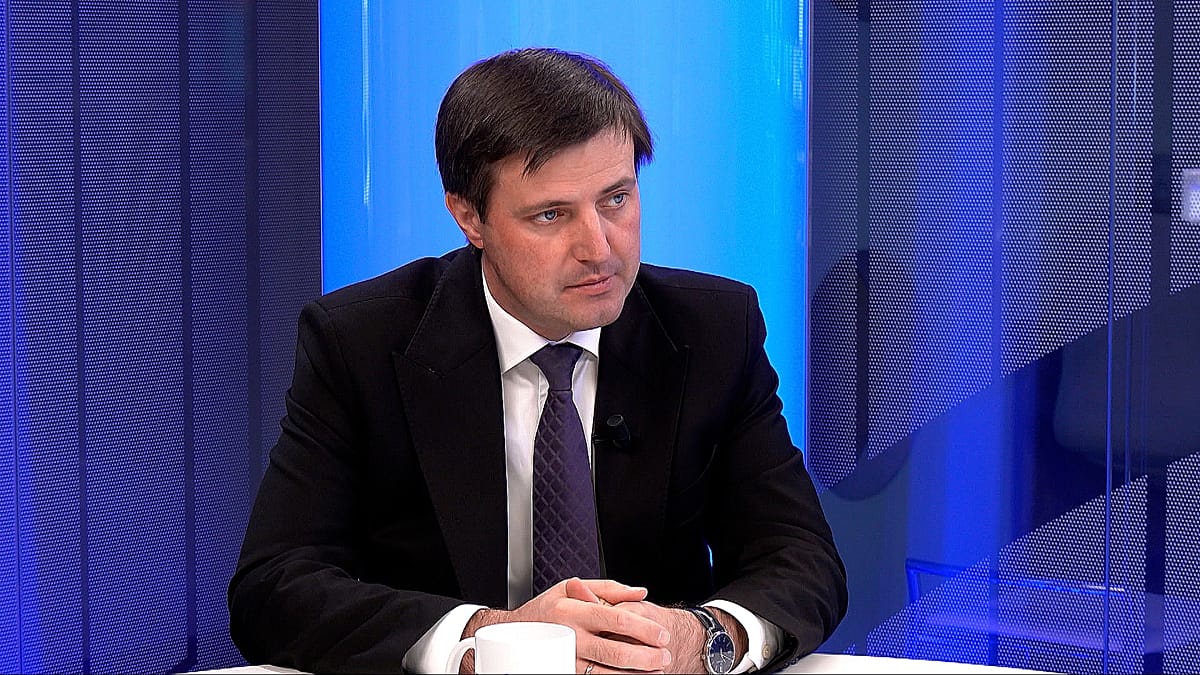
Beyond the budget crunch, Ukraine is facing a second crisis: the blockade of its Black Sea export routes. Taras Vysotskyi, Ukraine's Minister for Agrarian Policy and Food, told Euronews that the situation has become "critical," with global grain prices already up by 25% on average. He warned that if the blockade persists, consumers worldwide could face up to $60 billion in additional costs within a year.
Russia has intensified strikes on Ukrainian Black Sea vessels and infrastructure, on which Kyiv relies for around 90% of its agricultural exports. Attacks on storage facilities inside Ukraine have also increased. Vysotskyi said Kyiv is making "some progress" in getting harvests to market, including through the EU's "solidarity lanes"—alternative transport corridors established to bypass the blockade.
Asked about the possibility of a negotiated deal with Russia brokered by international partners, Vysotskyi said Ukraine is open to creating safety conditions in the Black Sea for all civilian goods, including agricultural commodities. However, he expressed deep scepticism about trusting Moscow: "The reality is that we can never trust what's going to happen tomorrow, or after any kind of memorandum or deal is done."
Tobias Cremer, a German Member of the European Parliament from the Socialists and Democrats group, told Euronews that Putin's battlefield progress is "that of a snail," prompting him to lash out through grain export restrictions and hybrid campaigns against European allies. "This war that Putin conducts in Ukraine against Ukraine is not purely about Ukraine," Cremer said. "For him, this is a war against the European order of peace. It's a war to undermine the unity of NATO, and it's a war to undermine the way we are living in our free democracies."
The dual pressures of funding and grain exports are intertwined. Without adequate budget support, Ukraine's ability to defend its ports and export routes could weaken, further destabilising global food markets. The EU's response in the coming weeks will be critical.
Meanwhile, the European People's Party (EPP), the EU's largest political group, is set to discuss the membership of Aleksandar Vučić's Serbian Progressive Party (SNS). The Serbian president recently resigned to run for prime minister, but his handling of opposition protests and ties to Vladimir Putin have triggered a scrutiny process that could lead to expulsion. The glorification of Bosnian Serb war criminal Ratko Mladić at his funeral has further angered EU officials, with many calling for sanctions against SNS.
As winter approaches, the EU is also facing a gas supply crunch, with Brussels warning that the energy price crisis could become a supply problem. Energy Commissioner Dan Jørgensen has highlighted the need for member states to reduce consumption and fill storage facilities. The bloc's thin gas cushion is a reminder that energy security remains a pressing concern.
For Ukraine, the immediate priorities are clear: close the budget gap, secure grain exports, and maintain international solidarity. The meetings in Brussels are a step in that direction, but the clock is ticking.