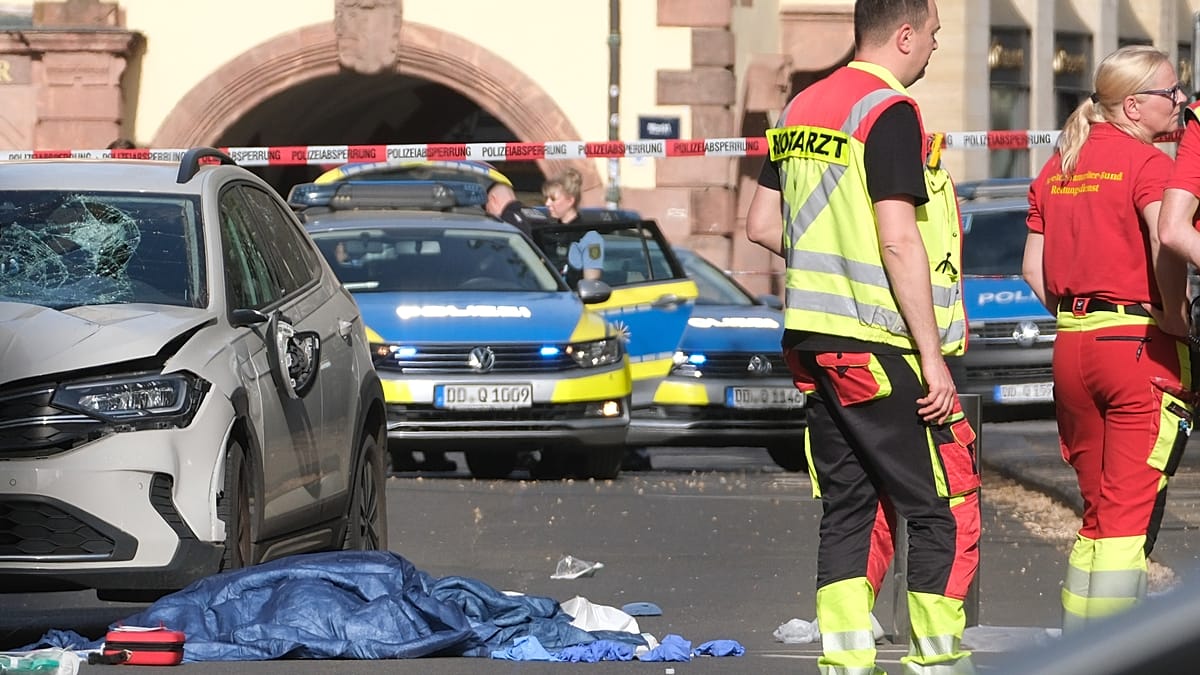
In the wake of a deadly car ramming in Leipzig that left two people dead and several seriously injured, a wave of false and unverified images has flooded social media. The suspect, identified by German media as Jeffrey K., a 33-year-old Leipzig resident born in Germany, has been linked in doctored photographs to both the left-wing anti-fascist movement Antifa and the far-right Alternative for Germany (AfD) party. Authorities, however, have stated that there is currently no evidence of a political or religious motive behind the attack.
One widely shared image purported to show the suspect wearing a T-shirt emblazoned with the logo “Antifa International.” Euronews’ fact-checking team, The Cube, was unable to independently verify the origin of this image. German fact-checkers traced one of its earliest uploads to an account that posted what appeared to be a genuine photo of the suspect in a green shirt alongside the manipulated version. The uploader claimed to have found the image on the niche website “Pr0gramm,” but searches of that platform turned up no evidence of the picture. A screenshot of the image indicated the account was located in California and used a template for an Instagram display, suggesting digital manipulation. Another account that amplified the picture later admitted it was fake, despite Elon Musk’s AI chatbot Grok initially deeming it authentic.
Simultaneously, a doctored version of the same image showing the suspect in an AfD T-shirt circulated online. Analysis clearly showed it had been digitally altered. Some posts sharing the AfD image did so to highlight how easily photos can be manipulated, but others—some with thousands of views—used it to claim the suspect was an AfD voter. The spread of these false images underscores the challenges of verifying information in the immediate aftermath of a traumatic event.
Misleading Protest Footage
Beyond the manipulated photographs, several videos on TikTok and X claimed to show thousands of people gathering in Leipzig to demand new elections and support the AfD following the attack. One such video garnered tens of thousands of views. However, a reverse image search revealed that the footage was not current and was unrelated to the incident; it actually showed a protest in Nuremberg from February 2025. This misattribution adds to the confusion and potential for political exploitation.
Authorities have released limited information about the suspect, confirming that he had previously come to their attention for “threats and defamatory offences in his social circle” and had been admitted and treated in a psychiatric hospital. The investigation continues, but officials have not indicated any ideological motivation. The incident has reignited debates about public safety and political extremism in Germany, but the false images risk inflaming tensions without factual basis.
This episode is a stark reminder of the need for rigorous fact-checking, especially in the charged atmosphere following violent events. As reports on the Leipzig ramming continue to develop, it is crucial to rely on verified information from authorities and reputable sources.