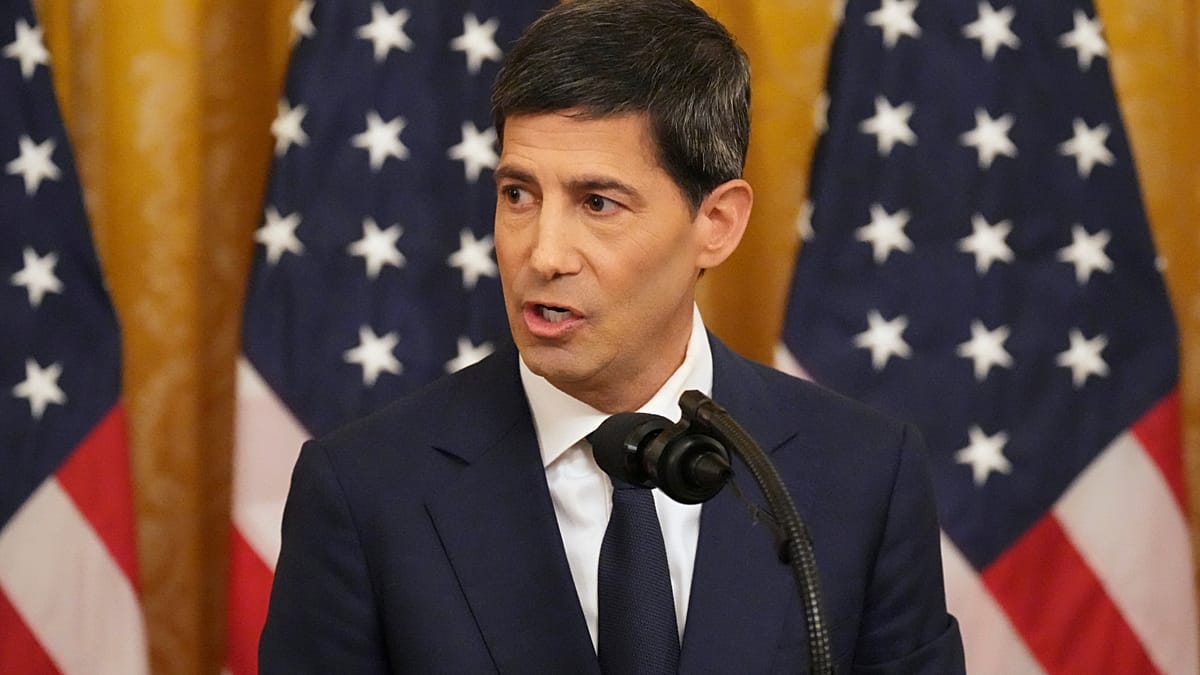
The Federal Reserve left its benchmark interest rate unchanged at 3.6% during its first policy meeting under Chair Kevin Warsh, but the central bank's updated projections revealed a significant shift: nine of 19 officials now anticipate at least one rate increase before the end of 2026. Six policymakers penciled in two or more hikes, a stark departure from March, when no one expected a rise and the committee collectively forecast a single cut next year.
The change reflects mounting concern over inflation, which has climbed to a three-year high of 4.2%, driven largely by higher energy costs following the Iran conflict that began on 28 February. The Fed removed language from its statement that had previously suggested its next move would be a rate cut, and it also struck forward guidance—a move consistent with Warsh's past criticism of such projections for potentially locking the central bank into a specific policy path.
Warsh's First Meeting and New Task Forces
Warsh, appointed by President Donald Trump after his predecessor Jerome Powell faced White House pressure to lower rates, did not submit his own interest-rate projection. He encouraged colleagues to do so but has long argued that the quarterly forecasts can constrain the Fed. At a press conference, Warsh announced he is forming five task forces to examine the Fed's communication, data sources, and inflation frameworks, aiming to ensure the institution remains “clear-eyed and focused on the future.”
Powell, who remains on the Fed's board after Trump's attacks backfired, voted in favor of the rate hold. The decision leaves Warsh in a delicate position: raising rates to combat inflation could slow borrowing and spending, potentially increasing mortgage and auto loan costs just ahead of the midterm elections—a move that would likely draw White House ire.
Inflation and Economic Crosscurrents
While a potential peace deal in the Iran conflict could ease gas prices, many economists caution that underlying inflationary pressures persist. Prices for goods and services such as clothing, dental care, and child care were already rising before the war, and inflation has exceeded the Fed's 2% target for five consecutive years. “We’ve missed for five years, and we’re gonna fix that,” Warsh said, stressing the committee's commitment to price stability.
At the same time, the labor market has strengthened. A government report earlier this month showed employers added 172,000 jobs in May, marking the third straight month of solid gains. That removes a key rationale for rate cuts, which had been expected earlier in the year when job losses seemed possible. The Fed had forecast two rate reductions in 2026 based on a weakening employment outlook, but the recent data has upended those assumptions.
Stuart Clark, portfolio manager at Quilter, noted: “This situation is entirely of the US's own making, and with energy prices likely to remain elevated relative to the start of the year, inflation isn't going to suddenly begin to fall.” He added that given the employment figures and strong consumer spending, “it is not out of the realm of possibility that the Fed will have raised rates by the end of this year, instead of cutting them as was expected at the start of 2026.”
The Fed's shift has implications for European markets and monetary policy. The European Central Bank recently raised rates for the first time in three years, driven by similar inflation pressures from the Iran conflict. Meanwhile, EU energy ministers are considering releasing jet fuel reserves as the Hormuz crisis continues to disrupt supply chains. These parallel moves underscore how global energy shocks are forcing central banks on both sides of the Atlantic to recalibrate their strategies.
Warsh's earlier advocacy for lower rates, citing AI's potential to boost productivity and reduce costs, now seems at odds with the current inflationary environment. Many economists remain skeptical, noting that heavy investment in semiconductors and computing equipment is itself contributing to price pressures in the short term. The coming months will test whether the Fed can navigate these crosscurrents without derailing economic growth.