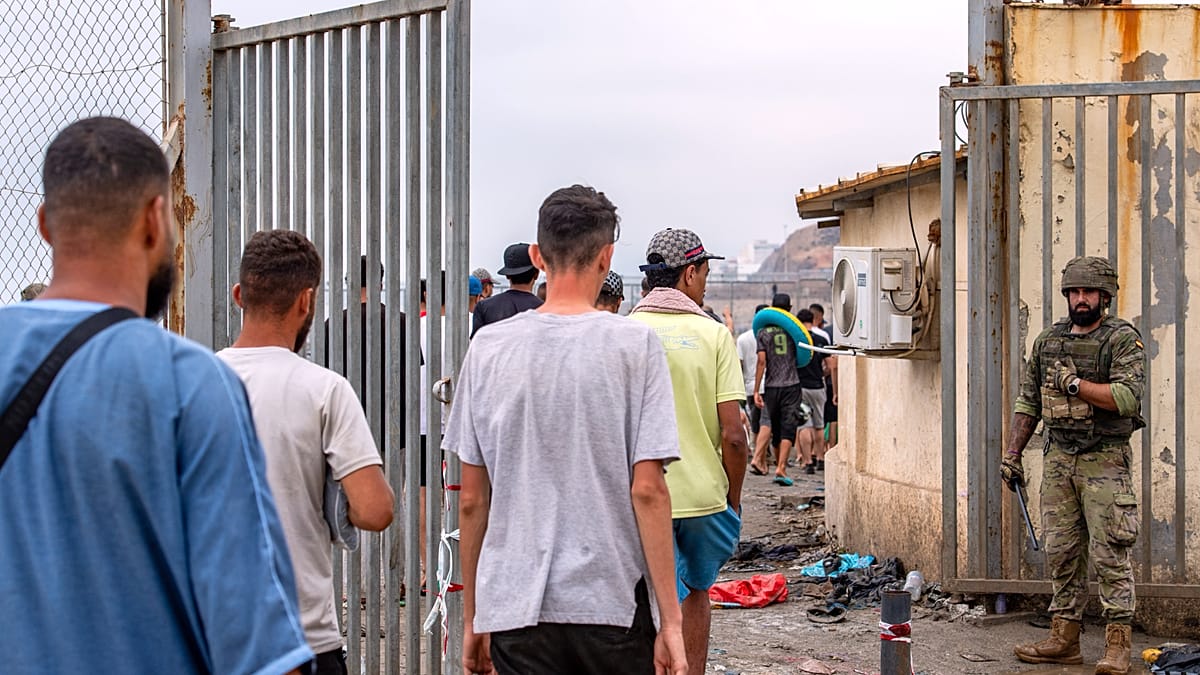
The Spanish autonomous city of Ceuta is slowly trying to regain a semblance of normality after days of turmoil. Authorities have begun installing protective barriers along the breakwater where, according to official estimates, at least 60,000 people crossed irregularly from Morocco last week. The barriers are part of a broader effort to prevent a repeat of the mass influx that overwhelmed the city's infrastructure and tested the limits of Spain's migration policy.
Yet the aftermath of the crisis is still visible. An undetermined number of migrants remain on the streets, and local officials suspect that some are being sheltered by friends or relatives already residing in the city. The presence of these individuals, many of whom have not been formally registered, adds to the uncertainty that hangs over Ceuta's daily life.
One resident, reflecting on the moment the crowd surged across the border, described the fear that gripped the city:
“Honestly, it was scary. When that whole stampede came in, that whole crowd came rushing in. Yes, we were scared, to be honest. The truth is, we were really scared. The thing is, the Armed Forces—they’ve arrived—thank God—and they’ve left.”
The departure of the military, which had been deployed to reinforce security, has left some residents feeling exposed, even as the immediate threat appears to have subsided. The Ceuta Business Confederation has reported that local shops and services have resumed operations, but the reopening is being done “with caution.” Many business owners are wary of a renewed surge and are keeping a close eye on the situation.
A city on edge
The crisis has also disrupted long-standing traditions. Ceuta would normally be celebrating its Patron Saint Festivities in honour of the Virgin of Africa this week, but the celebrations have been cancelled—an unusual step that underscores the gravity of the moment. The cancellation has added to an already charged social atmosphere, marked by a mix of fear, uncertainty, bewilderment, and anger, but also compassion for those who arrived in search of a better life.
One would-be migrant, who gave his account while sleeping rough in the city, explained his motivations:
“I came here to find a new life. My father, my family, all are poor. But now we’re here. We’re trying to get by. Sleeping on the street. We’re here. Life is really hard.”
He said he had spent time in Ceuta before and has no immediate plans to leave, reflecting the determination of many migrants who see the enclave as a gateway to Europe, despite the legal and practical obstacles they face.
The situation in Ceuta has reverberated far beyond the city limits. In Brussels, European Commission President Ursula von der Leyen has sought to reassure member states that no migrant from Ceuta has reached mainland Spain or the broader Schengen area, as she confirmed in a statement. That reassurance, however, has done little to quell the political fallout. Twenty-two EU member states have demanded emergency talks on the Ceuta surge, reflecting the deep divisions over how to handle migration at the bloc's external borders.
Spain's Prime Minister Pedro Sánchez has pushed back against criticism from some EU partners, accusing them of prejudice and political attacks rather than constructive engagement. The episode has also reignited debates about the future of the Schengen area, with Italy among those calling for its suspension in response to the crisis. As the pressure on Schengen grows, the legal and political deadlock over returns has become more apparent, with Spain struggling to repatriate migrants due to a lack of cooperation from Morocco and legal hurdles at home.
For now, Ceuta is attempting to return to a routine that was violently disrupted. The barriers along the breakwater are a visible reminder of the fragility of the city's borders, and the cancelled festivities a symbol of a community that is still processing what happened. The road to normality, as local leaders have acknowledged, will be long and cautious.