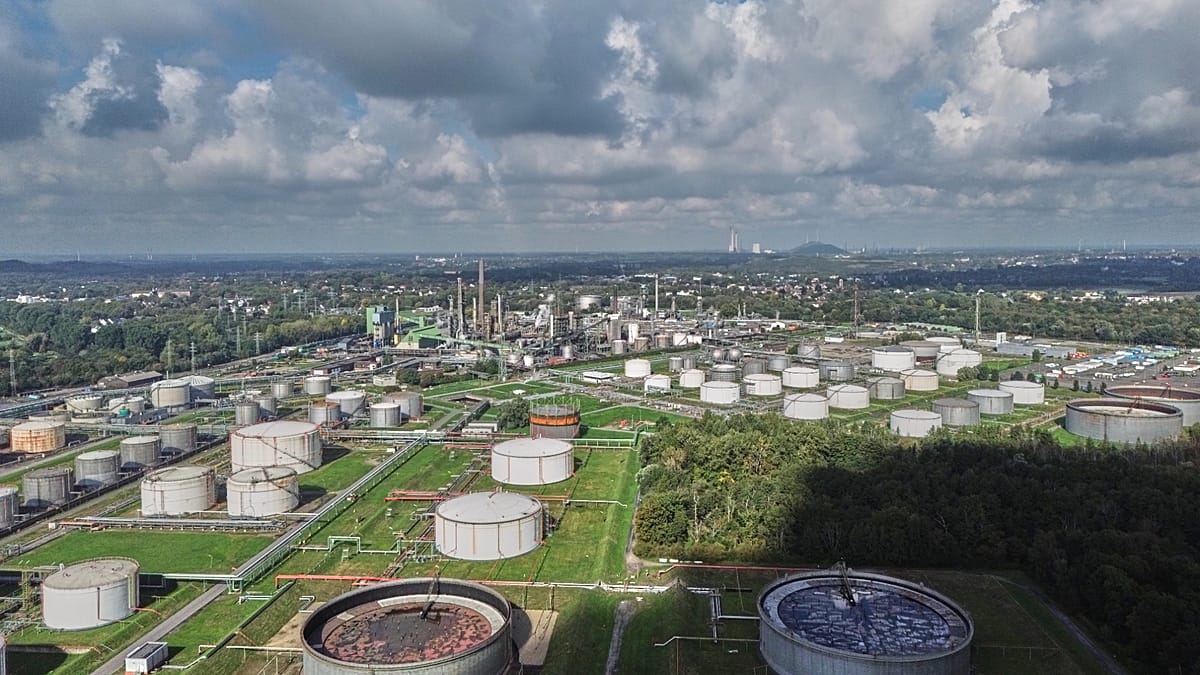
Eleven European Union member states have committed to releasing 20.5 million barrels of diesel from their strategic reserves by the end of January 2027, according to a joint declaration seen by Euronews. The move comes as persistent instability in the Middle East and attacks on refining infrastructure heighten concerns over fuel availability ahead of the winter months.
The countries involved — Belgium, Denmark, France, Germany, Greece, Italy, Lithuania, Luxembourg, the Netherlands, Portugal, and Sweden — agreed to the release following a G7 statement on energy security and an urgent call for action from the International Energy Agency (IEA). The declaration, presented by French Energy Minister Roland Lescure on the sidelines of an energy ministers' meeting in Luxembourg on 29 October, underscores the bloc's determination to bolster short-term supply.
“We, the undersigned EU members of the International Energy Agency, have taken and are taking decisive actions to increase the supply of crude and refined products in the short term through the release of significant volumes of strategic reserves, including diesel,” the document states.
This initiative follows a broader collective action coordinated by the Paris-based IEA in March, which saw the release of 42.6 million barrels of oil and refined products. Nearly half of those refined products were diesel, a fuel that the European Commission's oil monitoring group has described as “remaining tight.” While Brussels maintains that “physical shortages” are not foreseen, Energy Commissioner Dan Jørgensen has warned that skyrocketing prices could ultimately deprive the most vulnerable consumers.
Brent crude oil was trading at $112 per barrel on 20 October, a sharp rise from the $40 levels seen before the war in Ukraine. The EU is particularly exposed to disruptions in refined fuel markets, which affect road transport, freight, agriculture, and industry. Releasing strategic stocks — a measure pushed by the United States administration — could help increase immediate supply and ease market pressures. However, analysts caution that this is a temporary fix rather than a solution to the bloc's underlying energy vulnerabilities.
Brussels urged to tighten oversight
The eleven governments have called on the European Commission to enhance coordination through its oil monitoring group. They want Brussels to collect monthly data on the volumes released, the types of products, and the timing of deliveries. The goal is to give global markets greater visibility over the additional supply and to help governments coordinate further responses if conditions deteriorate.
The declaration also highlights the critical role of Europe's refining industry. The prolonged conflict in the Middle East, including attacks on Gulf refineries, and Ukrainian strikes on Russian refineries have put additional strain on an already tight global diesel market, driving up energy prices. EU governments are urging the Commission-led oil group to monitor refinery output and encourage producers to increase capacity where possible.
The Commission has recently launched a strategic dialogue with European refineries and fuel producers to strengthen security of supply. Given the scale of the disruption, Brussels has acknowledged that the bloc needs functioning refineries capable of turning crude oil into the products its economy consumes. Strategic stock releases can bridge temporary shortages, but only for a short time. Analysts argue that emergency oil stocks cannot compensate for disruptions to refining capacity or international supply chains.
FuelsEurope, the trade body representing the European refining industry, has called for an “approach that protects the competitiveness of its refining industry” and has asked Brussels to create the necessary investment conditions for its transformation. The industry's plea reflects a broader concern that Europe's refining capacity has been shrinking for years, leaving the bloc more dependent on imports and more vulnerable to external shocks.
As winter approaches, the release of strategic diesel reserves offers some relief, but it also underscores the need for a more resilient energy system. The EU's efforts to revive refining capacity are part of a wider strategy to reduce vulnerabilities. Meanwhile, gas prices have tripled as winter storage hits record lows, adding to the pressure on households and businesses. The bloc's energy security remains a delicate balancing act, with geopolitical tensions and market volatility posing ongoing challenges.