Brussels is moving to reverse a two-decade slide in European oil refining capacity, warning that the bloc's reliance on imported fuels has become a security liability. Energy Commissioner Dan Jørgensen told reporters on Wednesday that recent disruptions—from attacks on Gulf refineries to Ukrainian strikes on Russian facilities—had exposed the fragility of global diesel supplies and should serve as a "wake-up call."
"We need to counter this trend and ensure that we have adequate and flexible refining capacity in Europe. Today and for the future. This is not just a matter of economic competitiveness. It is also a matter of security," said the Danish commissioner.
The European Commission has launched talks with refiners across the bloc to explore ways to increase fuel production at existing sites. A further technical meeting is planned for early 2027 to assess progress. The industry has already put forward proposals, though the Commission has not detailed whether these involve reopening closed plants, expanding current operations, or investing in new capacity.
Refining capacity as a strategic asset
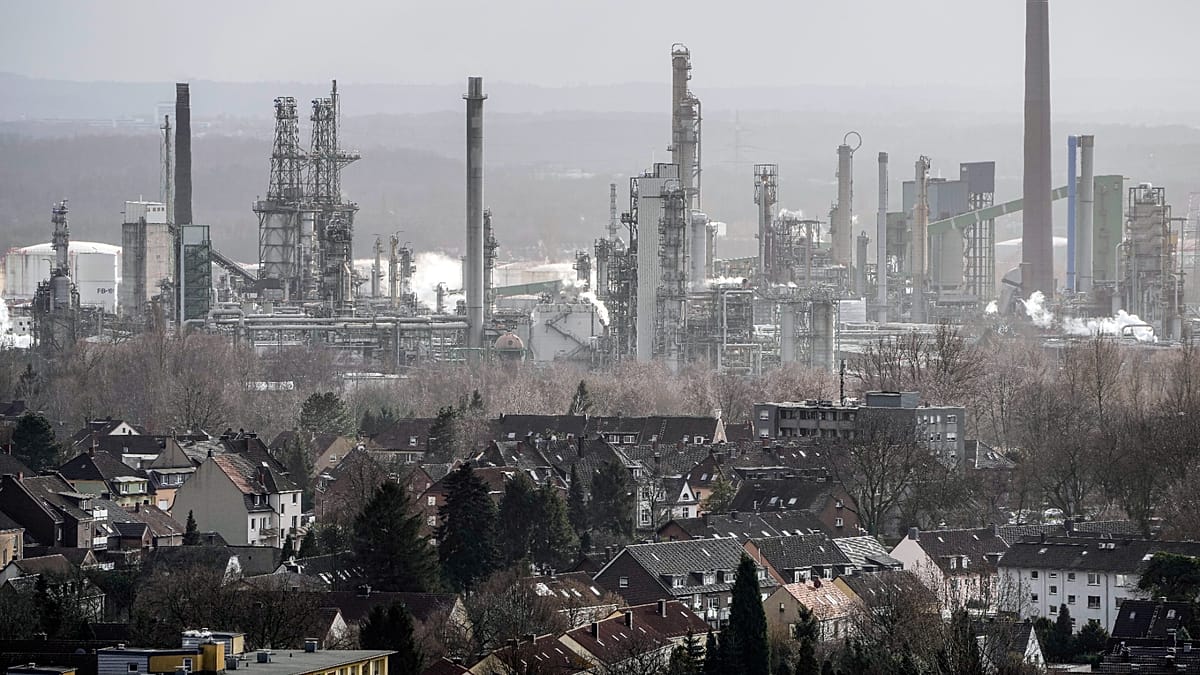
Germany, Italy, Spain, the Netherlands, France, and Belgium account for the bulk of the EU's refining capacity. Yet roughly a quarter of the bloc's refineries have shut down over the past two decades, cutting overall capacity by about 10%, according to Commission data. The loss has left Europe more exposed to external shocks, particularly for diesel, which powers road freight, agriculture, and industry, and for jet fuel, which is critical to aviation and military mobility.
The Commission's initiative reflects a growing recognition that securing crude oil alone is insufficient. "Security of crude oil supply and security of refined product supply are distinct challenges. Crude oil cannot substitute for diesel or aviation fuel without suitable processing capacity," reads a document from Poland, Czechia, and Slovakia, seen by Euronews, which urged Brussels to develop a long-term strategy to protect the bloc's refineries.
The three countries, ahead of an EU energy ministers' meeting on 29 October, argue that plant closures could deepen dependence on imported fuels. They point to the Middle East crisis as evidence that refined product supplies cannot be taken for granted.
Diesel market tightness to persist
The Commission expects the global diesel market to remain tight well into 2027, based on International Energy Agency projections. Even if crude prices stabilise, fuel prices could stay under pressure. Refineries have so far managed to maintain supplies, but EU officials worry about the bloc's ability to respond to further geopolitical disruptions.
Increasing domestic refining output could ease short-term supply constraints and reduce Europe's exposure to external shocks. However, as Jørgensen acknowledged, higher output would not automatically translate into lower prices if crude costs remain elevated or supply disruptions continue.
Balancing security with climate goals
The push to retain refining capacity sits uneasily with the EU's climate ambitions. Brussels wants to cut its reliance on imported fossil fuels, but it must still secure the fuels its economy consumes during the transition. European refineries face high operating costs, competition from larger facilities abroad, and the long-term prospect of declining demand as electrification advances.
Reversing the decline would require substantial investment, but the Commission has yet to outline financial incentives, regulatory changes, or concrete capacity targets. Its immediate focus appears to be on measures that could boost output from existing facilities—a faster response than building new plants, which take years of permitting and construction.
Reopening shuttered refineries or constructing new ones would be more complex, with investors needing confidence that demand would justify the expense over the assets' lifetime. The challenge for Brussels is whether its talks with industry can deliver additional fuel supplies quickly enough to ease price pressures without encouraging investments that could become stranded as Europe moves away from fossil fuels.
The debate also touches on broader energy security concerns, including the need to protect critical infrastructure from cyber threats, as highlighted by recent warnings about AI-driven attacks on energy systems. The Commission's move signals a pragmatic shift: while the long-term goal remains decarbonisation, the immediate priority is ensuring the bloc can weather the next energy shock.