At least 64 people have died and dozens more were injured when two high-speed trains collided near the central Spanish town of Urda, in the province of Toledo, on Wednesday afternoon. The crash, which occurred on a stretch of the Madrid–Andalusia line, has prompted a major rescue operation and plunged the country into mourning.
The two trains, operated by Spain's national rail company Renfe and private operator Iryo, were carrying more than 500 passengers combined when they collided. According to initial reports from Spain's Civil Guard, one train appears to have derailed and struck the other, though the exact sequence of events remains under investigation.
Rescue efforts under way
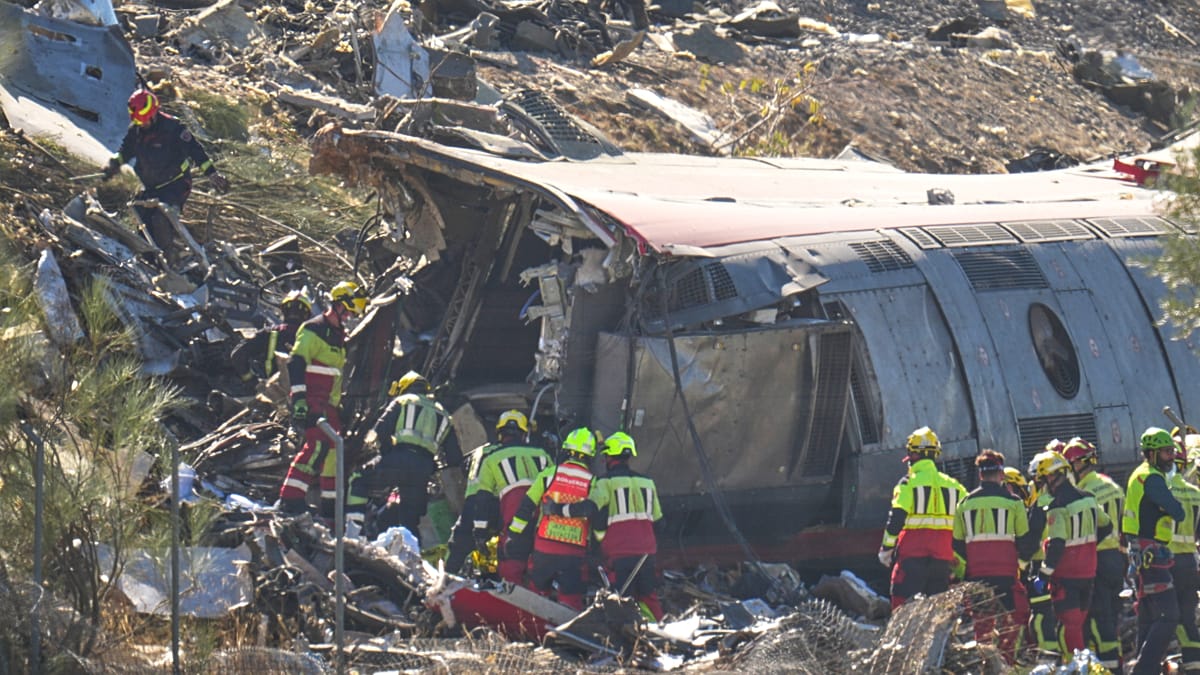
Emergency crews from across the region were dispatched to the scene, with firefighters, paramedics, and Civil Guard officers working to free passengers trapped in the twisted carriages. Aerial footage released by the Civil Guard shows the extent of the devastation, with carriages lying at odd angles and emergency vehicles lining the tracks.
Photographs from the scene show rescue workers attending to the injured on stretchers, while other passengers, some visibly shaken, were led to safety. Local hospitals in Toledo and Madrid have been placed on alert to receive the wounded, and the Spanish health ministry has activated its emergency protocols.
Spain's Prime Minister, Pedro Sánchez, expressed his condolences on social media, writing: "All our affection for the victims and their families. We are following the situation closely and are in contact with the regional authorities to coordinate all necessary assistance."
The crash has revived painful memories of Spain's worst rail disaster in decades, the 2013 derailment near Santiago de Compostela, which killed 79 people. That accident, caused by excessive speed on a curve, led to widespread scrutiny of high-speed rail safety across the country.
Spain boasts one of the most extensive high-speed rail networks in the world, with the AVE service linking Madrid to Barcelona, Seville, Valencia, and other major cities. The line near Urda is a key artery for both passenger and freight traffic, and the disruption is expected to have significant knock-on effects for travel in the region.
As the rescue operation continues, investigators are expected to examine the trains' black boxes and track conditions to determine the cause of the collision. Questions are already being raised about the safety protocols on the line, which has seen increasing traffic in recent years due to the growth of private operators like Iryo competing with Renfe.
The European Union has offered its support, with the European Commission president, Ursula von der Leyen, stating: "Our hearts go out to the victims and their families. Europe stands with Spain in this difficult hour."
For now, the focus remains on the search for survivors. Emergency teams are working through the night, using cutting equipment and sniffer dogs to comb the wreckage. The death toll, already the highest in a European rail accident in years, may yet rise.