In one of the most serious serial rape cases in recent German legal history, a Berlin court on Wednesday sentenced 69-year-old Frank S. to 12 years in prison followed by preventive detention. The judges at the Landgericht Berlin found that he had systematically drugged and raped 14 women between 2016 and 2022, filming the assaults and storing the recordings like trophies. Because of the severity of his crimes and the risk he still poses, the court ordered that he remain in custody after his sentence, meaning he is unlikely to be released before his 80s.
The case came to light only after police arrested a man who had been in online contact with S. and who had received some of the videos. A search of S.'s flat in Berlin uncovered a large digital archive of recordings, which investigators say show a total of 58 women. Of those, 14 have been identified and testified during the three-month trial. Police are now examining a further 44 cases, and ten women seen in the videos have not yet been identified. A separate trial may follow.
According to the court, S. met his victims through dating platforms, often pretending to be a police inspector or a helicopter pilot to gain their trust. He invited them to his flat and offered drinks laced with sedatives that, combined with alcohol, left the women helpless. Some were still conscious and begged him to stop, but he ignored them. Many later had no memory of the assault because of the drugs, which is why they never reported him. Others had suppressed the trauma, and only learned what had happened when police visited them during the investigation.
The presiding judge described S.'s methods as systematic and highly organised. He acted calmly and routinely, rewatching some of the footage while smoking a cigarette. The court noted that he treated the videos as a personal archive, storing them digitally in a way that showed a disturbing sense of ownership. The judge said his behaviour was particularly contemptuous towards women, and that he had not fully grasped the consequences of his actions for his victims.
All 14 women testified in court, six of them as joint plaintiffs. Two attended the sentencing but declined to speak publicly. Their lawyers said the women had chosen to give their closing statements behind closed doors, partly out of shame. Laura Leogrande, a lawyer for one plaintiff, said it was remarkable how much shame the victims felt about having trusted S. and gone home with him. She stressed that they were not to blame.
Silke Studzinski, another lawyer, welcomed the preventive detention order, saying the defendant's propensity to offend and the danger he poses are clear. The court rejected arguments that S.'s age made reoffending unlikely, pointing to his lack of insight and the calculated nature of his crimes.
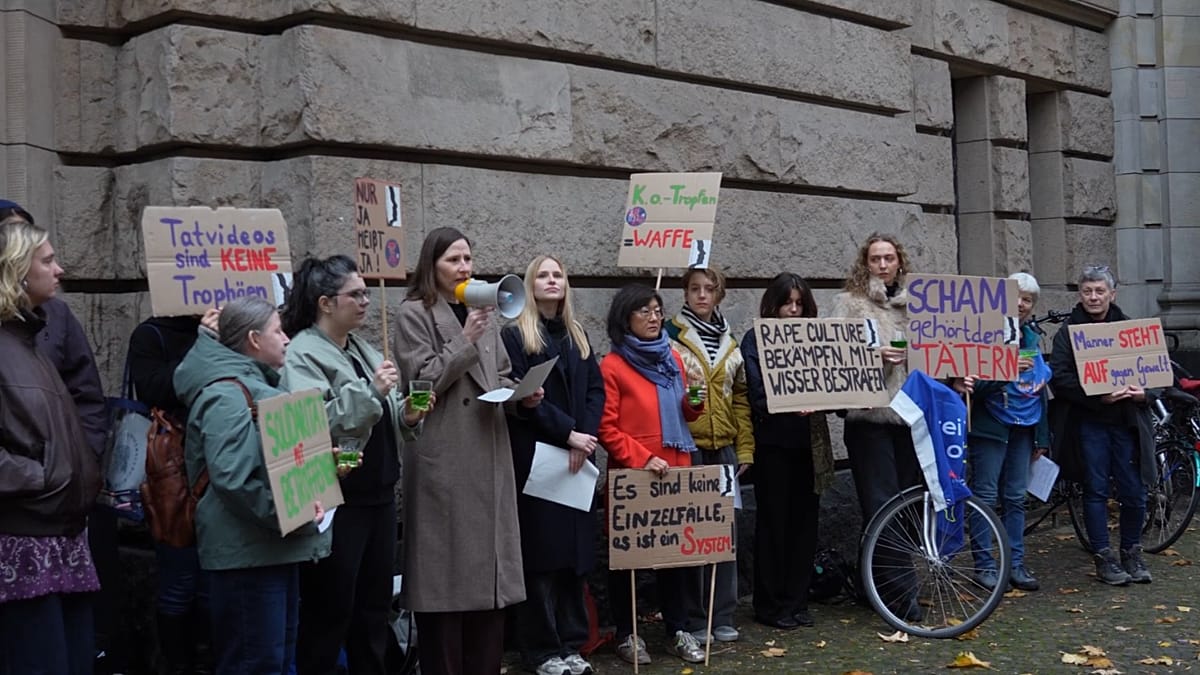
Outside the courthouse, organisations including Terre des Femmes and the initiative "Die Scham muss die Seite wechseln" ("Shame must change sides") showed solidarity with the victims. Sina Tonk, a department head at Terre des Femmes, said that only about three percent of rapes are ever reported to the police, often because of fear, shame, or obstacles placed in the way of those affected. She said the group was there to send a signal against sexualised violence.
The verdict is not yet legally binding; S. can appeal. But the investigation into the remaining 44 cases continues, and prosecutors are expected to bring further charges. For the women who have already testified, the trial has been an ordeal, but many hope it will encourage others to come forward.
This case has also reignited debate in Germany about the use of preventive detention for serious offenders and about the challenges of prosecuting drug-facilitated sexual assault. As Germany's economy shows signs of recovery, the country is also grappling with deeper social issues, including how to support victims of sexual violence and ensure that justice is done even when memories are clouded by sedatives.
The court's decision sends a clear message that such crimes will be met with the full force of the law, and that the victims' suffering has been acknowledged. For now, the focus remains on the ongoing investigation and the hope that the remaining victims will be identified and given the chance to see their attacker held accountable.