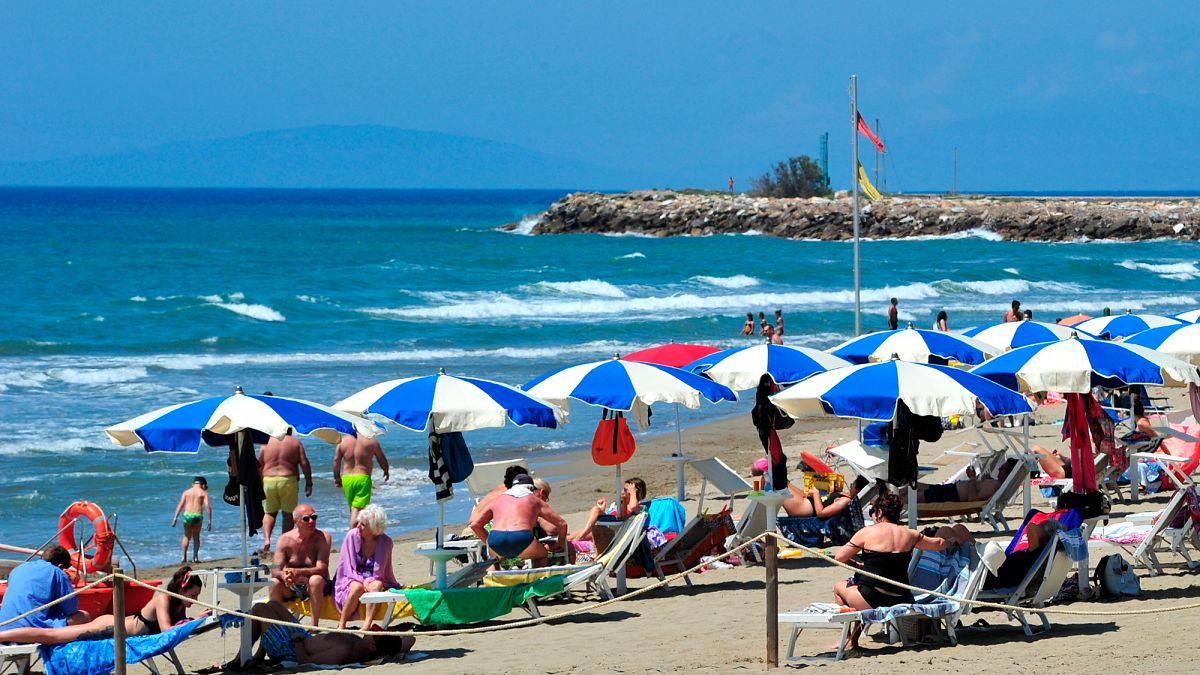
As Europe swelters through another summer of extreme heat, Italy is bracing for its busiest holiday period: Ferragosto. According to estimates from CNA Turismo e Commercio, between 1 and 23 August, 17.4 million tourists will be travelling within the country — 8.4 million Italians and nine million international visitors. Average stays are projected at around 4.5 nights, with direct spending exceeding €9 billion.
The wider economic ripple — encompassing accommodation, food services, retail, crafts, culture and services — could push the total impact past €15 billion over the month. These figures are part of a summer that may see 224 million overnight stays across July, August and September, generating roughly €27 billion in spending.
Shifting holiday habits
While August remains the peak, an EMG survey reveals that fewer than 40% of holidaymakers will actually depart during the month. Instead, many are choosing June, July or September to avoid the crowds and the heat. Almost 12.3 million Italians have already travelled in June and July, and another 8.2 million plan to go in September — a trend that continues to spread demand across the season.
Most Italians still prefer domestic destinations, but 6.2 million will head elsewhere in Europe, favouring Spain, Greece and France. On average, they expect to spend €939 per person on transport and accommodation. Over half (55.5%) will drive, while flying is the second most popular option. Holiday homes are the top choice for 7.6 million Italians (28.9%), while hotels, farm stays and B&Bs together account for 38.2% of travellers, or around 11 million people.
Top destinations and emerging trends
Seaside resorts remain the most sought-after, followed by cities, historic villages, mountains, lakes and spa towns. But demand is growing for experiential holidays — hiking, cycling, concerts, festivals, food fairs and shows. Italy's culinary heritage, craftsmanship and cultural riches continue to play a decisive role in destination choice.
Rome retains its international pull, alongside the coasts and villages of Lazio, the Conero Riviera, the Costa dei Trabocchi, the Gran Sasso area and the Molise coastline. In the Mezzogiorno, the Amalfi Coast, Salento, Tropea and the Costa degli Dei, Matera and the Lucanian Dolomites remain favourites, while Sardinia and Liguria's Riviera dei Fiori dominate for seaside holidays.
Foreign visitors and spending
Data from the Bank of Italy show that total tourism spending in 2025 reached almost €57 billion, up 4.8% year-on-year. That translated into 477 million overnight stays and 185 million arrivals. Figures for the first half of 2026 are equally encouraging: the Interior Ministry reports a 4.43% increase in arrivals compared with the same period last year, with foreign arrivals up 6.45% and domestic up 1.97%.
Spending by foreign travellers in Italy rose 2.1% to €4.5 billion in April 2026, while Italians travelling abroad spent €2.7 billion, down 1.6% from a year earlier. The outlook for the summer confirms Italy's competitive edge: 54% of European travellers name Italy as their preferred destination, ahead of Spain (51%), Greece (46%) and France (41%).
According to the Tourism Ministry, seaside destinations are seeing an occupancy rate of 82%, while Rome, Naples and Venice lead among cities. The main source markets are the United States, the United Kingdom, France and Germany.
This year's Ferragosto also comes amid broader European travel trends, such as the surge in last-minute bookings from Britain and the growing appeal of train routes to Europe's craft towns. For those planning to visit Italy's historic centres, note that parliament is moving to ban horse-drawn carriages in Rome and other cities, a change that could reshape the tourist experience.