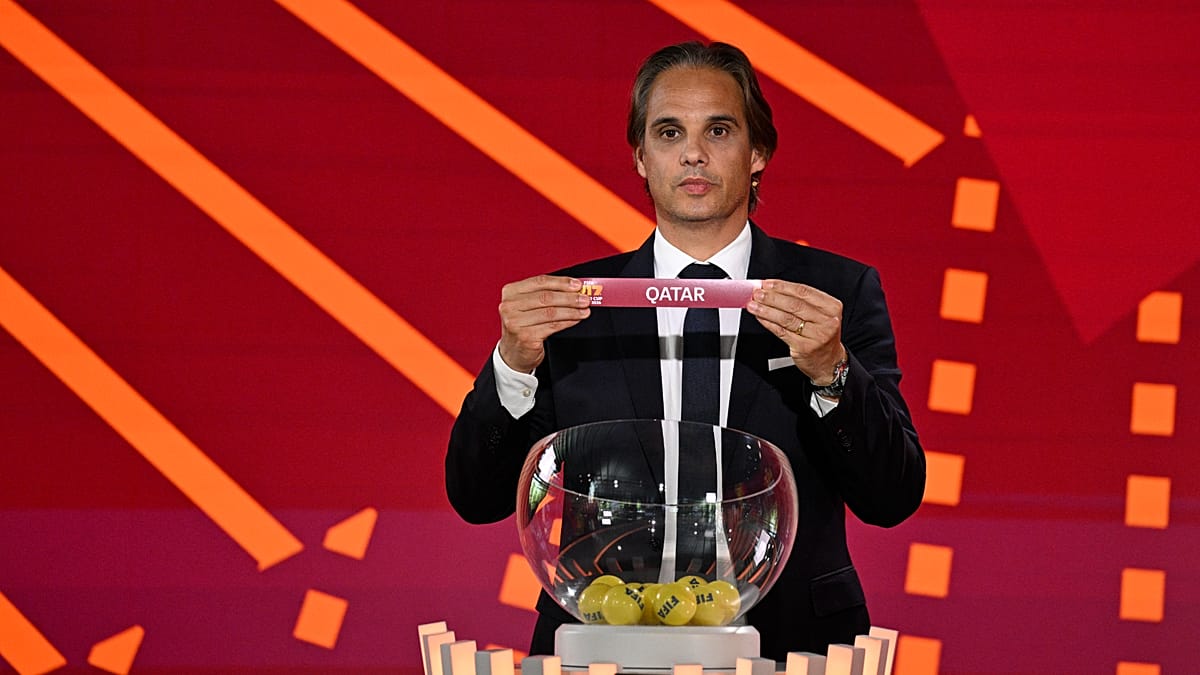
The draw for the FIFA Under-17 World Cup Qatar 2026 has been completed, setting the stage for a 48-team tournament that will run from 19 November to 13 December in Doha. Hosts Qatar will open against Panama, Egypt, and Greece in Group A, while several European sides face intriguing matchups.
Among the standout groups for European fans is Group C, where Argentina will face Australia and Denmark. Group L pairs Japan with Colombia and Serbia, offering a stern test for the Balkan side. Group I sees Brazil take on Ireland, Tanzania, and Costa Rica — a manageable start for the Seleção, though tougher knockout rounds likely await. Spain, drawn in Group H alongside China, Fiji, and Morocco, should advance comfortably but will face stiffer competition later.
Portugal absent as title holders miss out
Defending champions Portugal, who beat Austria 1–0 in last year's final at Khalifa International Stadium, will not be in Doha to defend their crown. They failed to qualify, becoming the first title holders since 2019 to miss the subsequent edition. Italy finished third and Brazil fourth in the 2025 tournament.
The 2025 edition was historic as FIFA's first-ever 48-team youth competition, drawing more than 197,000 fans to the Aspire Zone. Over 130 scouts from leading clubs attended to watch emerging talent. Jassim Al Jassim, CEO of the local organising committee, said: “This year, we build on everything we learned in 2025 to deliver an even greater experience for players, fans, and the global football community.”
Two African qualification spots remain to be decided on 23 May through CAF playoff matches in Morocco. Matches will again be played at the Aspire Zone Competition Complex, maintaining the centralised hosting model that allows easy movement between venues. The final is scheduled for 13 December at Khalifa International Stadium.
For European sides, the tournament offers a chance to showcase youth talent on a global stage. Denmark, Serbia, Ireland, and Spain will be among those looking to progress deep into the knockout rounds. The absence of Portugal underscores the competitiveness of European qualifying, where even reigning champions can fall short.