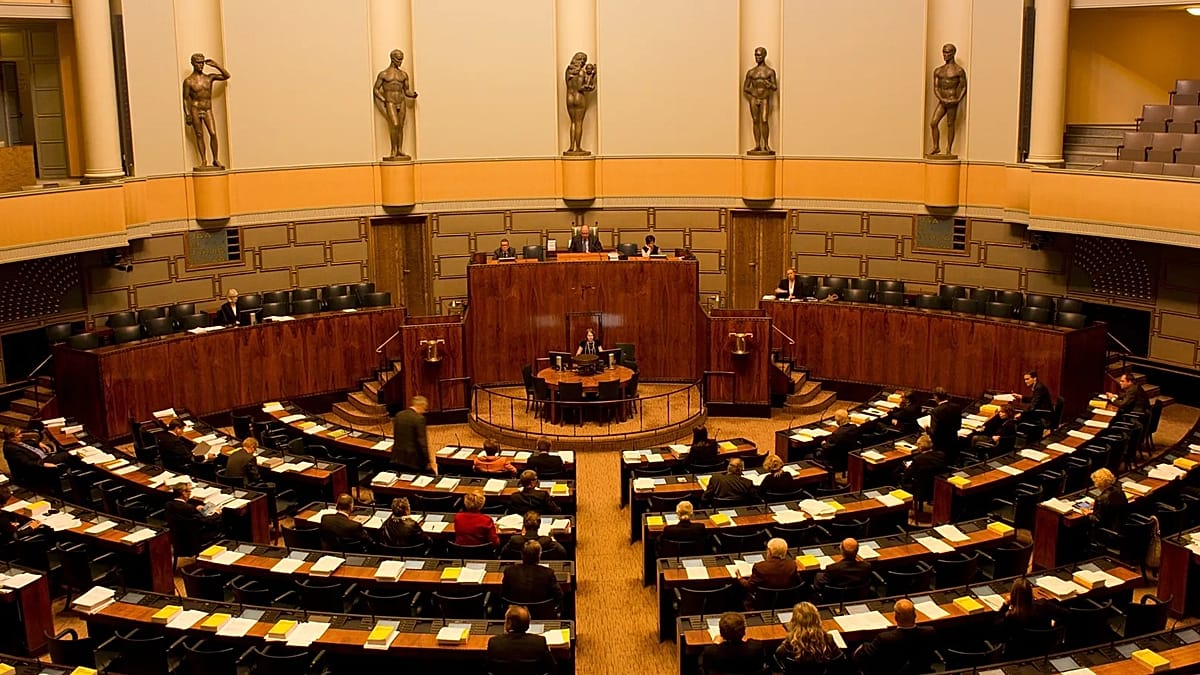
Finland's parliament voted on Wednesday to lift a comprehensive ban on nuclear weapons, a historic shift that brings the Nordic country fully into line with NATO's nuclear deterrence strategy. The bill, passed by 125 votes to 61 with 13 abstentions, now awaits presidential approval to become law.
The legislation amends Finland's Nuclear Energy Act, which since the 1980s had prohibited the import, production, possession, and detonation of nuclear explosives. It also updates the criminal code to create exceptions for nuclear weapons when required for national defense. Under the new rules, nuclear weapons may be brought into, transported through, supplied to, or stored in Finland if the country's military defense necessitates it.
From Non-Alignment to NATO Integration
Finland abandoned decades of military non-alignment in April 2023, joining NATO in direct response to Russia's full-scale invasion of Ukraine. The decision to lift the nuclear ban is the latest step in integrating Helsinki into the alliance's collective defense framework. Defense Minister Antti Häkkänen wrote on X on Tuesday: "With this proposal, we strengthen Finland's defence and enable the full use of NATO's nuclear deterrent as protection for Finland."
The vote has reignited domestic debate. Opposition parties have criticized the government for abandoning a long-standing principle of prohibiting nuclear weapons on Finnish soil. Prime Minister Petteri Orpo, however, has framed the move as a pragmatic necessity in a changed security environment. Earlier in June, Orpo indicated that Finland is exploring participation in a French-led nuclear deterrence initiative, though no final decision has been made.
In March, French President Emmanuel Macron unveiled a plan under which France—the European Union's only nuclear-armed state—would use its atomic arsenal to bolster continental security. The proposal has gained traction among EU member states seeking to reduce reliance on the United States for nuclear protection, particularly amid uncertainties over Washington's long-term commitment to European defense.
Finland's shift also reflects broader trends across the Baltic and Nordic regions. Neighboring Sweden, which joined NATO in March 2024, has similarly reviewed its nuclear stance, though Stockholm has not yet taken legislative action. The two countries' integration into NATO's nuclear planning has been closely watched by Moscow, which has repeatedly warned of consequences.
The bill's passage comes as NATO allies continue to ramp up support for Ukraine. At the recent G7 summit, leaders pledged additional weapons for Kyiv and targeted Russian energy revenue—a reminder of the ongoing conflict that reshaped Finland's security calculus. Meanwhile, Finland's new policy aligns with the alliance's doctrine of nuclear sharing, under which non-nuclear members host allied nuclear assets and participate in consultation and planning.
Critics argue that hosting nuclear weapons undermines Finland's traditional role as a peace broker and could make it a target in any future escalation. Supporters counter that the deterrent effect reduces the likelihood of aggression. The debate mirrors similar discussions in other European capitals, as the continent grapples with how to balance deterrence with disarmament goals.
President Alexander Stubb is expected to sign the bill into law in the coming weeks, formalizing Finland's departure from its nuclear-free status. The move underscores how Russia's war in Ukraine continues to reshape European security architecture, pushing even historically neutral states toward deeper military integration.