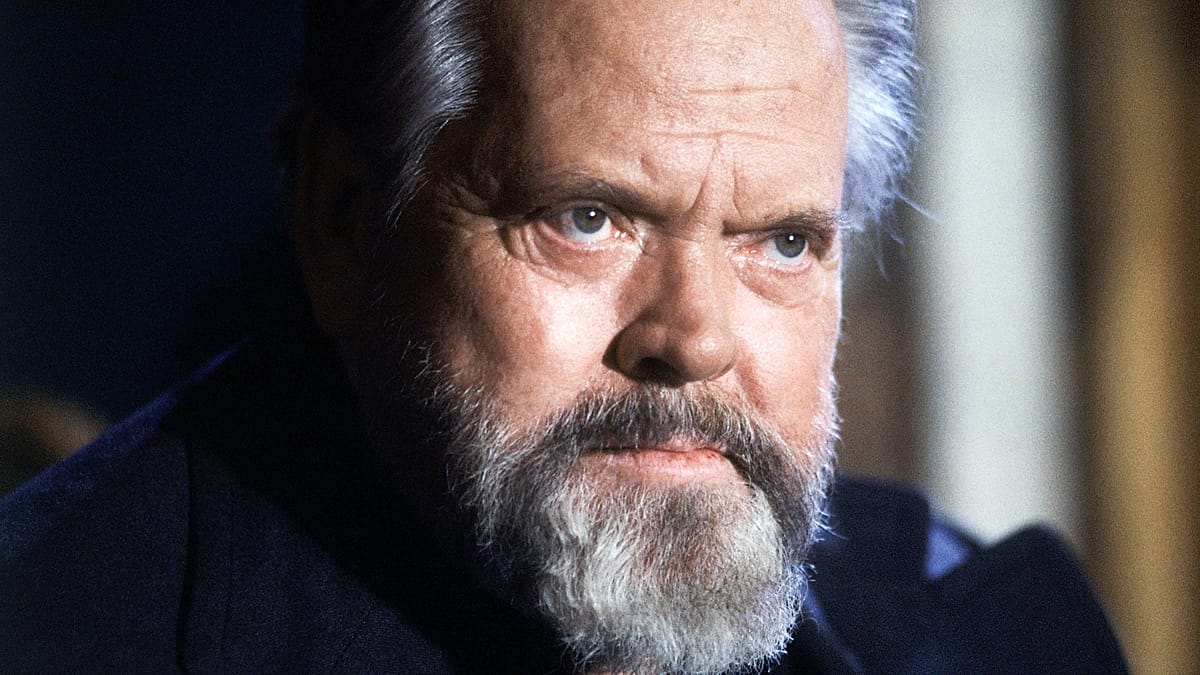
Orson Welles once compared film directors to "wretches" pursuing an obsolete craft. The American auteur, who died in 1985, might have found a kindred spirit in Alonso Quijano, the deluded knight of Miguel de Cervantes's masterpiece. For nearly three decades, Welles chased his own quixotic vision: a film adaptation of Don Quixote that he began in 1957 and never finished. Now, four European film archives are joining forces to piece together what he left behind.
The Spanish Film Archive (Filmoteca Española) is coordinating the effort with the Cinémathèque Française in Paris, Italy's Cineteca Nazionale in Rome, and Munich's Filmmuseum. Together they aim to recover and reconstruct the scattered footage, which Welles shot in Mexico, Italy and across the Spanish heartlands that so captivated him. The project was announced at the Il Cinema Ritrovato festival in Bologna by Valeria Camporesi, director of the Spanish Film Archive, and Esteve Riambau, a Welles specialist and former head of the Catalan Film Archive.
A Reconstruction, Not a Restoration
Riambau is careful to distinguish this undertaking from a standard film restoration. "We are not talking about a restoration," he said in a phone call from Bologna. "We're talking about reconstructing a film whose ideas and materials kept changing, with things being added and discarded. It is still too early to know whether we have everything or what we are missing." The goal is to produce a version as close as possible to Welles's intentions, but Riambau emphasises it will be a cultural presentation, not a commercial release.
The project will unfold over two years. In 2026, the institutions will study and rework the original script — which runs to 2,000 pages — and digitise the available material: some 70,000 metres of film. In 2027, they will carry out a comparative analysis of the sequences, their later variations and the written material. Riambau has taken a firm stance against using artificial intelligence; only human minds and hands will be involved.
This is not the first attempt to assemble Welles's Quixote. In 1992, for Seville's Universal Exposition, the Spanish director Jesús Franco — a friend of Welles — produced a version using roughly 40,000 metres of footage. Riambau calls it "very disappointing." Franco mixed the original material with a documentary by the Italian broadcaster RAI and even inserted his own images as if they were original. The Spanish dubbing was also problematic: actors recited passages from Cervantes's novel in sequences that did not correspond, ignoring lip-sync with the performers.
Welles began his Quixote odyssey in Mexico and Italy, then used a cover project — a documentary series titled Viaggio nel paese di Don Chisciotte — to persuade RAI to let him move to Spain. There, under the watchful eye of Franco's regime, he secretly shot his adaptation. An ardent supporter of the Republican cause during the Spanish Civil War, Welles had to keep his plans hidden from both the authorities and the producers of his other projects. He shot in locations such as Santa María de la Huerta and Calatañazor (Soria), Pedraza (Segovia), Brihuega (Guadalajara) and the city of Valladolid. When asked in 1960 where in Spain he would like to live, he replied without hesitation: "Ávila. The climate is awful: very hot in summer; very cold in winter. It is a strange and tragic place. I don't know why I feel something so special."
Welles's fascination with Spain and its literary heritage is well documented. He also adapted Kafka's The Trial and three Shakespeare plays. But Don Quixote proved especially elusive. The project's troubled history echoes that of Terry Gilliam's The Man Who Killed Don Quixote, which took nearly two decades and eight abortive production attempts before its lukewarm 2018 release. Yet Gilliam's ordeal pales beside Welles's three-decade struggle, which never yielded a finished film.
Riambau explains that the project is being revived partly because of the love Welles felt for Spain. Director Oja Kodar, his artistic partner from the 1960s onward, contacted the historian when the idea first surfaced. The collaboration across four European archives — in Madrid, Paris, Rome and Munich — reflects a broader trend of cross-border cultural preservation on the continent. As Spain grapples with other pressing issues, from soaring wedding costs tied to the housing crisis to Luxembourg shell companies linked to Spanish billionaires, this cinematic endeavour offers a reminder of the enduring cultural ties that bind Europe's nations.