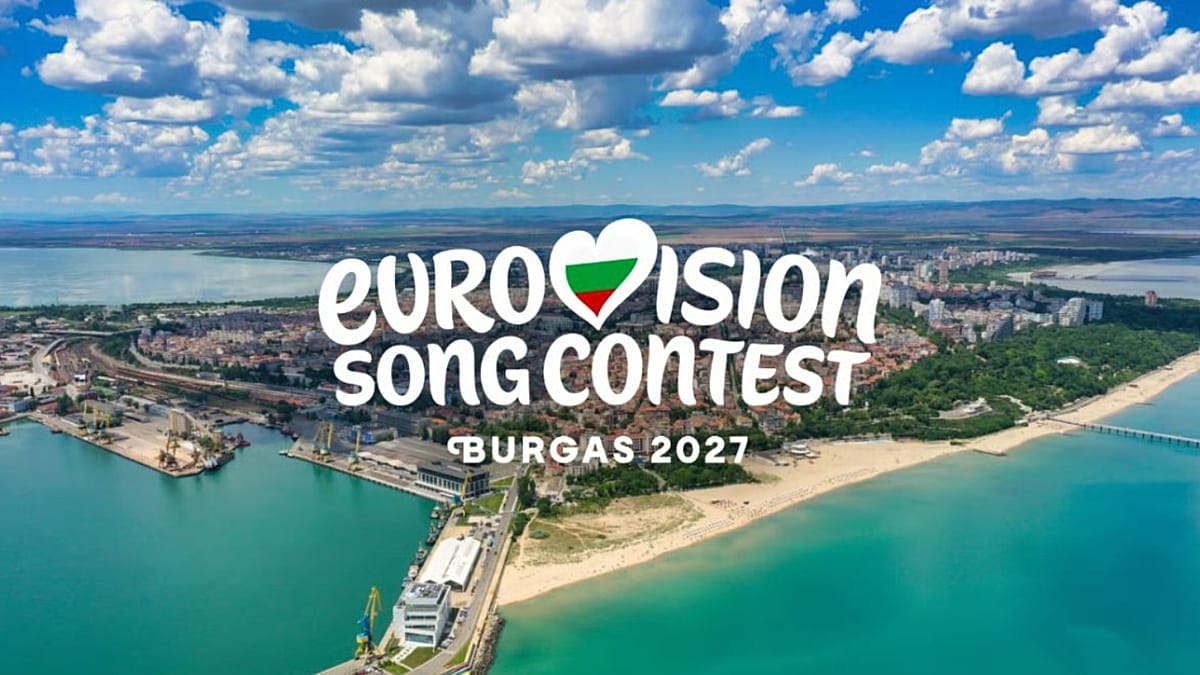
Burgas, a Black Sea resort city in Bulgaria, has been named the host city for the Eurovision Song Contest 2027. The announcement marks a historic first for Bulgaria, which earned the right to stage the event after DARA's victory with 'Bangaranga' at this year's contest in Vienna.
The European Broadcasting Union (EBU), which organises Eurovision, confirmed the decision on its website, praising Burgas for offering "a very unique setting for the world's largest live music event." The city, known for its beaches, parks, and vibrant cultural scene, beat out the capital Sofia, which had been widely tipped as the favourite.
A coastal stage for a continental celebration
Burgas, with a population of around 200,000, has built a reputation for hosting large-scale summer festivals and international cultural events. Its seaside location and modern infrastructure are expected to provide a distinctive backdrop for the competition, which draws hundreds of millions of viewers across Europe and beyond.
Martin Green, the Director of the Eurovision Song Contest, said: "We are delighted that Burgas will be the Host City for the Eurovision Song Contest 2027." He added: "For the first Eurovision Song Contest ever to be held in Bulgaria, we want to create something that feels truly Bulgarian while also being unmistakably Eurovision – a celebration that brings people together through music."
The choice of Burgas reflects a broader trend of Eurovision moving beyond capital cities, offering regional hubs a chance to showcase their identity. Previous hosts have included Malmö, Liverpool, and Turin, each bringing its own local flavour to the event.
For Bulgaria, the 2027 contest is a significant cultural milestone. The country has participated in Eurovision since 2005, with its best result coming in 2017 when Kristian Kostov finished second. DARA's victory in Vienna was a breakthrough, and the upcoming event is expected to boost tourism and international visibility for Burgas and the Bulgarian Black Sea coast.
The EBU's decision also comes amid ongoing discussions about the contest's political dimensions. Recent years have seen debates over participation rules and the role of host countries, particularly in light of restrictions on war-torn nations. Bulgaria, a NATO and EU member, has maintained stable relations with its neighbours, though regional tensions occasionally surface, such as incidents near its borders.
Local officials in Burgas have welcomed the announcement, promising extensive preparations. The city's mayor, Dimitar Nikolov, said the event would be "a celebration of music, culture, and European unity," and confirmed that infrastructure upgrades, including venue renovations and transport improvements, are already planned.
Eurovision 2027 is scheduled to take place in May, with the exact dates and venue to be confirmed in the coming months. The contest will feature semi-finals and a grand final, with participating countries from across Europe and beyond.
For fans, the choice of Burgas offers a new destination to explore. The city is known for its Sea Garden, a large park along the coast, and its annual Spirit of Burgas music festival, which has attracted international acts. The 2027 event is expected to draw tens of thousands of visitors, providing a significant economic boost to the region.
As Bulgaria prepares to host its first Eurovision, the focus will be on delivering a show that balances local traditions with the glitz and spectacle that the contest is known for. With Burgas's unique setting, the 2027 edition promises to be a memorable one.