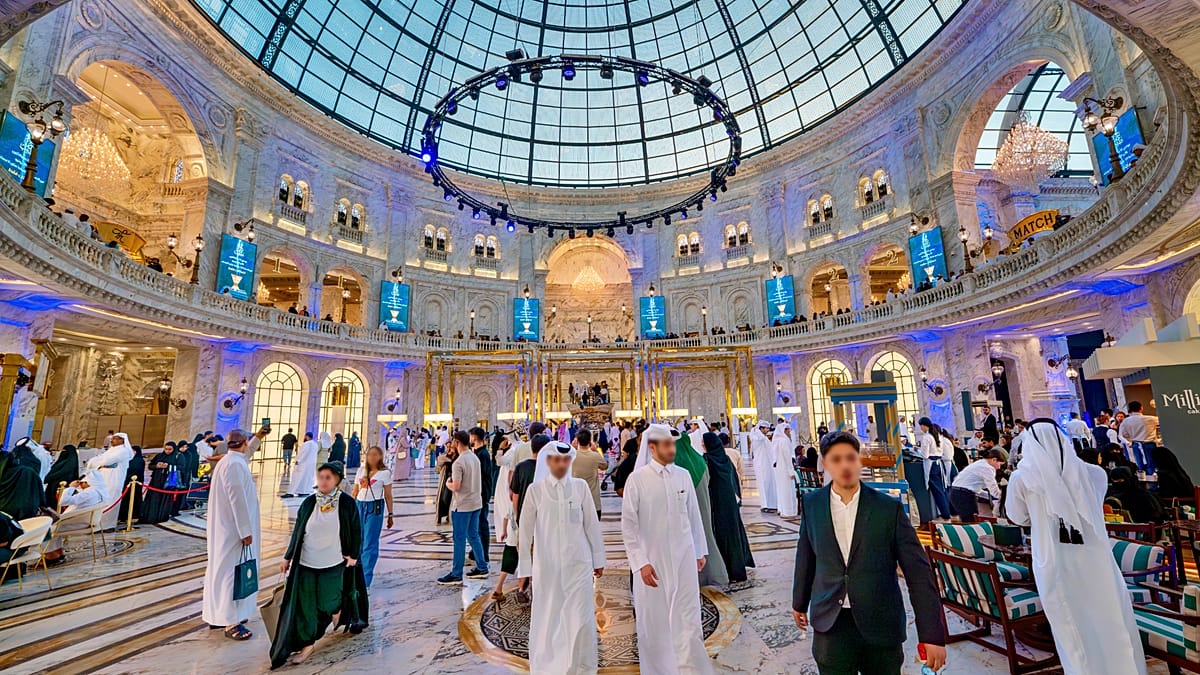
In the Gulf, perfume is far more than a luxury accessory. It is woven into daily life, hospitality, and religious practice, with scents like oud, bukhoor, musk, rose, and amber carrying deep cultural significance. Twice a year, Doha's Teeb Al Hazm festival brings this tradition to life, gathering perfume houses from across the Middle East to display everything from classic oud blends to modern interpretations inspired by regional ingredients.
Now, the organisers are preparing to take the concept beyond the Gulf. The next edition will be held in London, marking the festival's first foray into Europe. Mohamed Al-Emady, CEO of Al Hazm Mall, confirmed the expansion: "The next step is London. It's the first time Teeb Al Hazm will be in Europe. It will be the first edition in London, but we are already in the Gulf. We did in Abu Dhabi, we are going to Riyadh, and the third one will be London."
A showcase of Gulf fragrance culture
Unlike typical perfume exhibitions that focus on individual brands, Teeb Al Hazm offers a comprehensive view of the region's olfactory landscape. Visitors can compare a wide range of styles under one roof, from traditional oud—derived from resin in agarwood trees—to bukhoor, scented woodchips burned in homes and during gatherings. These scents are central to Gulf hospitality and everyday customs, and the festival reflects that enduring love of fragrance.
The latest edition, the 13th, drew exhibitors and visitors from across the Gulf despite being held at the start of summer, a time when many residents typically travel abroad. Al-Emady noted the unexpected turnout: "We never expect to have this number of the traffic, this number of the people. Usually the exhibition will be busy from five, but this one from 10 o'clock morning is busy."
Among the returning exhibitors was Czar Perfumes, a Kuwaiti house that has become a regular participant. Sales representative Ehab Fouad explained the appeal: "We come from Kuwait. It's our fourth time to share in this festival. It's a very big event. Qatari people like perfumes. So we have good customers here."
The festival's success in Doha is part of a broader trend: Gulf fragrance traditions are increasingly influencing the global perfume industry. Al-Emady observed, "The culture of the GCC with the oud and bukhour. This type of perfumes now become international. Even the international brands, they try to have the fragrance of the Arabian oud and bukhour."
That influence is visible in the growing number of international brands incorporating Arabian notes into their collections, and in the rising visibility of Gulf perfume houses beyond the region. The London edition of Teeb Al Hazm is expected to capitalise on this interest, offering European audiences a chance to experience the depth and diversity of Gulf perfumery firsthand.
For those interested in broader cultural events across the continent, the Gabala Festival's 15th edition in Azerbaijan and the Cappadocia Biennial's debut in Turkey highlight how regional traditions are being reimagined for international audiences. Meanwhile, the hotel breakfasts worth booking for from London to Ibiza show how travel and hospitality continue to evolve across Europe.
As Teeb Al Hazm prepares to cross the Mediterranean, it carries with it a centuries-old heritage that is now finding new resonance in the West. The London edition promises to be a sensory journey into the heart of Gulf culture, and a testament to the enduring power of scent.