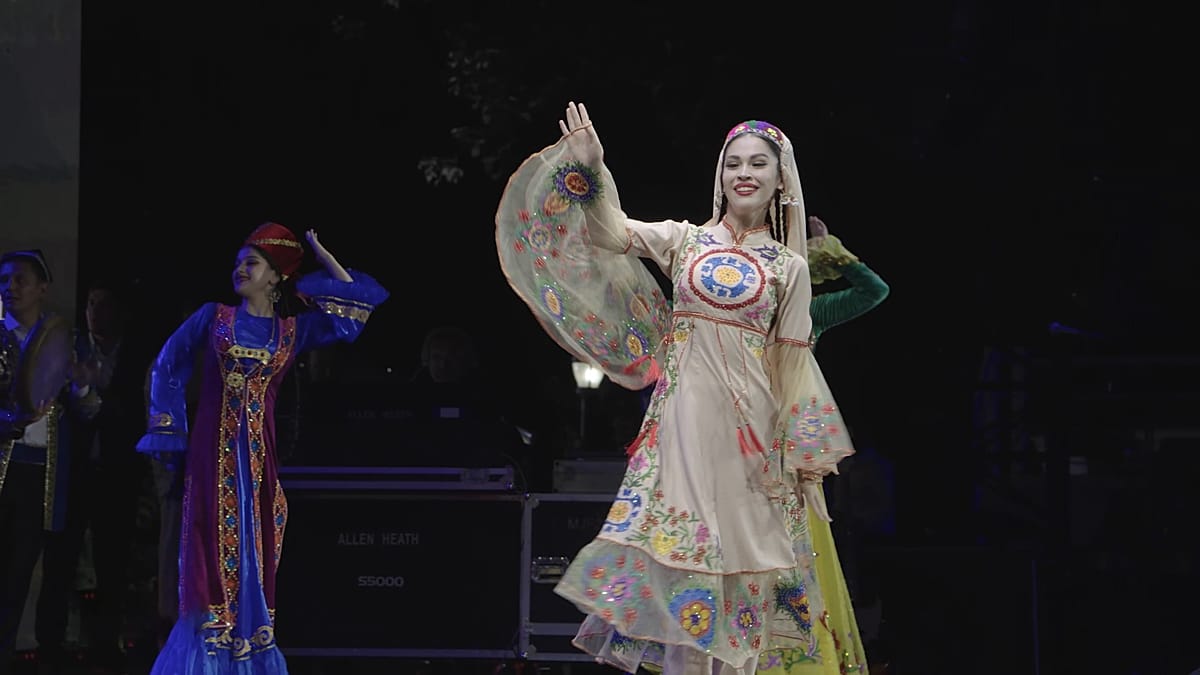
Fifteen years after its debut, the Gabala Music Festival in Azerbaijan has evolved into something far broader than a series of concerts. This year's edition, held in the mountain town of Gabala, introduces Gabala Fest, a new platform designed to foster collaboration among musicians, visual artists, and performers from across Europe and the wider region.
The festival has long been a meeting point for classical music, Mugham, and contemporary sounds. But with Gabala Fest, the organisers are pushing beyond the stage, creating a space where artists can exchange ideas, experiment, and present work that defies easy categorisation. The result is a programme that feels less like a traditional festival and more like a living cultural laboratory.
Art at the crossroads
A central element of this year's expanded edition is The Crossroads of Cultures, an art exhibition featuring more than 30 local and international artists. The show, which runs alongside the musical performances, reflects the festival's ambition to position Gabala as a genuine hub for creative exchange—not just for Azerbaijan, but for the entire Caucasus region and beyond.
For many participants, the value lies in the unexpected connections. A classical pianist from Vienna might find common ground with a Mugham singer from Baku; a visual artist from Tbilisi could discover new inspiration in the work of a peer from Istanbul. The festival's organisers say these encounters are precisely what they hoped to encourage.
“We wanted to move beyond the concert hall,” said one of the festival's curators. “Music is the starting point, but the real magic happens when different art forms and cultures meet.”
Looking ahead to 2027
The expansion is not a one-off. Organisers have announced plans to further develop the cultural programme by 2027, with ambitions to attract even more international participants and audiences. Gabala, already known for its scenic beauty and growing tourism infrastructure, is being positioned as a year-round destination for the arts.
The timing is notable. Across Europe, festivals are rethinking their role in a post-pandemic world, seeking to offer more than passive entertainment. The Gabala model—combining performance, exhibition, and dialogue—reflects a broader trend toward immersive and participatory cultural events. Similar initiatives are emerging elsewhere, from Transylvania's medieval celebrations to summer festivals reshaping Central Asia's creative landscape.
For Azerbaijan, the festival also serves as a soft-power tool, showcasing the country's cultural heritage and its openness to international collaboration. The inclusion of Mugham—a UNESCO-listed tradition—alongside Western classical and contemporary genres underscores a deliberate effort to bridge traditions.
As the festival enters its second decade and a half, its organisers are confident that the formula works. “We are not just celebrating music,” said a spokesperson. “We are building a community that transcends borders.”
With the 2027 expansion already on the horizon, Gabala seems poised to become a permanent fixture on Europe's cultural calendar—a place where the arts, in all their forms, can meet and multiply.