Across Kazakhstan, summer festivals are evolving from local celebrations into powerful engines of event tourism. Rather than concentrating cultural life in its largest cities, the country is now staging major events in valleys, canyons, lakes and national parks, giving travellers fresh reasons to explore its diverse regions.
The trend reflects a deliberate shift. By hosting everything from contemporary music concerts to paragliding competitions in remote areas, Kazakhstan is building a new creative economy that supports local businesses and attracts international visitors. The approach is already drawing comparisons with European festival circuits, where events like those in Marmaris have long blended culture with tourism.
Nauryz: ancient roots of a modern festival culture
Long before festivals became a major tourism draw, nomads gathered to celebrate the arrival of spring. Nauryz, observed every March, is Kazakhstan's oldest and most important festival. Marking the spring equinox, it symbolises renewal, prosperity and the start of a new year. Families share traditional dishes such as Nauryz kozhe, musicians perform folk music, and cities and villages host sporting competitions, concerts and craft fairs.
Today the celebration lasts ten days in Kazakhstan. Nauryz is also recognised by UNESCO as part of the Intangible Cultural Heritage of Humanity and is celebrated across much of Central Asia and beyond.
Paragliding above the Seven Rivers
The Zhetysu region, known as the 'Land of Seven Rivers', is one of Kazakhstan's most picturesque areas. It offers dramatic mountain ridges, alpine lakes and deep valleys stretching from the Dzungarian Alatau to Altyn-Emel National Park. This year, the Paragliding Festival coincided with the Paragliding World Cup, bringing together around 150 pilots from 33 countries.
“We are doing this quite often. There are famous festivals like this in France, in the United States and many other places. They become a reason for people to gather, while many other activities grow around them,” said Goran Dimishkovski, President of the Paragliding World Cup Association.
The competition was organised by paragliding world champion David Virshki together with his father, Igor Virshki, who have spent years promoting the region as an international flying destination. “It was always my dream to have such an event at my local site because our nature is very pristine and wild. Pilots tell me these landscapes are something they don't have in Europe. Flying above untouched mountains with these views is incredible,” David Virshki said.
Altai Fest draws 50,000 to Katon-Karagay
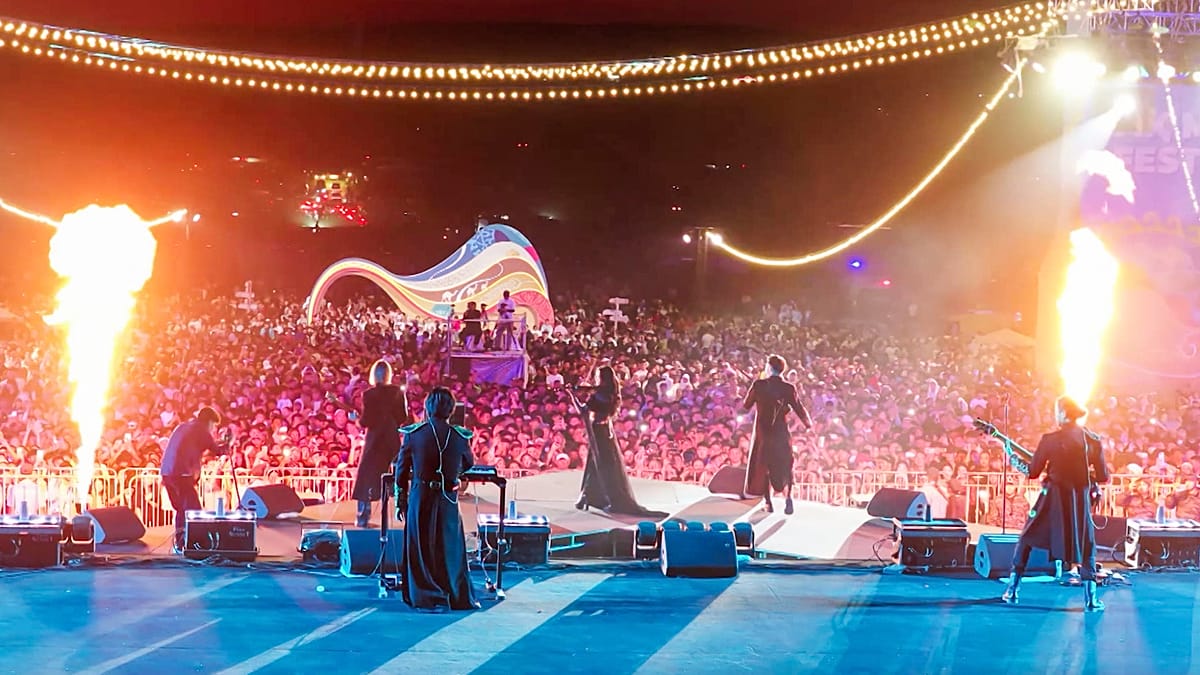
Far to the east, another festival celebrates the cultural roots shared by Turkic peoples. Held in Katon-Karagay, one of Kazakhstan's most pristine mountain districts, Altai Fest brought together artists and visitors from across the Turkic world. This year, the event welcomed 50,000 visitors and concluded with a performance by Dimash Qudaibergen.
A festival inspired by camel's milk
Every August, the Ak Maya Festival transforms the spectacular canyons of the Mangystau region into an open-air cultural venue celebrating one of the area's oldest traditions — producing shubat, or fermented camel's milk. The festival combines ethnic music, contemporary art installations, local cuisine and workshops with the surreal desert landscapes that have made Mangystau increasingly popular among international travellers. It is designed to promote sustainable tourism while introducing visitors to the region's nomadic heritage and the importance of camel breeding in western Kazakhstan.
Together, these festivals show how Kazakhstan is redefining tourism. By leveraging its natural landscapes and cultural traditions, the country is positioning itself as Central Asia's creative hub — a development that European travellers and investors are beginning to notice.