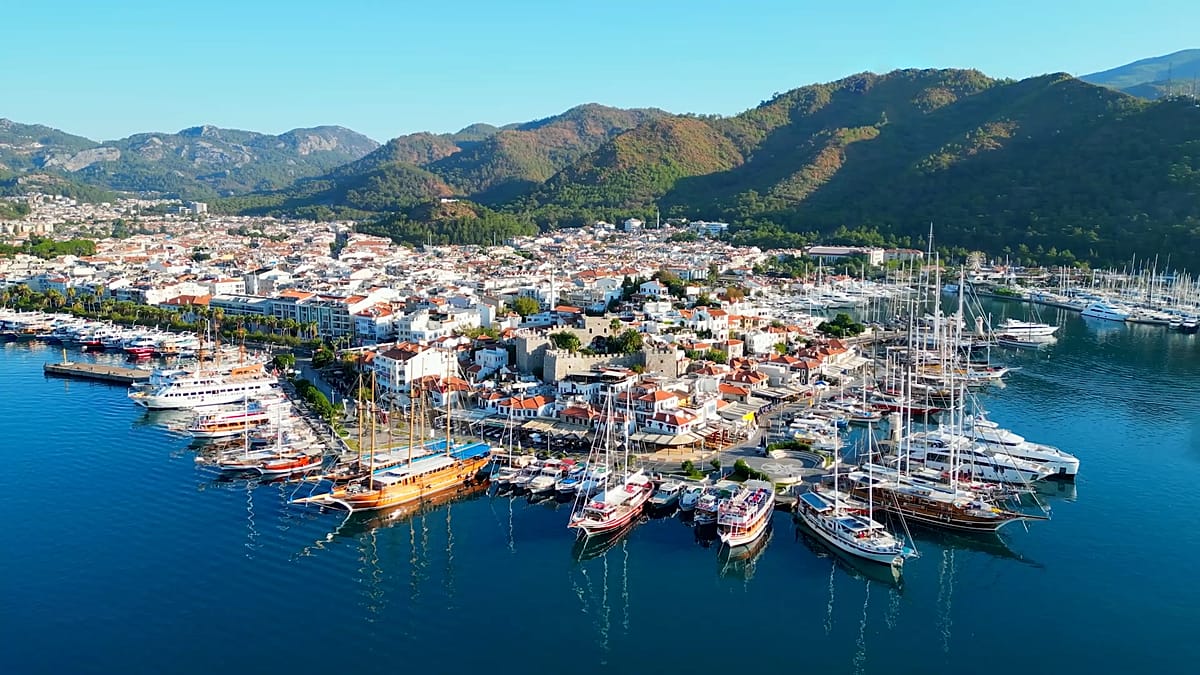
Most visitors arrive in Marmaris for the sea, but it is the pine forest above the coastline that defines much of what makes this stretch of Türkiye's Mediterranean coast distinctive. The region, nestled along the Datça Peninsula, offers a layered experience that goes well beyond sunbathing.
Setting Sail on a Traditional Gullet
The quintessential way to explore this coast is aboard a gullet, a handcrafted wooden boat built by local artisans using techniques passed down through generations. These vessels are the backbone of the famous Blue Voyage, a multi-day sailing itinerary that weaves through secluded coves and past ancient settlements. One highlight is the hilltop ruins of Amos, a ancient city perched above the sea, visible from the water as you sail toward Kumlubük Bay. There, the calm, clear waters invite snorkelling directly off the boat.
This maritime tradition is deeply rooted in the region's identity, much like the ancient architecture on Croatia's Rab Island, which offers a blueprint for living with the Mediterranean climate. Both places remind us that the sea has shaped human settlement here for millennia.
Inland Treasures: Forests and Caves
Marmaris National Park covers 30,000 hectares of Mediterranean pine forest, a green expanse that shelters Nimara Cave. This cave has been used by humans since the Palaeolithic age, and its walls bear traces of ancient rituals. The park's trails wind through fragrant pines, offering a stark contrast to the bustling marina below.
The forest is not just a scenic backdrop; it sustains a local craft that few visitors expect. Pine honey, produced not from flower nectar but from honeydew collected on the trees, is darker, less sweet, and richer in minerals than most honeys. Türkiye produces roughly 92% of the world's pine honey, and much of it comes from this very region. At the Marmaris Honey House, visitors can see the centuries-old craft on display, from the beekeeping techniques to the final product.
This tradition is a reminder that Europe's periphery holds unique cultural practices. For context, the annual festival on Mount Olympus reviving ancient Greek polytheism shows how other parts of the continent also preserve pre-modern traditions.
A Region of Layers
Marmaris is a place where the sea, the forest, and the past converge. The gulets bob in the harbour, the ruins of Amos watch over the bay, and the bees work the pines. For travellers willing to look beyond the beach, this corner of Türkiye offers a rich, textured experience that connects the present to a deep history.
As interest in film-inspired travel to Europe's ancient sites grows, Marmaris stands out as a destination where the ancient is not just a backdrop but a living part of the landscape. Whether you come for the sailing, the honey, or the ruins, the region rewards those who take the time to explore its layers.