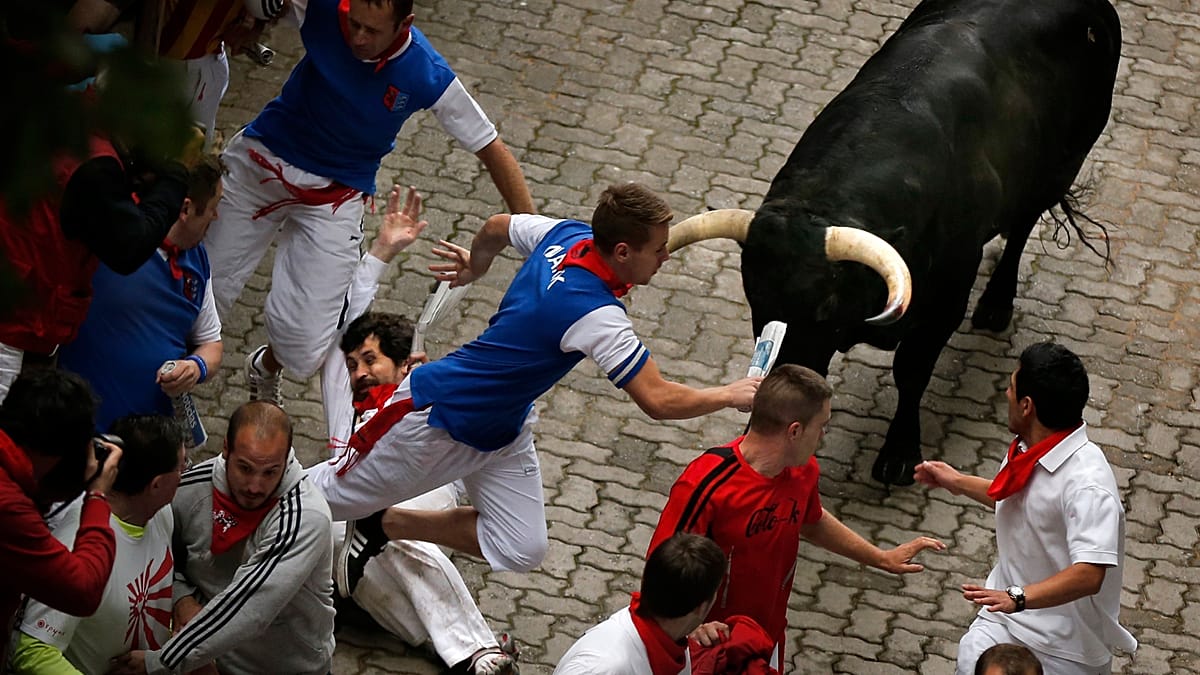
The fourth running of the bulls at the San Fermín festival in Pamplona, Spain, resulted in nine injuries on Thursday, according to local health officials. The event, a cornerstone of the annual celebration, saw participants dash through the city's narrow, cobbled streets alongside six fighting bulls from the Jandilla ranch.
Among the injured, two were transported to local hospitals with non-life-threatening injuries, including a 38-year-old man from Madrid who sustained a head injury after being trampled. The remaining seven were treated on-site for bruises and minor cuts. The run, which lasted just over two minutes, was described by witnesses as particularly fast-paced, with the bulls staying close together and charging through the course.
Tradition and Risk in Pamplona
The San Fermín festival, held annually from July 6 to 14, attracts thousands of visitors from across Europe and beyond. The bull runs, which take place each morning, involve participants running ahead of a group of bulls along an 875-meter route from the Santo Domingo corral to the Plaza de Toros. Despite strict safety measures, injuries are common, with participants often suffering falls, goring, or trampling.
This year's fourth run was the second to result in multiple injuries, following a similar incident on Tuesday. The festival has a long history of accidents, with 16 deaths recorded since 1910. The most recent fatality occurred in 2009 when a 27-year-old man from Madrid was gored.
Local authorities have emphasized the importance of following safety guidelines, including avoiding alcohol consumption before the run and staying within designated areas. However, the inherent risks of the event remain a point of contention, with animal rights groups calling for its abolition. The festival's defenders argue that it is a deeply rooted cultural tradition that generates significant tourism revenue for the region.
Pamplona, the capital of the Navarre region in northern Spain, sees its population swell during San Fermín, with hotels and restaurants reporting full occupancy. The festival's economic impact is estimated at over €100 million annually, according to regional government data.
For those interested in broader Spanish issues, the country continues to grapple with challenges such as rising rental costs and the aftermath of recent environmental disasters like the wildfire in Almería. Meanwhile, Spain's role in European economic debates has been highlighted by its push for an €850 billion joint borrowing plan within the EU.
The San Fermín festival remains a magnet for international media, with live broadcasts of the bull runs reaching audiences worldwide. For participants, the thrill of the run often outweighs the risks, as one runner from Germany told local reporters: "It's a test of nerve and speed. You feel alive."
As the festival continues, authorities urge caution. The next run is scheduled for Friday morning, with bulls from the Miura ranch, known for their size and unpredictability.