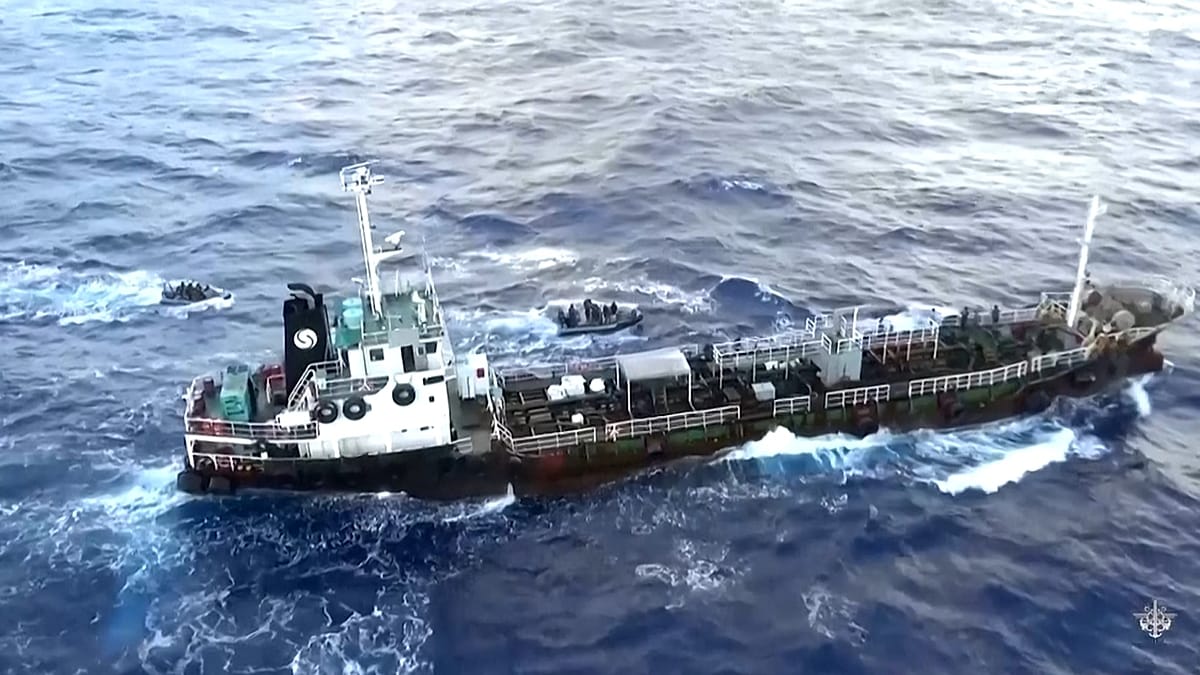
In one of the largest drug seizures in the region, the French navy has intercepted a stateless tanker in the Pacific Ocean carrying more than 33 metric tons of methamphetamine. The operation, confirmed by the French armed forces, underscores the growing role of European navies in combating transnational drug trafficking far from the continent's shores.
The vessel was boarded on Friday, November 20, after several weeks of tracking. A team from a French frigate took control of the tanker, with air cover provided by the frigate's helicopter, a French military Falcon 50 jet, and a maritime patrol aircraft from the US Coast Guard. The coordination was managed through maritime information centers in French Polynesia and New Caledonia, working alongside international partners.
European reach in the Pacific
France's overseas territories in the Pacific—French Polynesia and New Caledonia—give Paris a strategic foothold in a region increasingly affected by drug smuggling routes linking South America to Asia and Oceania. The seizure highlights how European security operations extend well beyond the continent, often in partnership with allies like the United States.
The stateless nature of the tanker is a common tactic among traffickers, who use vessels without a registered flag to evade maritime law enforcement. The operation's success relied on intelligence sharing and persistent surveillance, a method that French authorities have refined in recent years to counter such illicit shipments.
While the French military did not disclose the crew's nationality or the tanker's origin, the scale of the haul—equivalent to millions of individual doses—points to a sophisticated trafficking network. Methamphetamine seizures in the Pacific have risen sharply, with cartels exploiting the vast ocean's porous maritime boundaries.
This bust comes amid broader European efforts to tighten controls on drug trafficking, both within the EU and in international waters. The European Union's Maritime Security Strategy, updated in 2023, emphasizes cooperation with member states and partners to disrupt criminal activities at sea. France, as a permanent member of the UN Security Council and a leading naval power in Europe, plays a central role in these missions.
The operation also reflects a pattern of increased French naval activity in the Indo-Pacific, a region where Paris has sought to assert its presence as a resident power. Earlier this year, French forces participated in joint exercises with regional navies, and the country has pledged to enhance its surveillance capabilities in the Pacific.
For the broader European audience, the seizure is a reminder that security challenges are not confined to the continent. The fight against drug trafficking, which fuels violence and instability in many parts of the world, has direct implications for European citizens, from the consumption of illicit substances to the financing of organized crime.
The French military has not yet released further details about the investigation, including where the tanker will be taken for legal proceedings. However, the successful interdiction sends a clear signal to traffickers that even the most remote stretches of the Pacific are not beyond the reach of European-led law enforcement.