Thirty years after Daft Punk's Homework and AIR's Moon Safari introduced the world to a distinctly French strain of electronic music, the so-called French Touch has achieved a status few could have predicted: it is now officially part of France's cultural heritage. In a move that would have seemed unthinkable in the 1990s, when the scene was still fighting for credibility, the Culture Ministry has added French electronic music to the National Inventory of Intangible Cultural Heritage.
The dossier, prepared under former culture minister Rachida Dati, pays tribute to the pioneers who "established French electronic music as an international benchmark"—Daft Punk, AIR and Laurent Garnier among them. The ministry notes that these genres are now "anchored in French society, bringing together different audiences, fostering social and cultural mixing, and encouraging experimentation, collaboration and free expression."
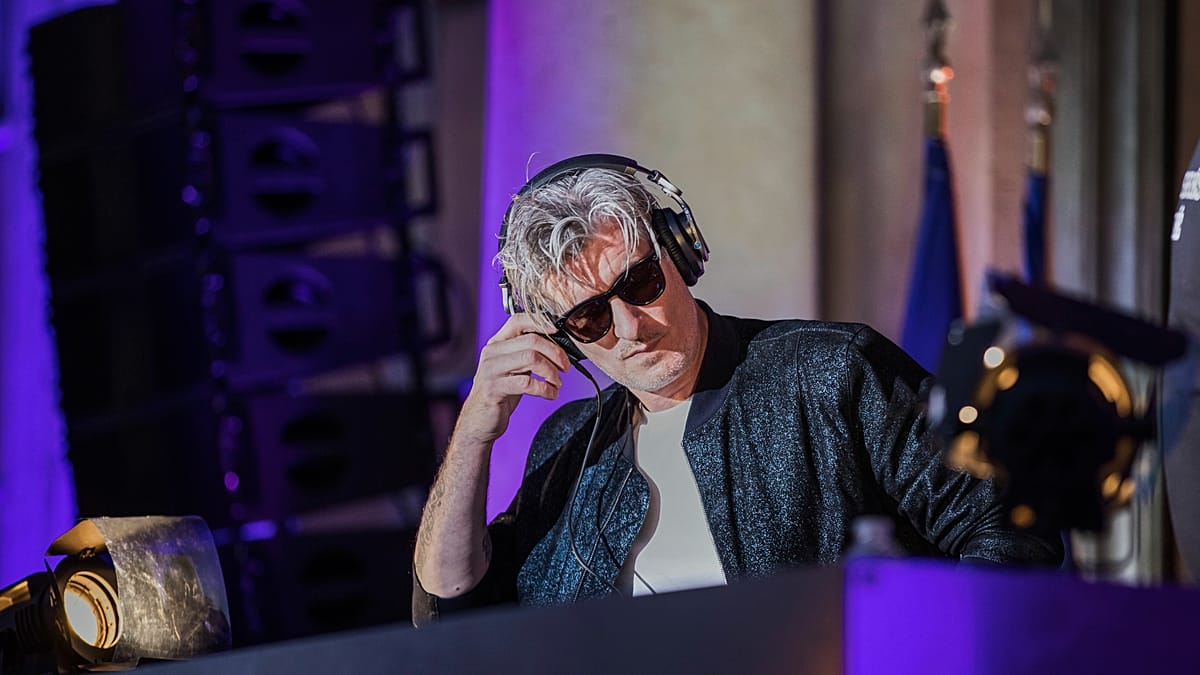
The canonisation follows a decade of growing institutional embrace. French Touch took centre stage at the Paris 2024 Olympic Games, and in July 2026, the death of producer and DJ Kavinsky—real name Vincent Belorgey, found dead at his Paris home at age 50 from an apparent stroke—prompted an outpouring of tributes from the highest levels of the state. President Emmanuel Macron called him "French pride for ever" on Instagram, while the Élysée Palace issued a statement describing him as a "towering figure of electronic music and the French Touch, a distinctive voice who made people dance and dream."
Kavinsky's trajectory encapsulates the movement's journey from the margins to the mainstream. Invited to perform at the Fête de la Musique at the Élysée in 2018, he brought his signature track "Nightcall" to the closing ceremony of the Paris Olympics in 2024, alongside Angèle and Phoenix. "That night, French electronic music rang out before the whole world," the Élysée noted. New culture minister Catherine Pégard added on X that his music "will continue to transcend generations and borders."
From underground to officialdom
Political interest in French Touch is not new. In the mid-2000s, Jacques Chirac's culture minister Renaud Donnedieu de Vabres awarded the Order of Arts and Letters to AIR, Philippe "Zdar" Cerboneschi of Cassius, and Dimitri From Paris—a decision that sparked controversy within the scene. Daft Punk and Laurent Garnier both refused the honour.
"Zdar told me: when somebody offers me a decoration, I accept it—my mother is going to be so proud. He brushed the criticism aside," recalls Stéphane Jourdain, a France Inter journalist and co-author of the podcast Histoire secrète de la French Touch. "Are DJs compatible with this kind of institutionalisation and political recognition?" he asks.
Jourdain argues that electronic music has long been a "space where minorities can express themselves," particularly sexual minorities, and that it "lives outside these types of recognition." He points to the decades-long crackdown on free parties, which have been "hunted down by the authorities for 30 to 40 years." Indeed, the new RIPOST law, in force since August, makes organising or attending an undeclared music gathering a criminal offence. This weekend, several hundred revellers defied a prefectural ban near Caen in Normandy, exposing themselves to heavy penalties.
"There is something paradoxical about a president of the Republic paying tribute to a DJ while his Interior Ministry is clamping down on rave parties," Jourdain says, though he acknowledges that Macron is "from the same generation" as Kavinsky and that "the tributes paid by our representatives should not be limited to Léo Ferré."
Jourdain also notes the social background of many French Touch stars: "Kavinsky, AIR… We're talking about the 18th arrondissement of Paris, about people who are mostly bourgeois, or the children of bourgeois." He insists, however, that the music belongs to a "broad" definition of techno, and that there is a "continuum" leading up to French Touch—"It is still part of the same family."
Macron's push to have French Touch added to UNESCO's Intangible Cultural Heritage list, announced in June 2025, drew a parallel with Berlin techno's recognition. For Jourdain, that effort is largely "window dressing." Yet the movement's legacy is undeniable: it has influenced a generation of producers across Europe, from Paris to Berlin to Stockholm, and its sounds remain a staple of festivals and clubs from Ibiza to the Balkans.
As France prepares for the 2027 presidential election, the political embrace of French Touch shows no sign of fading. But the debate over what the movement means—and who it truly belongs to—remains as vibrant as the music itself. For every official tribute, there is a reminder of the underground parties that gave birth to the scene, and the tensions that persist between institutional recognition and the spirit of rebellion that defined it.