Across the Gulf of Oman and the vast steppes of Central Asia, a quiet but determined effort is underway to pull threatened species back from the edge. Scientists and rangers are combining cutting-edge research with traditional field craft, offering a glimpse of what conservation can achieve when it is given time and resources.
Laboratories for a warmer ocean
On the UAE's east coast, the Sharjah Marine Science Research Centre has built a series of tanks that simulate the oceans of the future. Some are warmer, more acidic, and lower in oxygen than today's seas. Professor Stephen Widdicombe, the centre's director, says these conditions provide a window into how marine life might cope as climate change alters the marine environment.
“The oceans are incredibly important, they represent 90% of the habitable space for life on this planet,” Widdicombe said. But he warned that they face pressures ranging from climate change and pollution to other human activities.
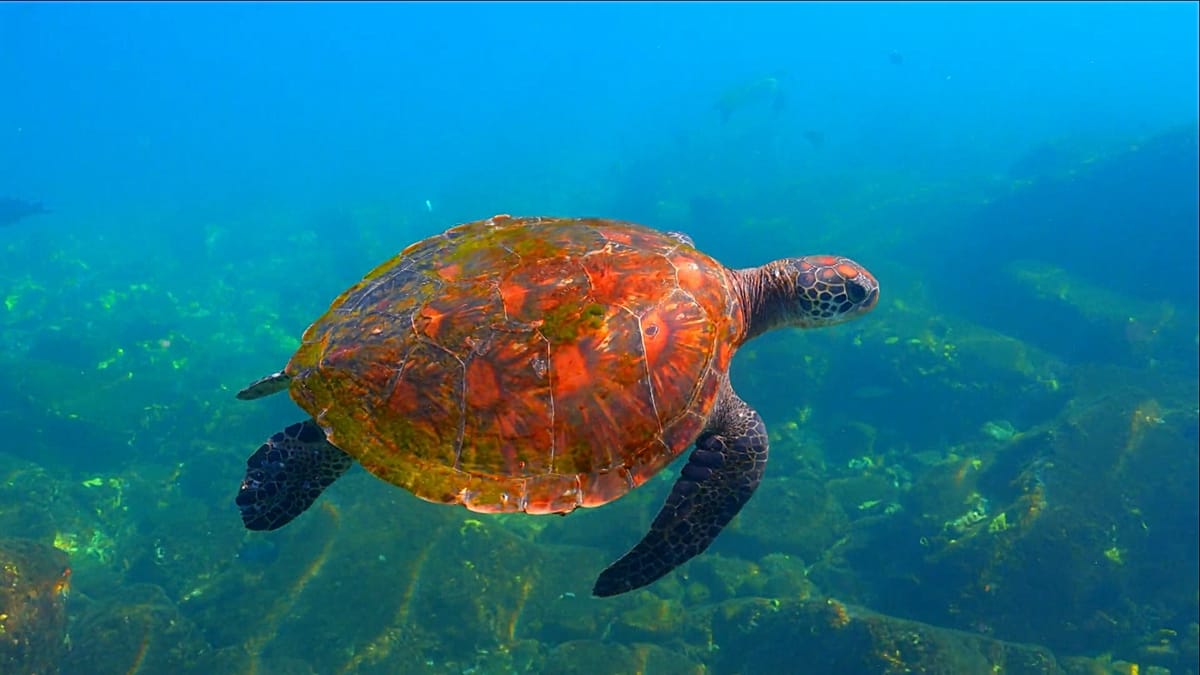
One project focuses on sea turtles. Each turtle has a unique pattern of scales on its face, much like a human fingerprint. Marine biologist Dr Jon Lapeyra photographs turtles along roughly one kilometre of coastline each week and uses artificial intelligence to help recognise individual animals.
“AI for us, and for this project in particular, has been a game changer,” Lapeyra said. When the same turtle reappears, researchers can build a record of where it spends time and how it moves. Over six months, 95% of the turtles Lapeyra personally photographed were juveniles, which he described as an encouraging sign for the population.
Coral reefs are another focus. Corals in the Gulf of Oman already experience temperatures that would put many reefs elsewhere under severe stress, making them valuable for research into how reefs may respond to warmer oceans. “The studies we do on coral reefs here can, of course, tell us something about future scenarios in other places of the world,” said Professor Henrik Stahl, the centre's head of research and innovation.
Researchers are also working on restoration. Small coral fragments are placed on nursery tables anchored to the seabed, where they can grow into larger colonies under suitable conditions. Protecting threatened species often depends on understanding not only the animals themselves, but the habitats and resources they need to survive.
Saiga on the steppe
On Uzbekistan's Ustyurt Plateau, the more than 600,000-hectare Saygachiy Complex Landscape Sanctuary protects part of the range of the saiga, a migratory antelope found across Central Asia. “When we first arrived, we would see only two or three saiga antelopes,” said chief inspector Ortiqbek Saydullayev. “Today, we have managed to establish a resident population.”
Maintaining suitable conditions requires work throughout the year. Staff provide grain and other fodder when snow covers vegetation in winter, while water is pumped to watering points during the dry summer months. Saydullayev says 83 wells are spread across the sanctuary. Saiga can also travel across national borders in search of food and milder weather, meaning conservation depends not only on conditions within the sanctuary but also on the landscapes through which they migrate.
When protected habitats lose water
Further west, in Karakalpakstan, the Sudochye lake system shows another challenge facing protected wildlife. Once connected to the Aral Sea, Sudochye became an independent lake system as the sea retreated and remains an important stopover for migratory birds. “Water levels in the lakes have been declining year after year,” said Aymuradov Tokhtamurad, chief specialist at the Sudochye-Akpetki State Wildlife Sanctuary. “As inflows decrease, salinity increases. This affects wildlife and can force animals to leave the area.”
The changes can be seen along the shoreline, where vegetation remains green in areas still reached by water while reeds and plants further away have dried. Sanctuary officials say Sudochye is the only nesting site for flamingos in Uzbekistan. If water levels continue to fall, they warn, the lakes could eventually stop functioning as a breeding site and become primarily a passage point during migration. Protected status can reduce some pressures, but it cannot replace the water on which an ecosystem depends.
Tracking recovery in the mountains
In southern Uzbekistan's Kugitang mountains, Surkhan State Nature Reserve protects the markhor, a wild goat known for its corkscrew-shaped horns, and the Bukhara urial, a wild sheep. The reserve was established in 1986 after populations of both species had fallen sharply. Wildlife censuses are now conducted twice a year. “In November 2025, we counted nine hundred and eighty-one markhor and one hundred and thirty-seven Bukhara urial,” said deputy director Muhiddin Mamatqulov.
Researchers supplement those counts with 32 camera traps operating across the reserve. Senior researcher Umidjon Murtazayev says the devices record wildlife around the clock and help scientists study rare species, their behaviour, population dynamics and migration. Technology has not replaced fieldwork. Ranger Bobur Eshoniyev says teams often remain in the mountains into the evening, when many animals become more active.
Reserve officials say the markhor population is growing, although threats including poaching, livestock pressure and fragmented habitat remain. The work here, as elsewhere, is a reminder that conservation is a long game—one that requires patience, innovation, and a willingness to adapt as conditions change.