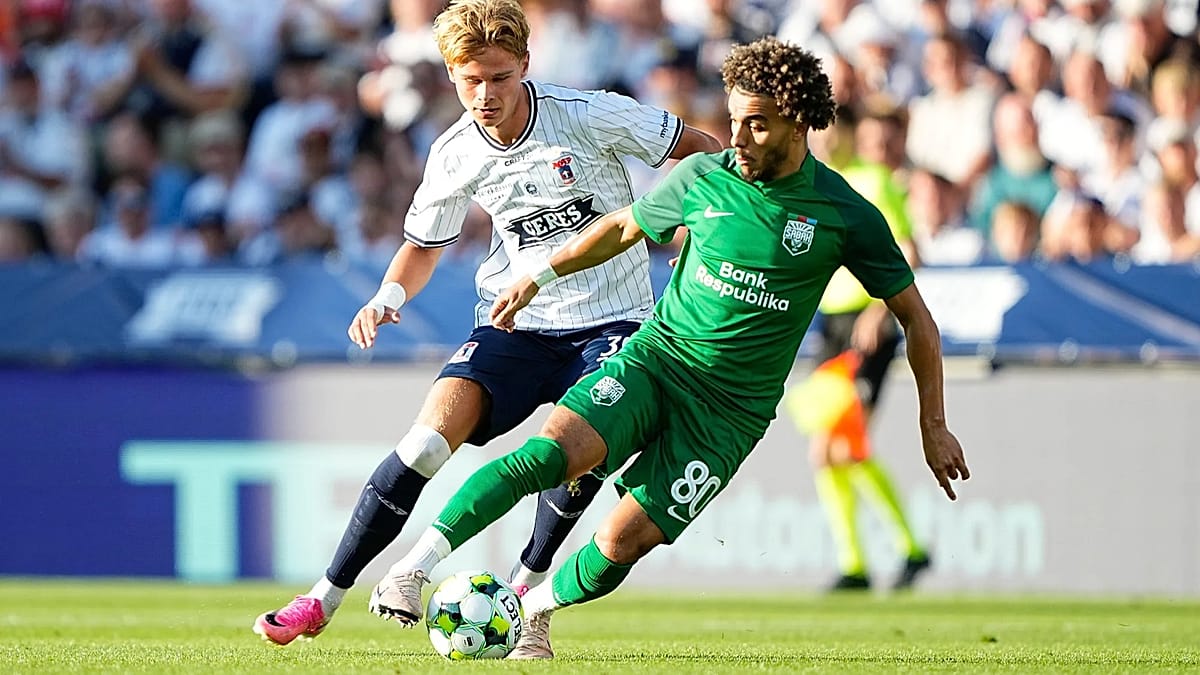
When Valdas Dambrauskas won prize money on a Lithuanian quiz show in 2002, he could hardly have imagined that two decades later he would be preparing to face Barcelona and Manchester United. Yet the 49-year-old now stands as the first Baltic coach to reach the Champions League main round, guiding a club that did not exist nine years ago.
Sabah FC, based in Baku, secured their place with a 5-2 aggregate victory over Hapoel Beer Sheva last Tuesday, setting up eight matches against some of Europe's most storied clubs. Barcelona, Borussia Dortmund, Napoli and Slavia Prague will travel to the Tofiq Bahramov Republican Stadium, while Dambrauskas's side will visit Arsenal, Manchester United, Villarreal and Viking.
Dambrauskas, who had no professional playing background, used his quiz winnings to move to England and fund his UEFA coaching badges. He worked as a babysitter, salesman and newspaper delivery man before breaking into youth academies at Fulham, Brentford and Manchester United. Sabah is his tenth club.
"Sometimes it was difficult. I had to work hard, and sometimes to believe when myself and those around me were doubting," he recalled. "I take this achievement as a milestone and believe that journey is more important. There are other dreams ahead and I really don't want to stop."
Focus on the domestic league
Despite the glamour of the Champions League, Dambrauskas is keen to keep his squad grounded. "Everyone is speaking about the Champions League, but the Azerbaijan championship is what allows you to play there," he said. "It is very important we keep the focus and prepare for every game that we are going to play."
His squad reflects a global approach, with starting line-ups often featuring eleven different nationalities. "In this kind of environment the main word we base our philosophy on is respect," he added.
Sabah were founded in 2017 and won the Azerbaijan Cup in 2024-25, followed by the Premier League title the next season, ending Qarabağ FK's domestic dominance. For right-back Tellur Mutallimov, the scale of the challenge ahead is a matter of responsibility rather than excitement. "Playing against clubs of this stature gives me a greater sense of responsibility and extra motivation rather than excitement," he said. "The celebrations are now behind us. It is time to focus all our attention on the important and difficult matches ahead."
Mutallimov also paid tribute to the supporters who travelled to Denmark, England, Finland and Romania during the qualifying rounds. "Even when we played far away from home, we were not alone," he said.
Data-driven approach
Club president Magsud Adigozalov attributes the club's rise to a data-driven recruitment strategy rather than financial muscle. "We could not compete financially with many established European clubs, so we had to find our own competitive advantages," he explained. "We were inspired by the Moneyball philosophy, which demonstrated that intelligent use of data and recruitment can help a club compete far beyond what its financial size might suggest."
Sabah's entire squad is valued at around €16.65 million, a fraction of Barcelona's €1.1 billion or Manchester United's €900 million. Napoli's Benoît Badiashile, who recently joined from Chelsea, is valued at roughly the same as the whole Azerbaijani squad.
Yet Adigozalov insists that human factors come first. "Footballers are people before they are assets or statistics. We try to provide players with excellent training and living conditions and treat them and their families with respect," he said.
The Champions League qualification brings a base fee of millions of euros in UEFA distributions, plus broadcasting and sponsorship income. But for Adigozalov, the deeper impact is cultural. "A young boy or girl sitting in the stadium and watching Barcelona or Borussia Dortmund play against Sabah may start dreaming differently about football," he said.
Sabah's journey also highlights Azerbaijan's growing role in regional connectivity, as the country's Middle Corridor trade route gains traction. The club's success, built on analytics and respect, offers a model for smaller European leagues seeking to compete on the continental stage.