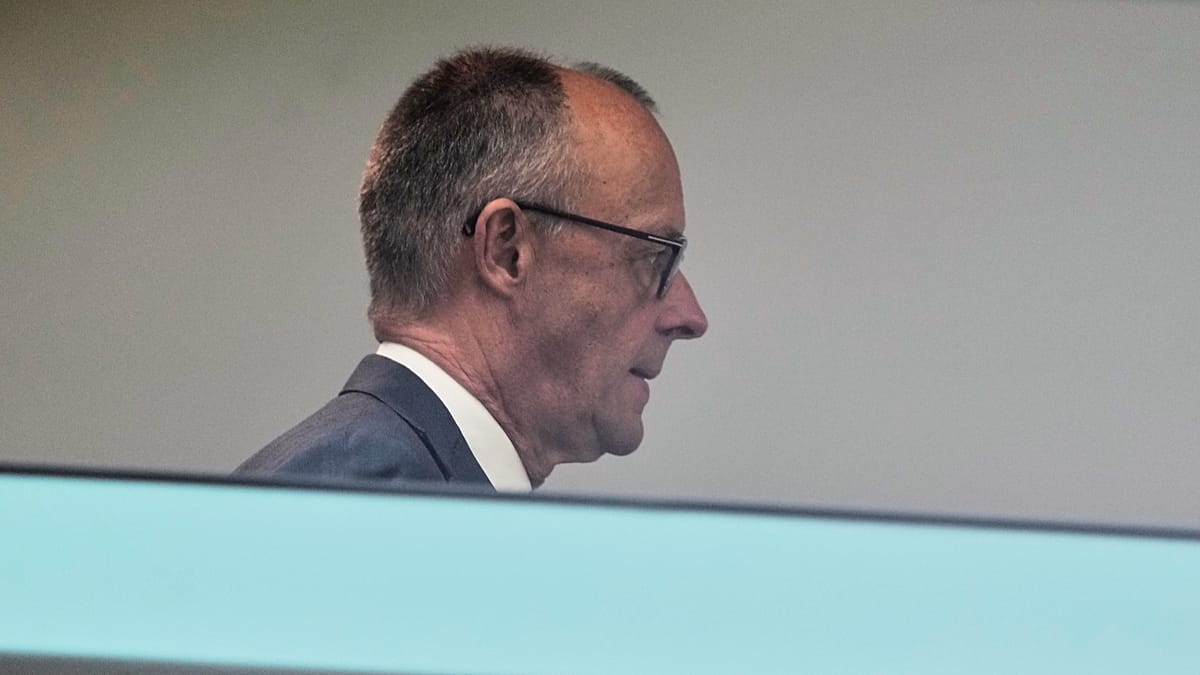
German Social Democrat MEP Sabrina Repp has warned that the federal coalition in Berlin is buckling under the weight of recent regional election setbacks, with public confidence in the government eroding fast. Speaking after the latest votes in Berlin and Mecklenburg-Western Pomerania, Repp said the alliance between her SPD and Friedrich Merz's CDU is now facing "lots of pressure" as voters punish the establishment parties.
The far-right Alternative für Deutschland (AfD) made significant gains in both states, capitalising on widespread discontent with the national government. Repp, who sits with the Socialists & Democrats group in the European Parliament, argued that the election results reflect a deeper crisis of trust. "German citizens have lost trust in the federal government," she said, pointing to the AfD's surge as a direct consequence of that disillusionment.
Coalition under fire
The results have intensified scrutiny on Chancellor Friedrich Merz, whose CDU suffered heavy losses in the two eastern and northern states. The regional elections delivered a sharp rebuke to the chancellor, with voters in Berlin and Mecklenburg-Western Pomerania turning away from the mainstream parties. The AfD's success has raised questions about the stability of the federal coalition, which was already fragile after months of internal bickering over migration, energy policy, and the economy.
Repp acknowledged that the pressure on Merz is mounting, but she stopped short of calling for his resignation. Instead, she stressed the need for the coalition to hold together. "The priority now is to stabilise the coalition," she said, urging her party and the CDU to focus on delivering tangible results for citizens rather than internal power struggles.
The SPD and CDU have governed together at the federal level since 2021, but their partnership has been tested by a series of crises, including the war in Ukraine, inflation, and the cost-of-living squeeze. The recent state votes also showed gains for the far-left, further complicating the political landscape. Analysts say the fragmentation of the party system is making it harder for any coalition to command a stable majority.
For Repp, the lesson from the regional elections is clear: the government must reconnect with ordinary Germans. "People feel that their concerns are not being heard," she said. "We need to address the issues that matter most to them, from affordable housing to secure jobs and a functioning public infrastructure."
The MEP's comments come as Berlin faces mounting pressure from Brussels and other EU capitals to take a more decisive role in European affairs. Germany's political instability is being watched closely across the continent, given its economic and diplomatic weight. The German government's stance on trade with China and its leadership in NATO are just two areas where a weakened coalition could have ripple effects.
Repp's call for stability echoes the sentiments of many in the SPD, who fear that early elections would only benefit the AfD further. "We have a responsibility to govern responsibly," she said. "That means staying the course, even when the going gets tough."
Whether the coalition can weather the storm remains to be seen. With the AfD now the second-largest party in several state parliaments, the pressure on Merz and his partners is unlikely to ease soon. For now, Repp and her colleagues are hoping that a renewed focus on policy delivery can rebuild the trust that has been lost.