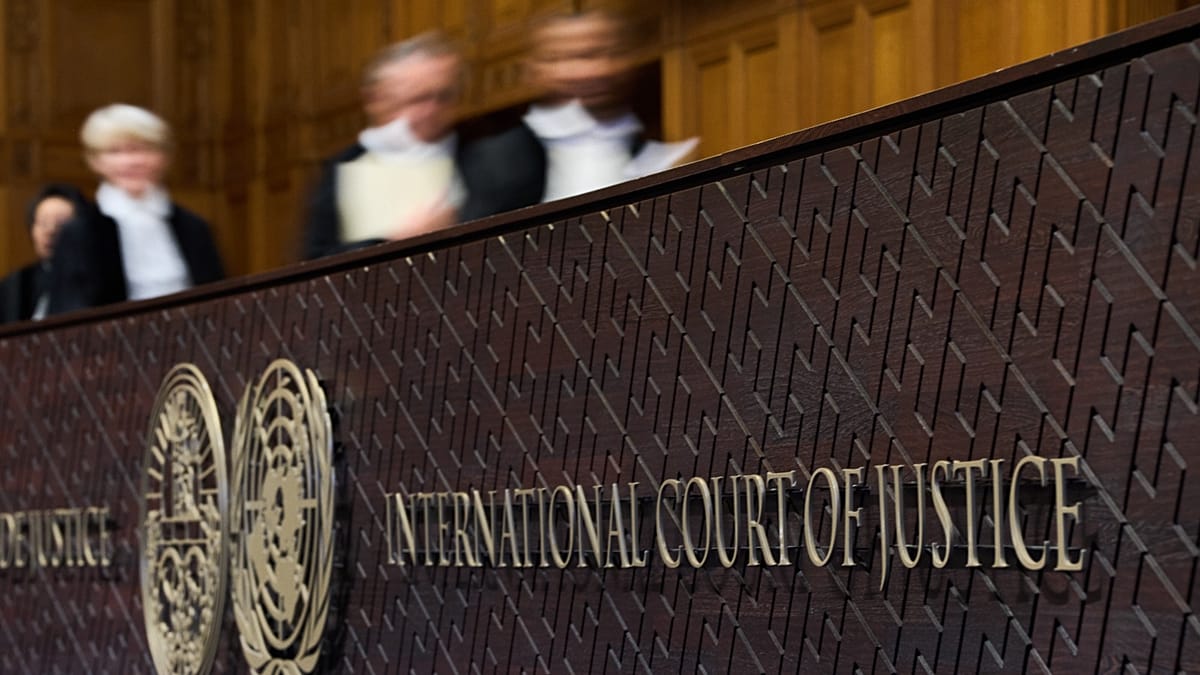
Germany will urge the International Court of Justice (ICJ) in The Hague to dismiss a case filed by Nicaragua, which alleges that Berlin's military support for Israel amounts to facilitating genocide in Gaza. The hearings, starting Monday, mark the latest stage in a legal battle that began in early 2024.
Nicaragua's application, lodged shortly after Israel launched its offensive in response to the 7 October 2023 Hamas attacks, sought emergency measures to compel Germany to halt all aid to Israel, particularly weapons. The ICJ rejected that request in April 2024, stating that the circumstances at the time did not justify such orders. However, the underlying case has continued, and Germany now hopes to have it permanently struck out.
Preliminary objections
Berlin has filed what the court describes as "preliminary objections to the jurisdiction of the Court and to the admissibility of certain claims." The specifics of Germany's legal argument have not been made public, but they are expected to challenge both the court's authority to hear the case and the validity of Nicaragua's claims under the 1948 UN Genocide Convention.
During the April 2024 hearings, Nicaragua's ambassador to the Netherlands, Carlos José Argüello Gómez, accused Germany of hypocrisy, saying it was "pathetic" to provide humanitarian aid to Gaza while simultaneously supplying Israel with weapons. He added, "Germany seems not to be able to differentiate between self-defence and genocide."
Germany has strongly rejected such accusations, calling Nicaragua's case "grossly biased." Its representatives have stressed that, given the country's Nazi past, Israel's security is a cornerstone of German foreign policy. Berlin also maintains that its arms exports to Israel are subject to rigorous scrutiny that exceeds international legal requirements.
The ICJ's rulings are binding, but the court has no enforcement powers. A decision on Germany's preliminary objections is expected within about six months. If the court sides with Germany, the case will be dismissed entirely; if it rules against Berlin, the case will proceed to a full examination of the merits.
This case is separate from the high-profile genocide case brought by South Africa against Israel at the same court, which Israel denies. The outcome of Germany's challenge could have significant implications for how European nations balance support for allies with their obligations under international law.
Germany's legal position is being watched closely across Europe, particularly in light of domestic political pressures and debates about arms exports. The case also intersects with broader discussions about Europe's role in the Middle East, as seen in European unity on foreign policy challenges.
As the hearings unfold, observers will be looking for signals on how the ICJ interprets the Genocide Convention's obligations for states that supply arms to parties in conflict. The decision could set a precedent for future cases involving military assistance and alleged human rights abuses.