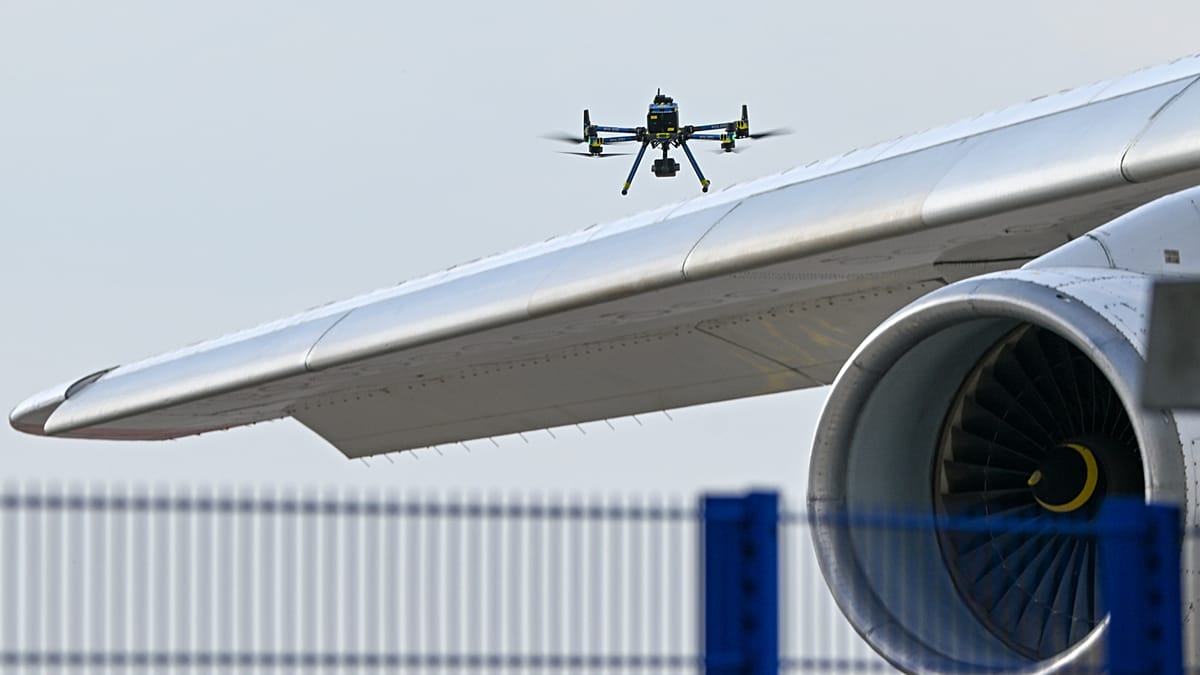
Germany has taken a significant step in bolstering its defences against unauthorised drones with the official opening of a new research centre in the eastern state of Saxony-Anhalt. The facility, located in Cochstedt, about 40 kilometres south of Magdeburg, is dedicated to developing and testing technologies to detect and neutralise hostile or stray unmanned aerial vehicles (UAVs) around airports, major public events, and critical infrastructure.
The Drone Security Technology Centre, inaugurated on Tuesday, operates under the umbrella of the German Aerospace Centre (DLR), which has been using the former Cochstedt airport as a testing ground for unmanned systems since 2021. Interior Minister Alexander Dobrindt, Research Minister Dorothee Bär, and Saxony-Anhalt's state premier Sven Schulze jointly opened the facility, underscoring its national significance.
Dobrindt described the new centre as a nationwide unique asset, where innovative drone security technologies will be researched, developed, and tested in real-world conditions. He framed the drone threat as part of what he called the "shadow war of the 21st century," highlighting the growing challenge posed by small, cheap, and easily accessible UAVs.
The centre builds on the DLR's existing National Test Centre for Unmanned Aerial Systems at Cochstedt, which has been a pioneer in testing drone technologies in realistic scenarios. Similar research is also conducted at other DLR sites across Germany, creating a network of expertise that the new centre aims to integrate and expand.
Leipzig incident underscores urgency
The opening comes at a moment of heightened concern in Germany about the threat drones pose to aviation and national security. Earlier this month, a drone carrying explosives was discovered near a runway at Leipzig Airport, roughly 100 kilometres southeast of Cochstedt. Leipzig Airport is one of Europe's largest cargo hubs and also supports NATO logistics operations, making the incident particularly alarming.
Germany's federal prosecutor has launched an investigation into the incident, treating it as a suspected attack on national security. A NATO spokesperson later confirmed that the drone, equipped with explosives and a detonator, was found near an aircraft operated by the Ukrainian cargo carrier Antonov Airlines.
In response, Dobrindt announced that the federal police would double the number of personnel dedicated to drone defence. While German airports and other sensitive sites already have systems in place to counter UAVs, the rapid evolution of drone technology means these defences must be constantly updated.
Defence ministry spokesperson Mitko Müller offered a sobering assessment, warning that complete protection against drones is impossible. "You cannot provide detection and defence capabilities around the clock along tens of thousands of kilometres of fencing. That simply will not work," he said, adding that the notion of 100 per cent security is an illusion.
Research Minister Dorothee Bär struck a more optimistic tone, pointing to the IDAS-PRO research project, which aims to detect, classify, and capture unauthorised drones in sensitive areas. "Unwanted drones over an airport? Over a stadium? Over a concert? Not with us!" she wrote on Instagram, emphasising that technological sovereignty also means using high-tech systems to enhance national security.
The choice of Cochstedt is steeped in aviation history. The site was originally a Soviet military airfield before being repurposed by the DLR as a testing ground for unmanned aircraft and other aviation technologies. Its transformation reflects Germany's broader efforts to stay ahead in the rapidly evolving field of drone security, a challenge that resonates across Europe as incidents involving unauthorised drones become more frequent.
The new centre is expected to play a key role in developing countermeasures that could be deployed not only in Germany but potentially across the continent, as European nations grapple with similar threats to their airspace and critical infrastructure.