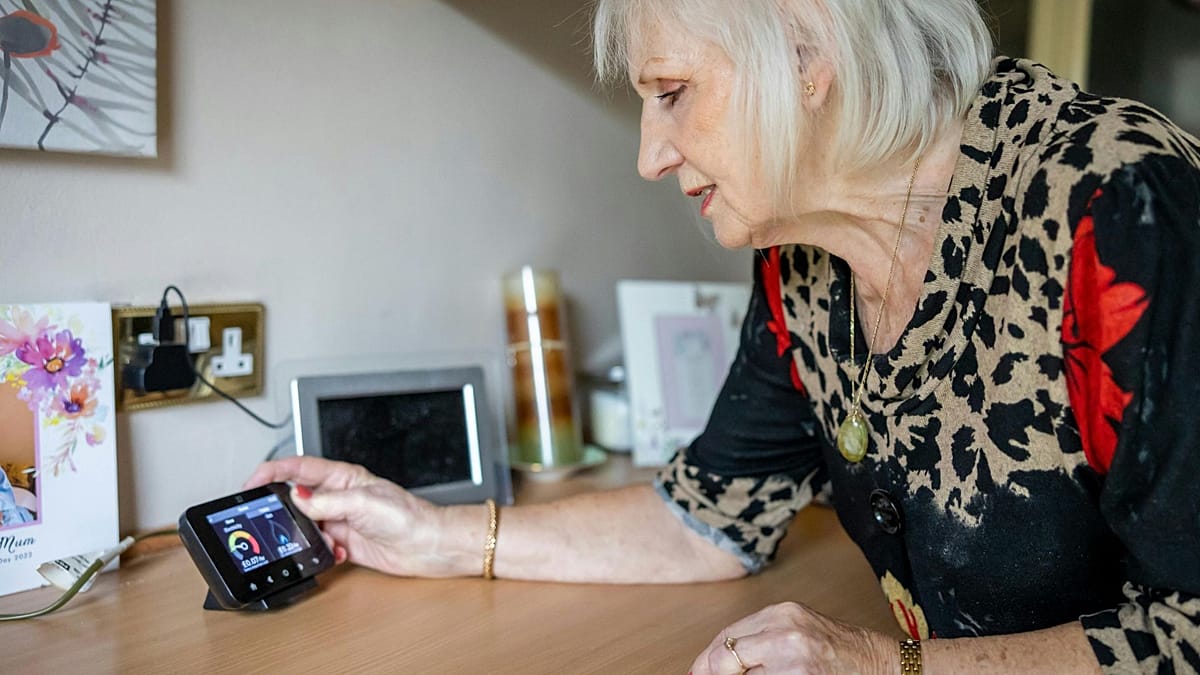
Germany, Europe's largest economy, is trailing far behind its neighbours when it comes to smart meters. As of December 2025, only 5.5 per cent of German households have one installed, compared with over 90 per cent in France, Italy, the Netherlands and Spain, and an EU average of 63 per cent. This slow adoption is not just a bureaucratic quirk; it is hampering Germany's ability to shift energy consumption to times when wind and solar power are abundant, leading to wasted renewable energy and higher bills for consumers.
Why Germany opted out of the EU's smart meter push
The EU's 2009 Third Energy Package set ambitious targets for smart meter rollout across the bloc, but included an opt-out clause: member states could be exempt if a cost-benefit analysis showed that the economic costs would outweigh the benefits. In Germany, where data privacy is a deeply sensitive issue, the idea of collecting detailed household energy data was politically unpopular. The government commissioned consultancy Ernst & Young to conduct such an analysis.
The 2012 study concluded that installation costs would exceed potential energy savings for households. It also argued that local grids were not prepared to handle the instability of intermittent renewables, and recommended a phased, market-driven approach rather than an accelerated rollout. Fourteen years later, Germany is paying the price for that decision.
The rapid expansion of wind and solar capacity means that supply now frequently outstrips demand, leading to negative wholesale electricity prices. This discourages investment in renewables and forces the government to compensate generators for curtailment – paying them to switch off. In 2025, Germany spent around €435 million on such compensation, a figure that is likely to rise as more renewables come online.
Smart meters could help Germany consume rather than waste this excess power, while allowing households and businesses to take advantage of low-cost electricity through flexible tariffs. As Jan Rosenow, Professor of Energy and Climate Policy at Oxford University, puts it: “It’s difficult to incentivise people to flex their demand if you don’t have a smart meter.”
Privacy fears: the 'Spionagezähler' legacy
Germany's historical experience with surveillance – from the Gestapo to the Stasi – has left citizens particularly wary of data sharing. This sentiment has bled into attitudes towards smart meters. Headlines warning of “Spionagezähler” (spy meters) in household basements, turning residents into “gläserner Mensch” (transparent people), fed fears of unnecessary surveillance.
Are those fears justified? Dr Christoph Sorge, professor of Legal Informatics at Saarland University, explains that smart meters can, in principle, provide high-resolution data on household electricity consumption. However, in practice, they typically collect data every 15 minutes, not every second. Still, he notes, “These are still detailed enough to detect when devices like washing machines, dryers, or flow-through heaters are running, and can be used to infer whether people are present in the household or not.”
Unauthorised access to this data could hypothetically see it misused by insurers, marketers, law enforcement or malicious actors. Dr Sorge acknowledges that, as with all computers, there is a theoretical risk that an attacker could manipulate the meters to transmit higher-resolution data than intended. But he believes the probability of such an attack has fallen significantly since 2012, thanks to stronger EU and national regulations.
Stronger security, slower rollout
Since the initial backlash, both data protection and cybersecurity rules have evolved considerably. The non-binding EU recommendation on smart meter privacy has been replaced by a binding legal framework. Illegal processing of smart meter data is now subject to substantial fines under the General Data Protection Regulation (GDPR), and smart meter gateways fall under the EU's Cyber Resilience Act, which mandates cybersecurity-by-design and incident reporting. Critical products like these must fully comply by December 2027.
Germany has gone even further. The Metering Point Operation Act requires security certification for smart meters, and the Federal Office for Information Security (BSI) mandates that data be processed locally and encrypted, with only billing-relevant figures shared by default. Dr Sorge concludes: “Overall, there is now quite a comprehensive legal framework that requires significant technical protections for smart meters. I do not think security and privacy concerns are still a very relevant issue today.”
But this high level of security comes at a cost. Strict certification requirements have slowed the rollout and driven up prices. Germany is currently off-track from its target of fitting smart meters in 90 per cent of homes legally required to have one by 2032, with many operators already missing 2025 milestones. Policymakers are now considering a 'Smart Meter Light' – a stripped-down device that can communicate consumption data and enable dynamic tariffs, but lacks the control hardware to automate savings remotely.
The slow rollout is not just a German problem; it has implications for the entire European energy transition. As Germany struggles to integrate its growing renewable capacity, it is also seeing curtailment costs rise sharply, a trend that could undermine the economics of clean energy across the continent. Meanwhile, other European countries are reaping the benefits of smart meters, using them to balance grids and lower consumer bills.
Germany's cautious approach may have been understandable in 2012, but the energy landscape has changed dramatically. With renewables now generating more power than fossil fuels for the first time, the country can no longer afford to leave this flexibility on the table. The question is whether it can accelerate its rollout quickly enough to meet its 2032 targets – and avoid paying an even higher price in the meantime.