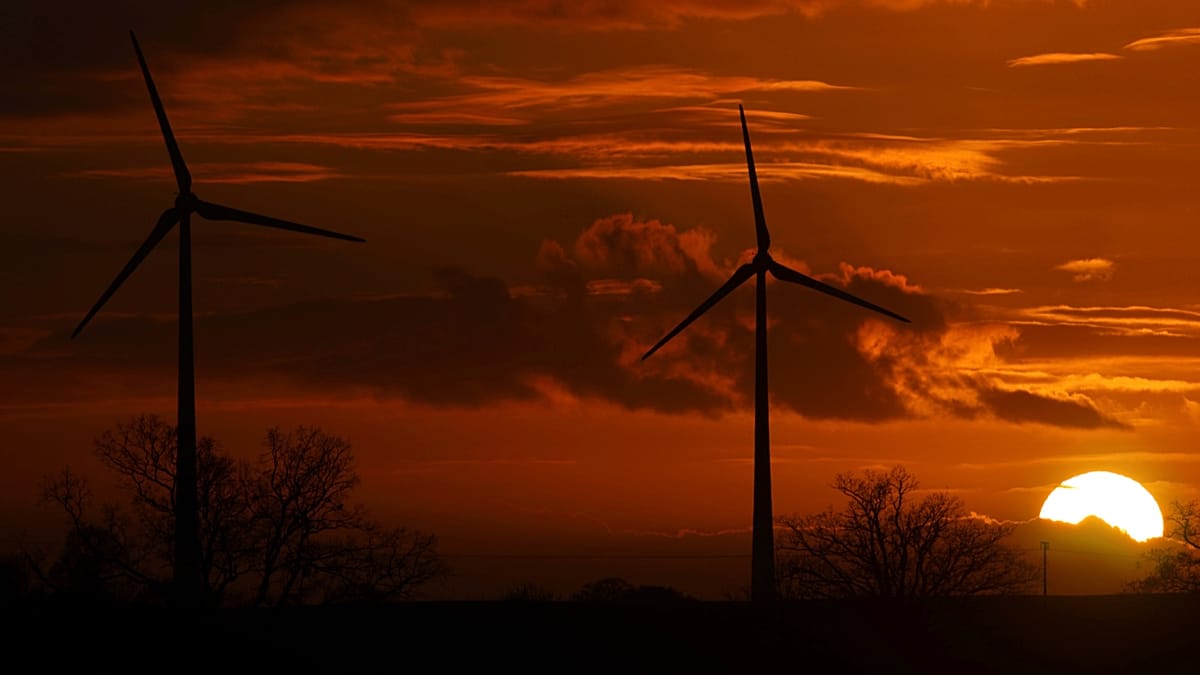
Across Europe, the share of renewables in the electricity mix continues to climb — wind, solar, and hydropower covered 45.5% of EU generation in the first quarter of 2026, according to Eurostat. Yet a growing paradox is emerging: the more renewables are built, the more often their output is deliberately switched off. This practice, known as curtailment, is now rising sharply in one country in particular: Germany.
A new analysis from energy market intelligence provider Montel shows that commercial curtailment — where operators stop generating because it is no longer profitable — fell across most of the continent in the first half of 2026 compared to the same period last year. The exception is Germany, where it increased by 20%, from 1,216 to 1,463 GWh. This happened even as the number of hours with negative wholesale electricity prices in Germany dropped by 23%, from 389 to 299.
The divergence is largely attributed to Germany's Solar Peak Act (Solarspitzengesetz), introduced in February 2025. Under this law, newly built renewable installations lose their guaranteed subsidy top-up as soon as wholesale prices turn negative. “Since the introduction of Germany’s Solarspitzengesetz in February 2025, newly commissioned renewable assets lose support payments immediately whenever wholesale electricity prices turn negative, while continuing to receive full remuneration when prices remain at exactly zero,” explains report author Jean-Paul Harreman. This creates a “much sharper commercial incentive” for operators to switch off rather than generate at a loss.
Separately, Germany’s move to quarter-hourly day-ahead auctions last October has increased the frequency of short periods where prices dip below zero, further encouraging curtailment. The result is that more renewable generation is being wasted precisely when it is most abundant.
France and Finland buck the trend
France presented the starkest contrast to Germany. Commercial curtailment there fell by 32% compared to last year, despite negative price hours increasing by 14%. The country’s booming nuclear and solar production pushed prices below zero more often, but French subsidy rules encouraged generators to keep producing clean electricity rather than switching off. A late-June heatwave also boosted electricity demand for cooling, which helped absorb midday surpluses.
Finland recorded the sharpest decline among the ten countries analysed: commercial curtailment dropped by a staggering 89%, while negative price hours fell from 337 to just 40. “The driver was a Nordic hydrological deficit that lifted wholesale prices and largely eliminated the oversupply conditions responsible for negative pricing,” the report states. “The Nordic water balance swung from a comfortable surplus a year ago to a deep deficit in 2026, with Norwegian snowpack near a 20-year low and reservoirs well below normal.”
The Netherlands, Belgium, Switzerland, and Poland also saw commercial curtailment decrease. The broader trend suggests that national market design, subsidy regimes, and weather patterns are increasingly shaping curtailment levels, rather than renewable growth alone.
Three ways to stop the waste
Experts argue that Germany’s experience is a warning for the rest of Europe. “These findings show that commercial curtailment was increasingly shaped by national market design, subsidy regimes, weather patterns and flexibility rather than renewable growth alone in the first half of this year,” says Harreman. “Germany remains the clearest signal that investment in storage, demand response and other flexible technologies will be needed to absorb growing volumes of renewable generation that would otherwise be commercially curtailed.”
Battery storage is widely seen as the primary solution. Commercial and industrial battery storage capacity is expected to roughly triple, from 9 GWh in 2026 to 24 GWh in 2028, but industry experts argue even more investment is needed. A 2026 report from the International Renewable Energy Agency (IRENA) found that when solar and wind power are combined with battery storage, they can compete with new coal plants on costs and provide reliable, 24/7 electricity — regardless of weather conditions. For example, Dutch students building the world's first solar-powered ambulance highlights the potential of integrating storage with renewables.
Smart meters are another key tool. By giving households more control over their energy use and enabling flexible “time of use” tariffs, they help align demand with renewable generation. When households run energy-intensive appliances like washing machines during periods of abundant solar or wind power, they reduce the need for curtailment. This approach is already being tested in several EU member states.
Market reform is the third pillar. Adjusting subsidy rules to avoid penalising generation during negative price periods — as France has done — can keep renewable plants online when they are most needed. The European Central Bank's recent rate decision, holding rates at 2.25% amid renewed Iran conflict, underscores the broader economic pressures that make efficient renewable integration even more urgent.
As Europe accelerates its green transition, the challenge is no longer just building more wind and solar capacity — it is ensuring that the electricity they generate is actually used. Germany’s rising curtailment is a clear signal that without parallel investment in storage, demand-side flexibility, and smarter market rules, the continent risks wasting a significant share of its clean energy potential.