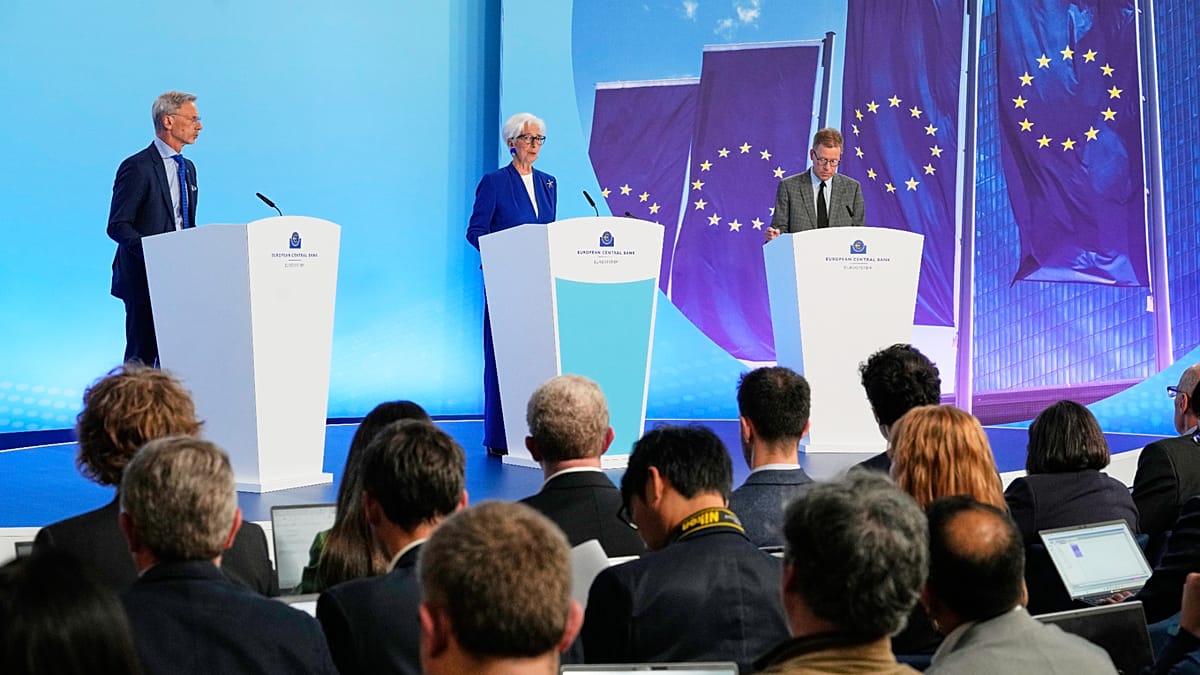
The European Central Bank held interest rates steady on Thursday, pausing its tightening cycle as policymakers assess the inflationary impact of a resurgent Middle East conflict. The deposit facility rate remains at 2.25%, with the main refinancing rate at 2.4% and the marginal lending facility at 2.65%.
The decision comes just six weeks after the ECB raised rates for the first time in nearly three years, responding to an energy shock that had pushed eurozone inflation to its highest since September 2023. While June's consumer price index eased to 2.8% from 3.2% in May, the central bank warned that uncertainty over energy prices remains high.
"The outlook for energy prices, while highly volatile, currently stands close to the baseline of the June Eurosystem staff projections and well above the levels recorded prior to the conflict in the Middle East," the ECB's statement read. "The Governing Council is therefore closely monitoring the intensity and duration of the shock, as well as its indirect and second-round effects."
Energy Shock Returns
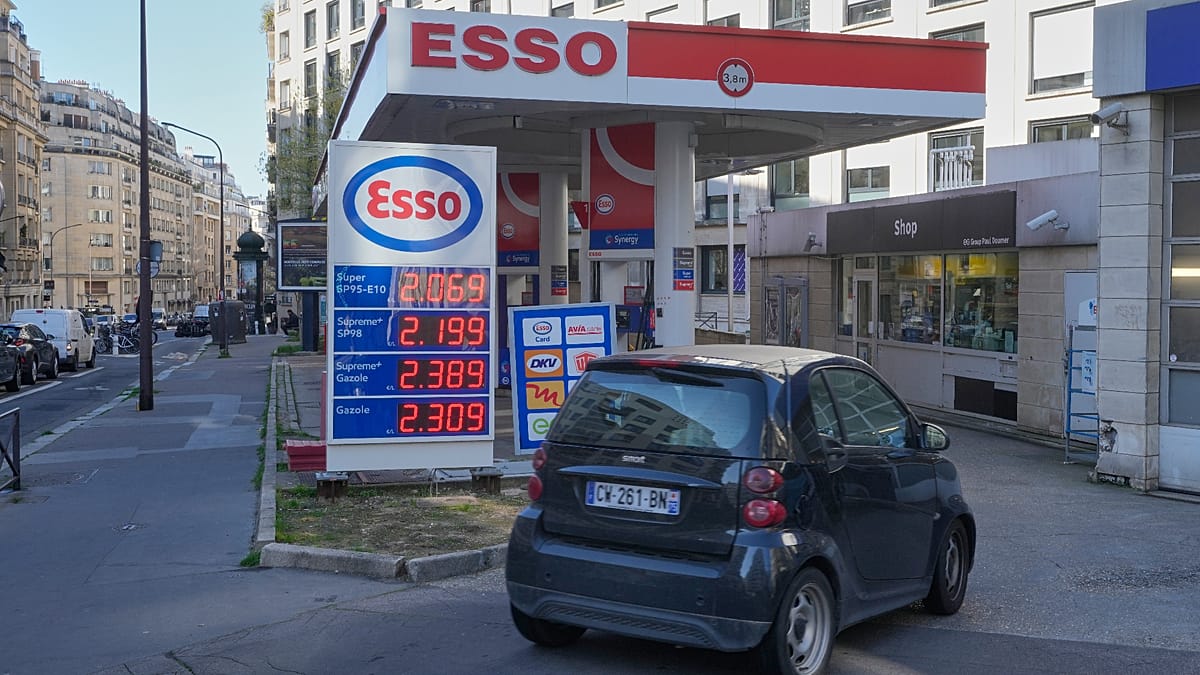
The complication for Frankfurt is that the very shock behind June's hike has reignited. Oil briefly touched $120 a barrel in March before sliding to around $72 after an interim peace agreement at the end of June. But the truce has frayed badly this month, with the US and Iran exchanging fresh strikes, attacks on tankers, and renewed sanctions pushing Brent back above $90 a barrel.
A prolonged rise in energy prices would feed through to household bills and headline inflation in the second half of the year, precisely the second-round effects central bankers currently fear. ECB President Christine Lagarde has been careful to keep the door open for further action. At the central bank's Sintra forum, she insisted June's move was not an "insurance hike" but a response to a genuine inflation problem, with projections showing a return to the 2% target only in late 2027, and only if monetary policy tightened further.
Lagarde also refused to pre-commit to a path, saying "forward guidance is not currently in the cards." July is not a forecasting round, and economists at ING, for example, had argued the bank would prefer to wait for September's fresh projections, when they see a second hike as the more realistic outcome.
Peers and Global Context
The ECB's pause comes as its major counterparts also hold steady. The Federal Reserve's target range sits at 3.50% to 3.75%, and the Bank of England's rate at 3.75%, while the Swiss National Bank remains at zero. Both the Fed and the Bank of England announce their next decisions next week, with markets overwhelmingly expecting holds.
The broader European economic landscape remains uneven. While the eurozone's inflation has moderated, household debt levels vary sharply across the continent. As our analysis shows, the most indebted households are in the north, not the south, complicating the transmission of monetary policy.
Meanwhile, the EU is also preparing to accept new US tariffs as long as a 15% cap holds, a development that could further affect trade dynamics. The ECB's path forward will depend on how these external pressures interact with domestic inflation trends.
For now, the central bank is buying time. But with energy prices rising and geopolitical tensions unresolved, the prospect of a second hike in autumn remains very much alive.